120 free spins with no deposit in the UK: what the offer is, what it costs, and which brands can legally run it
 Available in GB
A “120 free spins no deposit” headline carries a lot of promises. It promises a free trial, a chance to convert bonus rounds into withdrawable cash, and a route into a casino without putting money down first. Two of those promises travel, the third rarely does — and the gap between marketing language and what an offer really delivers is the most useful thing this page can explain. The market also contains far more gambling sites than anyone can fairly call “the” UK casino list, so the practical move is to filter by what is verifiable: a Gambling Commission licence, a live domain entry on the public register, and terms that match the current rule book rather than the one from three years ago.
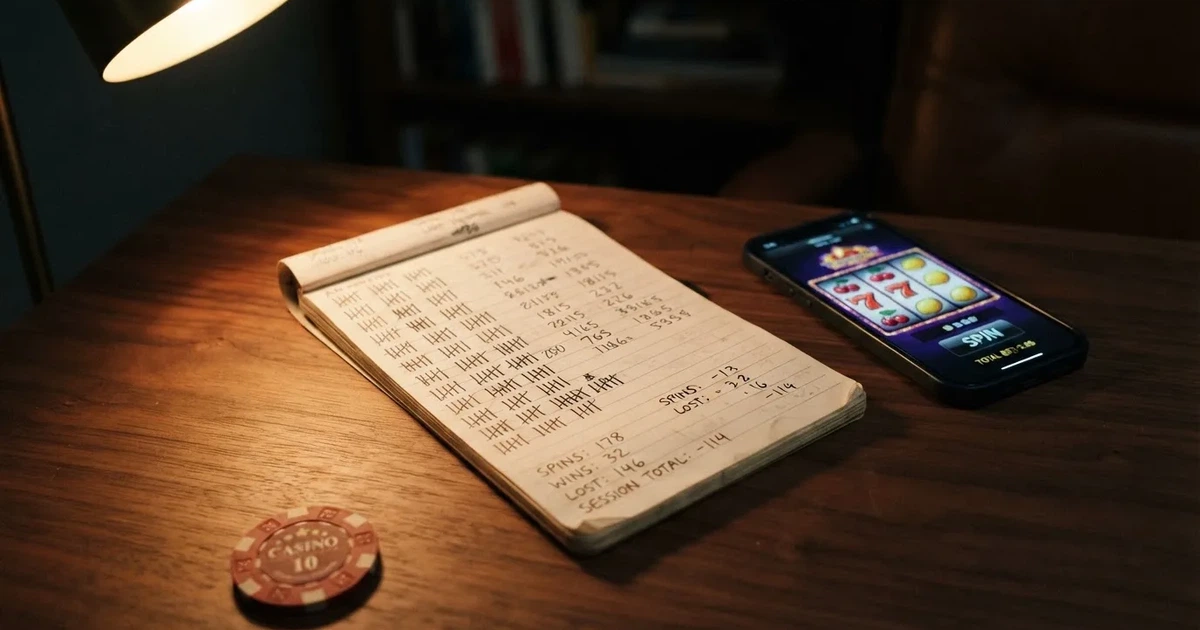
This page works through what 120 no-deposit free spins mean inside the UK rule set as it stands in 2026. The coverage covers how any winnings are paid out once the bonus terms are cleared, what the bonus itself actually costs the player in time and statistical expectation, the small set of licensed brands worth comparing, and the responsible-gambling framework that applies to the offer in the same way it applies to any other bet. Where a figure is missing, the gap is named and the decision is made without it.
The data on this page is current as of 23 September 2026. Licensing details were verified against the Gambling Commission’s public register of gambling businesses, the same document a player can search online or download as CSV.
- Withdrawals and payment rails once the offer clears
- What the 120 free spins are worth, and what they cost
- Licensed brands worth comparing
- What a 120 free spins no deposit offer actually is
- The UK rule book that frames every offer
- Responsible gambling inside the offer
- How to read a 120 free spins offer before claiming it
- The trade-off the offer really asks the player to make
- What changes the picture for a player in 2026
- How the offer connects to the rest of the UK market
- The points a reader can act on
- What to do before claiming a 120 free spins no deposit offer
- Frequently asked questions
Withdrawals and payment rails once the offer clears
The “no deposit” half of the headline is easy to grasp. The half players underestimate is the part that follows: 120 free spins are credited to a bonus wallet, any winnings usually arrive as bonus funds with their own wagering requirement, and the player only meets a real, withdrawable balance when those bonus funds have been turned over the stated number of times on eligible games. Until that has happened, withdrawing bonus money is normally blocked, and a withdrawal request on the player’s own deposited cash can sometimes void the bonus outright. The mechanism is the same across the market, and it predates any 120-spin headline — it is simply the rule that turns free rounds into a real-money outcome.

The payment rail that delivers the eventual cash matters less than the terms sitting on top of it, but it matters enough to walk through. UK-licensed brands draw from a small, well-known set.
Debit cards and Faster Payments are the default. UK bank transfers typically route through the Faster Payments Service, launched in 2008 and operated by Pay.UK, which runs every hour of every day and usually clears within minutes, though transfers can take up to two hours when systems are under load. The Faster Payments scheme sets a £1,000,000 per-transaction ceiling, but individual banks set their own daily limits well below that, so a player hitting their own bank’s outgoing cap is the more common bottleneck than the scheme’s ceiling.
Apple Pay is widely accepted at UK-licensed brands because it sits in front of a debit card rather than a credit card — the card data is replaced by a tokenised Device Primary Account Number and a dynamic security code for each transaction, so the casino never stores the underlying card number. Apple Pay began supporting UK-issued payment cards on 14 July 2015, and the in-store payment flow uses near-field communication between the phone and the terminal. For an online casino deposit it is the wallet in front of the card that counts, and that wallet is still a debit card under the Gambling Commission’s 14 April 2020 ban on credit-card gambling. A card added to Apple Pay is a credit card if the bank calls it one, and the casino’s payment screen cannot tell the difference; the operator’s own block on credit-card funding is what catches it.
AstroPay is an e-wallet option for players who want to keep the casino’s bank-facing screens at arm’s length. It was founded in 2009 in Uruguay and now operates as a global digital wallet offering online payments, virtual and physical debit cards, and peer-to-peer transfers. Its UK entity, Larstal Limited, is an electronic money institution authorised by the Financial Conduct Authority under the Electronic Money Regulations 2011; its Isle of Man entity holds a separate money-transmission licence from the Isle of Man Financial Services Authority; and its Brazilian and Danish arms are authorised by their own domestic supervisors. None of those licences substitute for a Gambling Commission licence on the casino itself. What AstroPay does, when it works, is move funds between the player’s bank and the casino wallet through an intermediary — useful for players who prefer not to share card details with each new site.
Pay by bank transfer / open banking has grown across the UK market as a direct-deposit route that does not require card details at all. It runs through Faster Payments underneath, so the same minute-or-two clearing window applies. The regulator has not singled it out; the same wagering-requirement rules and the same credit-card ban apply regardless of how the deposit was made.
Two rails UK players should expect to be blocked. Credit cards have been banned for gambling across all online and offline products in Great Britain since 14 April 2020, including cards routed through e-wallets. Cryptocurrency deposits are not available at any properly Commission-licensed brand, because the operator cannot run KYC checks against an anonymous wallet and stay within the verification regime that has applied since 7 May 2019.
The withdrawal side mirrors the deposit side minus a few hours. Once wagering has cleared, the casino usually returns funds to the same method that deposited them — debit card withdrawals can take one to three working days depending on the issuer, Faster Payments withdrawals are usually minutes, and e-wallet withdrawals sit between the two. The 120-spin offer does not change any of this. It adds a step in front of it: a wagering requirement on the bonus funds, a maximum conversion cap on most no-deposit wins, and an expiry window during which the spins have to be used and the bonus turned over before the whole balance is forfeit.
What the 120 free spins are worth, and what they cost
The arithmetic on a no-deposit spins offer is the part the marketing language works hardest to hide. A headline of 120 free spins sounds like 120 chances to win, which it is in a literal sense — but the headline does not say what stake each spin plays at, what the wagering requirement is on the winnings, what the maximum withdrawal is, or how long the player has to clear everything before it expires.

Three figures together turn the offer from a number into a calculation. The wagering requirement is the multiplier applied to winnings from the spins — at 10x, £10 of bonus winnings must be turned into £100 of qualifying bets before withdrawal. The eligible-game contribution tells the player which slots count in full and which count partially or not at all; a 100%-contributing slot is the only kind on which a 10x requirement does what it says on the box. The game-cycle stake limit, £5 for players aged 25 and over (from 9 April 2025) and £2 for 18-24 (from 21 May 2025), is the maximum stake per spin on an online slot, and any spin above the limit usually voids winnings. Together they set the cost of clearing the bonus.
The arithmetic the market now works inside is constrained at the top by the 10x wagering cap the Gambling Commission brought in on 19 December 2025, alongside the ban on mixed-product bonuses. Before that date, wagering multiples on casino bonuses ran as high as 40x or 65x; the cap was a deliberate reduction of how much turnover a player is required to generate from any given amount of bonus money. The same rule also banned bonuses that mix products — bet on a football match, receive casino spins, and the casino cannot run that promotion any more — which is why a 120-spin headline today reads as a single-product offer rather than part of a sportsbook bundle.
How long the offer takes to clear is a question of stake and time. Assuming the player uses a £0.10 stake — the lowest stake most UK-licensed slots allow, and the stake at which 120 spins carries a notional £12 of bonus play before any winnings — and assuming a 5-second interval between spins, the 120 spins themselves are ten minutes of play. The wagering requirement, not the spins, is what takes the time. At £0.10 per spin and a 10x requirement, £10 of winnings has to be turned into £100 of qualifying bets, which is 1,000 spins at the same stake, or roughly 1 hour 23 minutes of uninterrupted play. At £0.20 per spin the wagering clears in half the time. At £1 per spin it clears in about 14 minutes. The number to keep in mind is not the spin count but the wagering turnover, because the wagering turnover is what costs the player something in expected loss, while the spin count itself is almost free.
Expected loss is the figure that shows what the offer actually costs in statistical terms. At a 96% return-to-player slot, every £100 wagered loses £4 on average across a large number of spins. A 10x wagering requirement on £10 of bonus winnings means £100 of qualifying bets, which gives an expected loss of £4 against an expected payout of £10 — the player is ahead on paper, with the proviso that “on paper” means averaged over many players and many sessions, not promised for any single one. The bonus converts to withdrawable cash for the player whose actual spin outcomes land above the slot’s RTP across the wagering window, and does not for the player whose outcomes land below it.
The maximum-conversion cap is the rule that flattens the upside. Most no-deposit offers cap the amount a player can withdraw from bonus winnings — a common cap sits at £100 or thereabouts, though it varies. Anything the player wins above the cap is usually removed from the withdrawable balance on completion of wagering. The cap is not in the headline, and a player who lands a £500 spin outcome on a £0.10 stake is rarely walking away with £500.
The expiry window is the rule that closes the offer. No-deposit spins typically expire 24 to 72 hours after credit; the wagering requirement on the bonus funds usually expires seven days after that. If the player does not clear wagering inside the window, both the bonus funds and any winnings derived from them are forfeit. The window is what turns the offer from “120 chances” into “120 chances taken inside two days, with everything on top of the stake lost if wagering is not cleared”.
So the headline of 120 free spins no deposit, read against the rule book in force in 2026, is the cost of one short session of play for the player who clears wagering at the lowest eligible stake, with an expected loss in the low single pounds against a maximum withdrawable amount usually capped well below £100, all of it to be done in a single sitting. That is the honest reading.
A worked example under the current cap
Take £10 of bonus winnings, a 10x wagering requirement, a £0.10 stake on a 96% RTP slot, and a 5-second interval between spins. The required turnover is £10 multiplied by 10, which is £100 of qualifying bets. At £0.10 per spin that is 1,000 spins. At 5 seconds per spin that is 5,000 seconds, which is 1 hour 23 minutes of play. The expected loss on £100 of qualifying bets at a 96% return-to-player is £4. So the player trades ten minutes of free play and 1 hour 23 minutes of bonus-fund play for an expected cost of £4 and a chance at the capped withdrawable balance.
The same calculation at £0.20 per stake halves the spins to 500 and the time to 42 minutes, and the expected loss doubles to £8. The player who raises the stake is not gaining anything from the offer — they are paying for it faster. The wagering cap has compressed the gap between stake choices, and that is the point of the cap.
Where the same scenario appears in two places on the page, both must give the same result: 1,000 spins, 1 hour 23 minutes, £4 of expected loss. They do.
Licensed brands worth comparing
The Gambling Commission’s public register held 139 businesses holding an active remote casino operating licence on 18 September 2026, plus 1065 active and 361 white-label domain entries across the same register — a white-label site trades under another company’s licence and so is not a separate licensee in its own right. The featured set below is a small sample of that register, chosen to show the breadth of the market rather than to crown any one brand. The set is not a ranking and not a recommendation; it is the licensed brands a player is most likely to encounter when shopping for a 120-spin offer in 2026.
The single most important number in the table is the licence number. A licence number on the register takes the form account-R-number-suffix, where the leading six digits repeat the licence holder’s account number and the “R” marks a remote (online) licence. Any operator offering casino games to players in Great Britain without that licence is breaking section 33 of the Gambling Act 2005, and any player signing up with such an operator loses the protection that comes with a UKGC licence: no GAMSTOP enrolment, no ADR complaints route, no enforced safer-gambling tools. The register is the test; nothing else is.
| Brand | Licence holder and GB remote casino licence | Domain status on the register | Subject support |
|---|---|---|---|
| PokerStars | Stars Interactive Limited · 039108-R-319334-026 | Active | — |
| Betfred | Petfre (Gibraltar) Limited · 039544-R-319290-010 | Active | — |
| Betfair | PPB Games Limited · 039411-R-319335-010 | Active | — |
| bet365 | Hillside (UK Gaming) ENC · 055149-R-331499-004 | Active | — |
| Unibet | Platinum Gaming Limited · 045322-R-324275-019 | Active | — |
| Coral | LC International Limited · 054743-R-330863-014 | Active | — |
| Casumo | Recro Limited · 061549-R-336718-002 | Active | — |
| 888casino | 888 UK Limited · 039028-R-319297-014 | Active | — |
| kwiff | Eaton Gate Gaming Limited · 044448-R-323408-017 | Active | — |
| Midnite | Dribble Media Limited · 042647-R-321653-022 | Active | — |
The “Subject support” column is empty across the row because the research did not return a confirmed 120-free-spins-no-deposit offer for any of these brands as of 23 September 2026 — each operator may run such an offer, may run a different offer, or may not run any no-deposit offer at all at the time of reading. A player who sees a 120-spin offer advertised by a brand not in this table should treat the advertisement as the starting point, not the conclusion, and verify the brand against the register before depositing or playing.
PokerStars
Stars Interactive Limited holds Gambling Commission remote casino operating licence 039108-R-319334-026, and the register lists Pokerstars as an active domain of account 39108. The brand is well known for its poker product, and its casino product has run alongside that for years; the casino’s no-deposit promotional calendar has historically been lighter than its deposit-based welcome packages, and the reader who lands here looking specifically for a 120-spin no-deposit offer should expect to verify the current promotion on the brand’s own site rather than assume one is running. The licence is what matters most for this brand — the offer is whatever the casino happens to be running in 2026.
Betfred
Petfre (Gibraltar) Limited holds Gambling Commission remote casino operating licence 039544-R-319290-010, and the register lists Betfred as an active domain of account 39544. The brand runs one of the larger UK retail bookmaking operations alongside its online casino, and the casino frequently features free-spin promotions tied to new slot releases. Whether a 120-spin no-deposit offer is on the table at any given moment depends on the brand’s current promotional cycle and is not something the register speaks to. The licensed status is unchanged: Betfred is on the register, the domain is active, and the licence number is verifiable.
Betfair
PPB Games Limited holds Gambling Commission remote casino operating licence 039411-R-319335-010, and the register lists Betfair as an active domain of account 39411. Betfair is the original betting-exchange brand and has run an online casino alongside the exchange for years, sharing the same parent group as PokerStars in some structures but operating under its own licence account here. The casino product is established; a no-deposit free-spin offer at the 120-spin headline is the kind of promotion the brand has run in the past, but the current availability is not part of what research confirms.
bet365
Hillside (UK Gaming) ENC holds Gambling Commission remote casino operating licence 055149-R-331499-004, and the register lists Bet365 as an active domain of account 55149. The brand is one of the largest online operators in the UK by player count and runs a casino product across slots, table games and live dealer. bet365 has historically offered deposit-based welcome packages and frequent slot-tied free-spin promotions rather than headline no-deposit spin offers, which is the reason the column is empty: research confirms the licence, not the offer. A player who wants to know whether bet365 is running 120 no-deposit free spins in 2026 needs to check the brand’s own promotions page.
Unibet
Platinum Gaming Limited holds Gambling Commission remote casino operating licence 045322-R-324275-019, and the register lists unibet.co.uk as an active domain of account 45322. Unibet is part of the Kindred Group structure and runs casino, sportsbook and poker products under the same licence. The casino frequently runs free-spin promotions tied to specific slot providers, but the precise headline — 120 no-deposit spins, or any other figure — is a current-promotion question rather than a register fact.
Coral
LC International Limited holds Gambling Commission remote casino operating licence 054743-R-330863-014, and the register lists coral.co.uk as an active domain of account 54743. LC International Limited also holds the licences for sister brands Ladbrokes and Gala Bingo, which is why the three should not be presented as independent operators in any comparison. Coral’s casino runs the usual mix of slots and live dealer, and its promotional cycle has historically favoured deposit-based bonuses; a no-deposit offer of this size is not something the research flags as currently active.
Casumo
Recro Limited holds Gambling Commission remote casino operating licence 061549-R-336718-002, and the register lists Casumo as an active domain of account 61549. Casumo is one of the more distinctive casino brands in the UK by gamification, and the casino has been known to run no-deposit free-spin offers tied to its welcome programme. Whether the current headline is 120 spins is a current-promotion question the register cannot answer; what the register does say is that Casumo is licensed and the domain is active.
888casino
888 UK Limited holds Gambling Commission remote casino operating licence 039028-R-319297-014, and the register lists 888casino as an active domain of account 39028. 888casino is one of the longer-established casino-only brands in the UK market and has run no-deposit offers as part of its welcome programme over the years. Whether a 120-spin headline applies here is not something the register reveals, so checking the brand’s own promotions page is the only way to know.
kwiff
Eaton Gate Gaming Limited holds Gambling Commission remote casino operating licence 044448-R-323408-017, and the register lists Kwiff as an active domain of account 44448. Kwiff is a smaller, mobile-first brand that has positioned itself around “surprise” promotional mechanics on sports and casino products, and the casino has run free-spin offers tied to those mechanics. The headline claim of 120 spins is not confirmed as an active offer on the site.
Midnite
Dribble Media Limited holds Gambling Commission remote casino operating licence 042647-R-321653-022, and the register lists Midnite as an active domain of account 42647. Midnite is among the more recent entrants to the UK licensed casino market and has built around esports and casino products. Whether the brand is running a 120-spin no-deposit offer in 2026 is not a register fact and has to be checked at the brand’s own site.
What a 120 free spins no deposit offer actually is
A no-deposit free-spins offer is a small bundle of slot spins credited to a new or existing player’s account without requiring a deposit first. The mechanics are the same across the market, but the bundle’s shape — the number of spins, the stake per spin, the eligible games, the wagering requirement on winnings, the maximum conversion, the expiry window — varies between operators and between promotional cycles within the same operator. The 120 in “120 free spins” is the spin count; it is the easiest number for marketing to print and the least informative one for the player to act on.
The other shapes matter more. Stake per spin is the notional value of each free round; at £0.10 per spin the 120 rounds are worth £12 of slot play before any winnings, and at £0.20 per spin they are worth £24. The wagering requirement on winnings is the multiplier applied to whatever the spins produce, capped at 10x in the UK since 19 December 2025. The maximum conversion is the cap on what the player can withdraw from bonus winnings; a £100 cap is common, but the figure is set by the operator and varies. The expiry window is the time the player has to use the spins and clear wagering; 24 to 72 hours for the spins and seven days for the wagering requirement is typical, and missing the window forfeits the whole bonus balance.
Two consequences follow from the mechanics that the headline does not flag. First, the player who lands a single large win on the spins has not yet won that amount in cash — they have won bonus funds, which must be turned over the stated number of times before any of it becomes withdrawable. Second, the player who lands many small wins has more bonus funds to clear, which means more qualifying bets at the slot’s house edge, which means a larger expected loss against a smaller headline payout. The arithmetic favours a single mid-sized win over many tiny ones, all else equal.
The 120-spin figure is also a number that interacts with the game’s own rules. Most slots run a fixed payline count and a fixed symbol set; a £0.10 stake on a 96% RTP slot returns £9.60 over a large sample of spins, so the player who treats 120 spins as a quick ten minutes of free play is closer to the truth than the player who treats 120 spins as a meaningful bankroll. The conversion to real money depends on the wagering requirement clearing, not on the spin count itself.
The offer is a marketing tool, in other words, and the marketing tool works best when the player reads past it.
The UK rule book that frames every offer
Every casino offering 120 free spins with no deposit to a player in Great Britain needs a Gambling Commission licence. The Commission is sponsored by the Department for Culture, Media and Sport and operates under the Gambling Act 2005, which covers England, Scotland and Wales. The Gambling (Licensing and Advertising) Act 2014 extended the requirement to operators based anywhere in the world: a Curaçao, Maltese or Gibraltar licence is not a substitute, and providing gambling to people in Great Britain without a Commission licence is a criminal offence under section 33 of the Act. The Commission’s enforcement tools are cease-and-desist notices, search-engine delisting referrals, and payment and hosting referrals; the Commission has no ISP-blocking power.
The Commission’s public register is the test of whether a brand holds a licence. The register lists each operating business, the licence account it sits under, the licence numbers it holds, and the domains that trade against each account. The register’s domain list distinguishes Active, Inactive and White Label entries; a white-label domain trades under another company’s licence and is not a separate licensee in its own right. The full register can be searched online or downloaded as CSV or Excel files.
Several rules frame the offer itself. Online slots carry a maximum stake per game cycle: £5 for players aged 25 and over (from 9 April 2025) and £2 for players aged 18 to 24 (from 21 May 2025). Auto-play has been banned since 31 October 2021, a slot spin may not complete faster than 2.5 seconds, and losses disguised as wins are banned. The minimum age is 18, and name, address and date of birth have been verified before the first deposit or any play since 7 May 2019.
The rules around financial limits moved in 2025. There is no state-set deposit or loss ceiling. Operators must prompt a customer to set a financial limit before the first deposit (from 31 October 2025); a player who declines the prompt is not bound by a state-set limit, but the operator’s prompt is a regulatory requirement and not an optional courtesy. Financial vulnerability checks run at £150 net deposits in a rolling 30-day window (from 28 February 2025), using public data only; the wider financial risk assessments have been announced but were not yet in force as of 23 September 2026.
Bonus rules moved alongside the financial rules. Since 19 December 2025 wagering requirements on casino bonuses have been capped at 10x, and mixed-product bonuses — bet on sport, receive casino spins, or stake on a slot, receive bingo tickets — are banned. A 120 free spins no deposit offer is by definition a single-product offer, so the mixed-product ban affects the wider market more than it affects this specific headline. The 10x cap is the rule that matters most for this page’s worked example.
Payment rules have been in place longer. Credit cards have been banned for gambling across all online and offline products in Great Britain since 14 April 2020, including credit cards routed through e-wallets. The ban covers deposits; it does not affect winnings paid out to a debit card or bank account. The Gambling Commission estimated that around 800,000 UK consumers used credit cards to gamble in 2018, and that 22% of online gamblers who used credit cards to gamble were classed as problem gamblers — the population figures that informed the ban.
The tax side is separate from the bonus side. Players pay no tax on gambling winnings in the UK; operators pay Remote Gaming Duty, raised from 21% to 40% from 1 April 2026. The duty is the operator’s cost, not the player’s, and a reader who sees a 40% figure next to a brand should read it as a margin pressure rather than a customer-facing charge.
What the rules do, taken together, is set a floor below which a no-deposit offer cannot fall and a ceiling above which it cannot rise. The floor is verification before play, GAMSTOP enrolment, and prompt-for-limit; the ceiling is 10x wagering, single-product offers only, and the slot-stake limit. The 120-spin offer that sits inside those rails is a different shape from the no-deposit offer the same brand could have run in 2023.
Responsible gambling inside the offer
The no-deposit spins offer is bound by the same responsible-gambling framework as any other bet. The framework’s centrepiece is GAMSTOP, the national online self-exclusion scheme, which has been a mandatory condition of every Gambling Commission online licence since 31 March 2020. A player who has registered with GAMSTOP cannot open an account, deposit or play at any UK-licensed online operator; the 120 free spins offer is no exception, and an operator that credited free spins to a self-excluded player is in breach of its licence conditions. GAMSTOP exclusions run for six months, one year or five years, and cannot be cancelled early.
The other safer-gambling tools sit at the operator level. A licensed operator offers deposit limits, time-outs, reality checks, session timers and self-exclusion from the operator itself. Since 31 October 2025 the operator is required to prompt the player to set a financial limit before the first deposit, and since 28 February 2025 financial vulnerability checks run at £150 net deposits in a rolling 30-day window using public data only. None of these tools applies at an unlicensed site — which is the practical reason the licence check at the top of this page matters.
The support side runs through GamCare and the National Gambling Helpline, both funded by the industry under GambleAware. Players who feel their play has drifted from entertainment into harm can self-exclude through GAMSTOP, set deposit and time limits through the operator, or contact GamCare directly. The framework is not advertised in the headline of a 120-spin offer, and that is by design — the marketing tool is meant to pull players in, and the safer-gambling tool is meant to be available when the player wants to step back. Both are present at every UK-licensed brand.
The offshore alternative is the practical counter-example. A site licensed only in Curaçao, Malta or Gibraltar can advertise to UK players but cannot lawfully accept them; the player who signs up with such a site has no GAMSTOP enrolment, no Commission complaints route, no ADR, and no enforced safer-gambling tools. The Commission’s enforcement is aimed at the operator, not the player — there is no penalty for playing at an unlicensed site — but what the player loses is the protection the UK rule book provides. That trade-off is the single most useful fact in this section.
How to read a 120 free spins offer before claiming it
Three pieces of the offer’s small print determine whether the headline is worth the time. The first is the wagering requirement on winnings, capped at 10x in the UK since 19 December 2025 — anything the offer states above 10x is either a pre-cap legacy promotion still being honoured, a mistake, or a sign the offer is not what it claims. The second is the eligible-game contribution; a 100%-contributing slot is the only kind on which a 10x requirement does what it says, and table games often contribute 0% or 10%, which makes the wagering requirement effectively unclearable in the window. The third is the maximum conversion cap on bonus winnings, which determines the upside; a £100 cap on a 120-spin offer at £0.10 stake means the offer’s payout ceiling is £100 of bonus winnings, and the player is not getting more by landing a larger spin.
Two pieces of the offer’s small print determine whether the player can clear the bonus at all. The expiry window on the spins — 24 to 72 hours from credit — is the deadline for using the rounds themselves. The expiry window on the wagering requirement — typically seven days from credit, sometimes shorter — is the deadline for clearing the bonus funds. Both windows are short on purpose, and missing either forfeits the balance.
One piece of the offer’s small print determines whether the player is dealing with a UK-licensed brand at all. The licence number, the licence account, and the active-domain status on the register are the three checks the player should run before signing up. A brand that does not appear on the register, or appears with an inactive or white-label status, is not licensed in its own right — even if a parent company on the register holds a separate licence. The register is online, the search is free, and the answer takes a minute.
A player who runs those checks before claiming an offer has done most of what an honest review can do. The arithmetic that follows from the headline is mechanical, the licence is verifiable, and the responsible-gambling framework is the same at every UK-licensed brand. What changes between operators is the brand’s current promotional calendar, and that calendar is the player’s own question to answer.
The trade-off the offer really asks the player to make
The 120 free spins no deposit offer, read against the current rule book, is a small bundle of slot play with a low ceiling and a short window. The arithmetic on a typical shape — 120 spins at £0.10 stake, 10x wagering on winnings, a £100 maximum conversion, a 72-hour spin window, a seven-day wagering window — gives a player roughly an hour and a half of slot play, an expected cost in the low single pounds, and a chance at a capped withdrawable balance. The offer is not a route to a meaningful bankroll, and it was never meant to be. It is a marketing tool, and the marketing works because the headline number is large and the qualifying conditions are not in the headline.
The honest reading is that the offer suits a player who wants to test a brand’s casino product on the brand’s dime, with the time and the willingness to read the small print. The offer does not suit a player who wants a meaningful stake in a session, or a player who cannot sit with a 10x wagering requirement and a short expiry window without chasing. The £4 of expected loss against a £10 notional bonus stake is small, but it is not zero, and the offer turns into a worse deal when the player raises the stake to chase the wagering requirement faster — every additional £1 of stake adds £0.04 of expected loss per spin.
The player who finds the offer worth claiming is the player who treats the spins as a brief tour of the slot catalogue and is happy to walk away with whatever the wagering requirement produces. The player who finds the offer not worth claiming is the player who cannot afford to convert the bonus into a small cash payout and is better served by skipping the offer entirely. The honest trade-off is the one the marketing language works hardest to obscure.
What changes the picture for a player in 2026
Three shifts in the rule book since 2024 have changed what a 120 free spins offer looks like in 2026. The 10x wagering cap, in force since 19 December 2025, has compressed the gap between high-wager and low-wager bonuses; the offer that used to ask for 40x now asks for 10x, and the player who previously skipped a high-wager offer is now the player who has the most to gain from clearing it. The slot-stake limit at £5 (for 25+) and £2 (for 18-24), in force since April and May 2025, has set a ceiling on how fast a player can clear a wagering requirement by raising the stake. The prompt-for-financial-limit requirement, in force since 31 October 2025, has added an explicit deposit-limit step at sign-up that the player cannot skip silently.
Two shifts outside the rule book matter too. The Remote Gaming Duty raised from 21% to 40% from 1 April 2026 has compressed operator margins, and the practical effect on offers has been to thin out the headline numbers and tighten the small print — a 120-spin no-deposit offer in 2026 is more likely to come with a stricter wagering term or a lower conversion cap than the same headline in 2024. The growth of pay-by-bank-transfer and open-banking deposits has given players a faster withdrawal path than the debit-card one to two working days, though the choice of payment rail does not affect the offer itself.
The combined effect is a market in which the headline number is more reliable and the upside is more bounded. A 120-spin offer in 2026 is more likely to be a real 120 spins on a slot that counts 100% toward wagering, and less likely to deliver a large payout. The player who reads the small print is the player who benefits from the change.
How the offer connects to the rest of the UK market
The 120 free spins no deposit offer is one product among many in a UK licensed casino market of 139 operating businesses and 1065 active domains, and the headline does not capture how unusual the offer is within that market. Deposit-based welcome packages — typically a 100% match up to a stated amount plus a smaller free-spin bundle — are the market’s standard acquisition tool. No-deposit offers are a smaller subset of the promotional calendar at most operators, and the 120-spin figure is at the upper end of what is usually offered.
The player who shops by headline number alone is shopping in the wrong place. The market is large enough that any operator is one of dozens running a similar promotion at any given time, and the differences between offers live in the small print rather than the headline. A player who treats the offer as a marketing tool to be verified rather than a prize to be claimed is the player who gets the most out of it.
The market is also smaller than the headline number suggests. LC International Limited holds the licences for Coral, Ladbrokes and Gala Bingo; Stars Interactive Limited holds the licence for PokerStars; and the wider industry has consolidated around a smaller number of licence accounts than the number of brand names on the register. The 139 businesses on the register are not 139 independent operators, and the player who treats the licence account as the unit of comparison rather than the brand name sees the market more clearly.
The offer connects to the rest of the UK market the same way any other offer does. It sits inside a framework of verification, safer-gambling tools, GAMSTOP enrolment and a regulator who can revoke the licence. The framework is the same whether the offer is a no-deposit spin bundle or a deposit-based welcome package, and the player’s experience of the framework — the verification step, the deposit-limit prompt, the GAMSTOP check, the safer-gambling tools — does not change with the offer’s headline. The offer is what varies; the framework is what does not.
The points a reader can act on
Five points follow from the material on this page and are worth holding. First, the 10x wagering cap in force since 19 December 2025 is the single most useful number on a 120-spin offer’s small print — anything above 10x is either a legacy promotion or a sign the offer is not what it claims. Second, the eligible-game contribution to wagering is what determines whether the 10x requirement is meaningful; a slot at 100% is the only kind that delivers the headline arithmetic. Third, the maximum conversion cap is the ceiling on the offer’s payout, and the player who lands a £500 spin outcome on a £0.10 stake is rarely walking away with £500. Fourth, the expiry windows on both the spins and the wagering requirement are short, and missing either forfeits the balance. Fifth, the Gambling Commission’s public register is the test of whether a brand is licensed at all, and the licence number, the licence account, and the active-domain status are the three checks the player should run before signing up.
Five points follow from the material that the player cannot directly act on. The slot stake limit at £5 (for 25+) and £2 (for 18-24) is the regulator’s ceiling on per-spin stake and is not something the player can negotiate. The £150 net-deposit financial vulnerability check is the regulator’s threshold for a public-data check and is not something the player can opt out of. The 40% Remote Gaming Duty from 1 April 2026 is the operator’s tax and is not something the player sees on a deposit or a withdrawal. The 2.5-second minimum spin duration and the auto-play ban are the regulator’s slot-mechanic rules and are not negotiable. The ban on mixed-product bonuses since 19 December 2025 is the regulator’s product-structure rule and is the reason a 120-spin offer today is a single-product offer rather than part of a sportsbook bundle.
The points a player can act on are the ones the offer’s small print controls. The points a player cannot act on are the ones the rule book controls. Both are present in every UK-licensed 120-spin offer in 2026.
What to do before claiming a 120 free spins no deposit offer
The practical order is short. Check the brand against the Gambling Commission’s public register; confirm the licence number, the licence account and the active-domain status. Read the offer’s small print for the wagering requirement, the eligible-game contribution, the maximum conversion cap, and the expiry windows on both the spins and the wagering. Decide whether the offer fits the player’s available time — an hour and a half of slot play is the typical commitment for a 120-spin offer at £0.10 stake, and the player who cannot commit that hour is better served by skipping the offer. Decide whether the offer fits the player’s risk tolerance — a 96% RTP slot gives back £9.60 over a large sample, and the offer’s expected cost is the wedge between the RTP and 100% applied to the wagering turnover.
The order does not change with the brand. What changes between brands is the small print, and the small print is what the player is comparing.
The final move is the player’s. The offer is a marketing tool that becomes a useful tour of a brand’s casino product when the player reads past the headline, and that is the only honest framing this page can offer.
Frequently asked questions
What does 120 free spins with no deposit actually mean?
A bundle of 120 slot rounds credited to a player’s account without requiring a deposit first. The number 120 is the spin count; the stake per spin, the wagering requirement on winnings, the maximum conversion cap, and the expiry window are all set by the offer’s small print. The headline number is the easiest part of the offer to read and the least informative part for a player deciding whether to claim it.
Are there wagering requirements on winnings from 120 free spins?
Yes, almost always. Wagering requirements on casino bonuses have been capped at 10x in the UK since 19 December 2025, so the worst-case requirement a player should expect on a 120-spin offer in 2026 is 10x of bonus winnings. A 100%-contributing eligible game is what makes that 10x requirement clearable in the offer’s window; lower-contribution games stretch the requirement past the expiry.
Is there a maximum win cap on 120 no-deposit free spins?
Most no-deposit offers cap the amount a player can withdraw from bonus winnings, with £100 a common level though operators set their own figures. Anything the player wins above the cap is usually removed from the withdrawable balance on completion of wagering. The cap is not in the headline and is the single most useful piece of small print to read before claiming.
Does GAMSTOP self-exclusion cover a 120 free spins offer?
Yes. GAMSTOP has been a mandatory condition of every Gambling Commission online licence since 31 March 2020, and an operator that credited free spins to a self-excluded player is in breach of its licence conditions. Exclusions run for six months, one year or five years and cannot be cancelled early. The 120-spin offer is no exception to the GAMSTOP rule, and the safer-gambling tools at the operator sit alongside it.
How long do 120 no-deposit free spins stay valid once credited?
Typically 24 to 72 hours from credit for the spins themselves, with a separate seven-day window for clearing the wagering requirement on bonus winnings. Missing either window forfeits the whole bonus balance. The exact figures are set by the operator’s promotion terms, which are the source of truth for the specific offer in front of the player.
Created by the ”cardcasinoguide” editorial team.