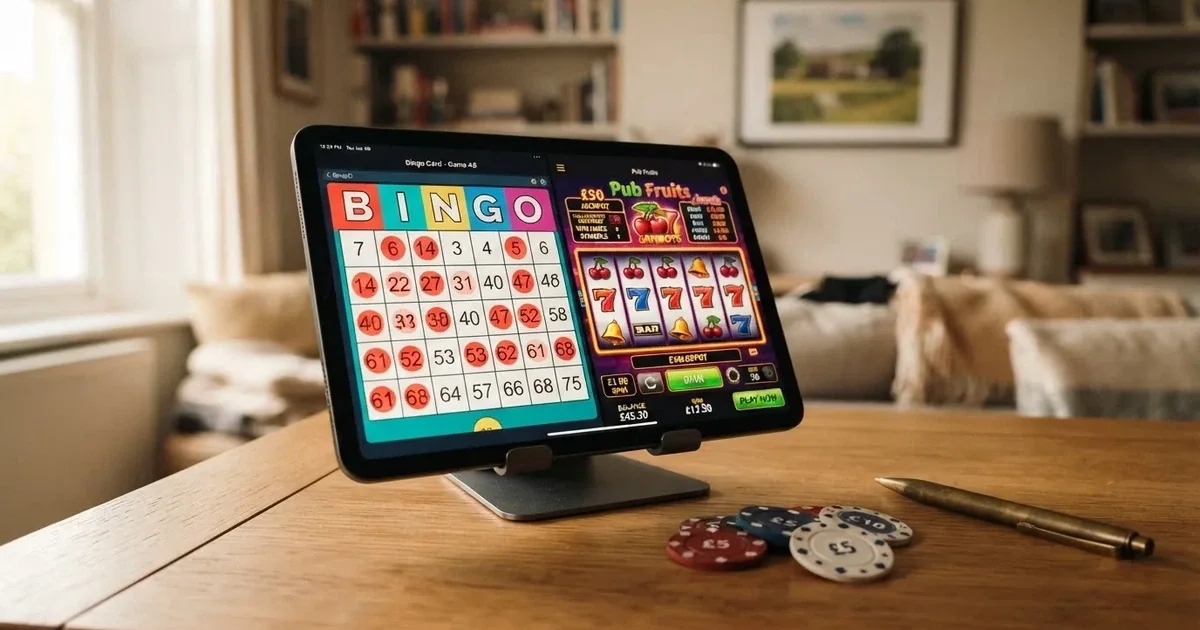
Best bingo sites UK no wagering 2026: what “no wagering” really pays
 Available in GB
Current as of 23 September 2026 and verified against the Gambling Commission’s public register of gambling businesses.
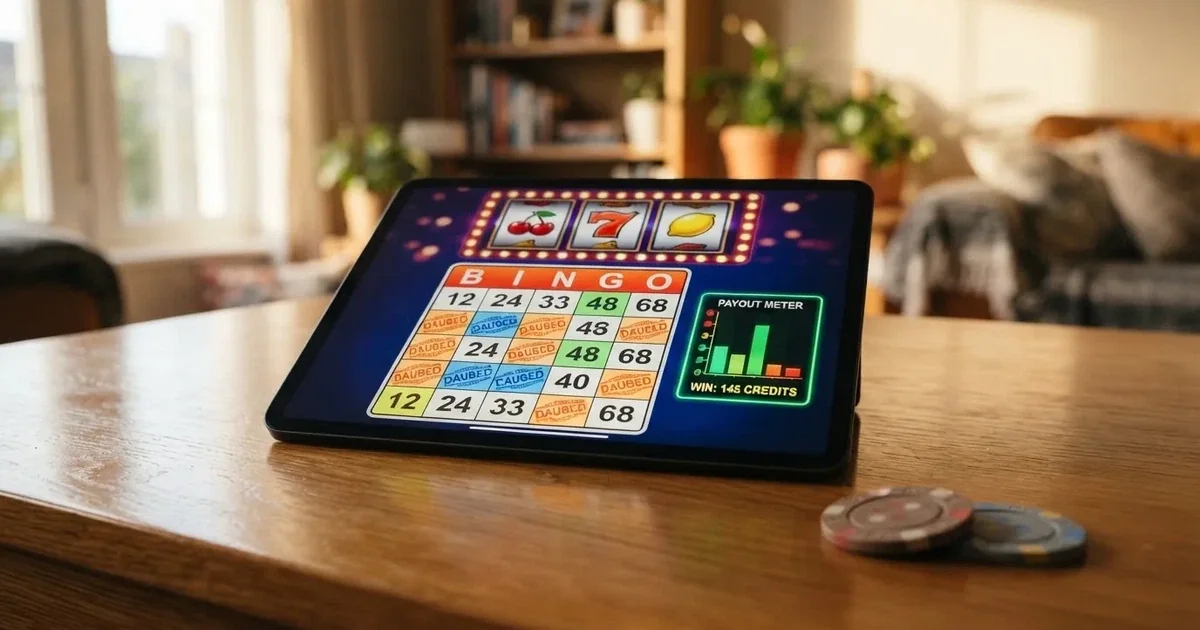
A “no wagering” bonus sounds like the cleanest offer in the room: keep what you win, no playthrough, no terms hiding behind a multiplier. The label is real, but the picture it paints is incomplete. A genuinely wager-free promotion still runs through a Gambling Commission licensee, still checks your name and address before the first deposit, and still hands you ordinary slots spins whose RTP does not change because the bonus attached to them was free. The page below reads what ten UK-licensed bingo and slots brands actually offer, where the new 10x wagering cap lands hardest, and which kind of player each site suits once the marketing is stripped back.
- The ranking at a glance
- What “no wagering” actually means on a UK bingo site
- Where UK bingo and slots sit inside the law
- Paytables, payment tables, and what a no-wagering bonus actually clears
- Responsible gaming on a no-wagering offer
- Payments and payout speed on UK-licensed bingo sites
- Bonuses and free spins: how a no-wagering offer is actually worded
- Mobile and app: bingo and slots on a phone browser
- The games themselves: bingo, slots, and the crash-style titles
- Operator verdicts
- What the data does not say
- Frequently asked questions
The ranking at a glance
The brands below are ten active Gambling Commission remote casino licence holders, taken from the public register rather than from any operator ranking. They are presented in the order research sets, with one line on the licence and one on the register status. “Subject support” — whether the brand markets a no-wagering bingo or slots promotion — is left as a dash where research carries nothing. A dash means “research did not say”, not “the brand has no such offer”, and the verdict line beneath each brand is the page’s own reading of what its licence and register entry imply.
| Brand | Licence holder and GB remote casino licence | Domain status on the register | Subject support |
|---|---|---|---|
| Paddy Power | PPB Games Limited · 039411-R-319335-010 | Active | — |
| kwiff | Eaton Gate Gaming Limited · 044448-R-323408-017 | Active | — |
| Betway | Betway Limited · 039372-R-319367-029 | Active | — |
| bet365 | Hillside (UK Gaming) ENC · 055149-R-331499-004 | Active | — |
| Unibet | Platinum Gaming Limited · 045322-R-324275-019 | Active | — |
| 888casino | 888 UK Limited · 039028-R-319297-014 | Active | — |
| Virgin Games | Gamesys Operations Limited · 038905-R-319430-022 | White label | — |
| Midnite | Dribble Media Limited · 042647-R-321653-022 | Active | — |
| Betfred | Petfre (Gibraltar) Limited · 039544-R-319290-010 | Active | — |
| BetVictor | BV Gaming Limited · 039576-R-319370-028 | Active | — |
A white-label entry means the domain trades under another company’s licence — Virgin Games sits inside Gamesys Operations Limited rather than carrying its own. The licence number matters here because every UK-facing gambling site must hold one, and a missing licence number is the only signal on this page that the brand should not be played at all.
What “no wagering” actually means on a UK bingo site
Wagering requirements used to be the central trick of any online bonus. A £10 bonus with a 40x playthrough meant wagering £400 of bonus money before any of it could be withdrawn, and most players never reached that line. A no-wagering bonus reverses the trick: whatever you win from the bonus is yours to keep, and the operator does not ask for further play on it.

What the label does not say is what sits beside it. Even a wager-free offer runs through the same licensed site, the same age and identity check, the same GAMSTOP registration, the same deposit limits prompt, and the same slot spin rules as any other promotion. The game itself — bingo, an online slot, a crash game — still has its own house edge, and that edge does not move because the bonus was free. A £10 wager-free bonus on a 96% slot still expects to return £9.60 in the long run; it is the marketing copy that is different, not the maths.
Three points shape the rest of this page. First, the bonus’s value is its headline number, not its realised return — the realised return is whatever the attached games pay back over the spins the bonus funds. Second, “no wagering” removes only the playthrough step; everything else about how the offer works stays in force. Third, the same offer at two different brands is not the same offer, because the games you can spend it on, the maximum win cap (if any), and the expiry window are set brand by brand.
Why a no-wagering promotion still costs the house nothing
A wager-free promotion is cheap for an operator to run precisely because it does not have to be generous. The bonus funds are a marketing expense, the spins are played on games the operator already runs, and the player who cashes out is one player among thousands. Where a 40x bonus would cost the house in foregone play, a 0x bonus only costs in games margin. The result is that no-wagering promotions tend to be small in headline value but very clean in what they ask of the player, which is why the term has spread rather than faded.
Where UK bingo and slots sit inside the law
Every brand in the table above holds an active remote casino operating licence issued by the Gambling Commission under the Gambling Act 2005. That is the only test the page applies. A Curaçao, Maltese or Gibraltar licence does not substitute; under the Gambling (Licensing and Advertising) Act 2014 any operator taking customers in Great Britain needs a Commission licence wherever it is based, and providing gambling to people in Great Britain without one is an offence under section 33 of the Act.
The public register is the verification tool. It lists 139 businesses holding an active remote casino operating licence as of 18 September 2026, with 1,065 active and 361 white-label domain entries mapped to those licences. A licence number on the register takes the form account-R-number-suffix, where the leading six digits repeat the licence holder’s account number and the “R” marks a remote licence. Paddy Power’s 039411-R-319335-010, Betway’s 039372-R-319367-029, and bet365’s 055149-R-331499-004 are all visible in that format on the register, and each one can be searched by account number on the Commission’s site.
Three rules from the Act and the Licence Conditions and Codes of Practice (LCCP) shape every bonus attached to a UK-licensed site. Minimum age is 18, with name, address and date of birth verified before the first deposit or any play — that check has been in force since 7 May 2019. Credit cards have been banned for gambling since 14 April 2020, including credit cards routed through e-wallets. Since 19 December 2025 wagering requirements on bonuses are capped at 10x and mixed-product bonuses (a sports bet that unlocks casino spins, for instance) are banned outright.
The 10x cap is the rule that re-prices almost every welcome package in the UK market, and it is the rule the rest of this page leans on hardest. Where a brand used to attach a 35x playthrough to a deposit bonus, it must now either drop that bonus or rewrite it inside the 10x ceiling. The brands that pivot hardest tend to do one of two things: shrink the headline bonus so the same playthrough fits, or drop the playthrough and lean on the smaller headline as the marketing pitch. A genuinely wager-free offer is the second of those two, and it is now a deliberate commercial choice rather than an oversight.
What the 10x cap costs a £25 bonus in real turnover
The calculation is straightforward. A £25 bonus with the new 10x wagering cap means £250 of qualifying turnover before withdrawal — ten times the bonus, no more, no less. Compare that to the pre-cap market, where the same £25 might have carried a 35x playthrough and required £875 of play. The cap does not make the bonus bigger; it caps the worst case. A no-wagering bonus, by definition, requires £0 of qualifying turnover on the bonus itself, which is why “no wagering” still matters in a market where the worst case has just been clipped.
The band the bonus-cost calculation produces runs from £0 turnover on a wager-free offer up to £250 turnover on a £25 bonus at the cap, with the article-language gloss being “how long to clear the bonus” rather than “how much the offer is worth”. That gloss is the ceiling on the conclusion: the figure answers how long, not how much the resulting payout will be.
Paytables, payment tables, and what a no-wagering bonus actually clears
Three facts govern what any bonus — wager-free or otherwise — clears into. The game’s RTP, the stake per spin, and the time a single spin takes. The Gambling Commission set the minimum slot spin time at 2.5 seconds and banned auto-play, so any calculation that uses a faster pace is using a pace the licensed market does not offer.
On a 2.5-second spin cycle, £250 of qualifying turnover at a £0.10 stake-per-spin works out to 2,500 spins. At 2.5 seconds per spin, 2,500 spins take exactly 6,250 seconds, which is 1 hour 44 minutes. The same £250 at a £0.50 stake is 500 spins, which at 2.5 seconds per spin takes 1,250 seconds, or 21 minutes. The stake choice does more work than the bonus size does: a player who bets ten times as much per spin clears the requirement in one tenth of the time, with the same total turnover either way.
This is where the “no wagering” label earns its keep. The same £0 turnover figure at zero wagering means zero qualifying spins, and the player is left only with whatever the free spins or free tickets themselves produce. That is the offer’s realised return, and it is the one figure the page cannot put a number on without naming a specific slot at a specific stake. The conclusion therefore answers how long, not how much: at zero wagering, the time-to-clear is zero, and the realised return is whatever the bonus’s free plays actually pay.
Where the wagering cap meets an ordinary slots session
A £25 bonus at the 10x cap, played at £0.10 a spin on a 96% RTP slot, gives an expected loss of £10 across £250 of turnover — turnover × (1 − RTP) = £250 × 0.04 = £10. That is the bonus’s real cost as a statistical estimate, not a guaranteed outcome. The same arithmetic at a £0.50 stake-per-spin on a 94% slot gives £15 of expected loss on the same £250 turnover, and the player reaches the line in roughly 21 minutes rather than 1 hour 44. The stake and the RTP together move the cost more than the bonus size does.
A no-wagering bonus removes the turnover line and leaves only the spins the bonus itself funds. A £5 no-wagering bonus paid as 50 free spins at £0.10 is 50 spins at the slot’s own RTP; if the slot returns 96%, the expected return is £4.80 against the £5 the bonus nominally cost the operator, and the player walks away with whatever the variance hands them.
Responsible gaming on a no-wagering offer
A wager-free promotion is not a softer form of gambling. The same player-protection rules apply in full. GAMSTOP, the national online self-exclusion scheme, has been a mandatory condition of every online licence since 31 March 2020, with exclusion periods of six months, one year or five years that cannot be cancelled early. A no-wagering bonus cannot be claimed while a GAMSTOP registration is active, and any attempt to register a new account during exclusion is a breach the operator is required to refuse.
Deposit limits are also unaffected by the wagering label. Since 31 October 2025 operators must prompt a customer to set a financial limit before the first deposit; the limit itself is the player’s choice, but the prompt is not. Financial vulnerability checks kick in at £150 of net deposits in a rolling 30-day window, using public-data sources only — credit header data and the like — and have been in force since 28 February 2025. The wider financial risk assessments under the Commission’s consultation have been announced but are not yet in force.
The slot stake limits that came in during 2025 also apply to a wager-free offer. Players aged 25 and over face a £5 maximum stake per game cycle from 9 April 2025; players aged 18 to 24 face a £2 cap from 21 May 2025. The Commission’s reasoning cites the higher average problem gambling score among 18 to 24 year olds, alongside lower disposable income and ongoing neurological development, as the basis for the lower cap. A no-wagering bonus does not move that ceiling.
The support routes sit outside the operator. GamCare runs the National Gambling Helpline; GambleAware funds treatment and education; the Commission’s ADR route is the formal complaints path against a licensed operator. None of these depend on whether the bonus attached to a session was a wager-free one.
Payments and payout speed on UK-licensed bingo sites
A no-wagering bonus changes nothing about how money moves into and out of the account. Credit cards are out, including credit-card-funded e-wallets. Debit cards, bank transfers, and a short list of approved e-wallets carry the deposit; the operator verifies the player’s name and address before the first deposit, and the first withdrawal often takes longer than later ones because that verification has not yet been completed.
The licence and LCCP set the rules of withdrawal. Reverse withdrawals — the old trick of cancelling a payout to keep playing — were banned from 31 October 2021, so a withdrawal request that has been confirmed stays confirmed. Operators must also publish their own target payout times, and those targets are the numbers a player should hold them to. Where a brand markets an “instant” or “same-day” withdrawal, that is a brand commitment, not a Commission rule, and it tends to apply only to e-wallet returns — debit-card withdrawals usually take one to three banking days after approval.
No-deposit bonuses, where the brand credits a small bonus without a deposit, are governed by the same withdrawal rules plus the brand’s own maximum-win cap. The bonus’s wager-free status does not remove the cap; it only removes the playthrough. A £5 no-deposit bonus with a 10x cap on winnings pays out at most £50 in real money; without such a cap, the brand is asking the player to take the variance for nothing in return.
How long a withdrawal actually takes, in plain steps
A withdrawal is a sequence rather than a moment. The player requests the payout from the cashier; the operator runs its internal review, which is where most “pending” delays sit; the payment is released to the chosen method, which then has its own processing time. E-wallets are typically credited within hours of release; debit cards take one to three banking days on top; bank transfers sit somewhere between the two depending on the bank. The first withdrawal on a new account is slower because the verification step runs in parallel.
The Commission’s rules do not fix a target time, but the LCCP does require operators to pay withdrawals without unreasonable delay and to keep customers informed if a payout is held. A pending time longer than 24 hours is unusual on a UK-licensed site; a pending time longer than 72 hours is a complaint the Commission’s ADR route exists to hear.
Bonuses and free spins: how a no-wagering offer is actually worded
A wager-free offer is a real product category in the UK market in 2026, and the brands that run one tend to write it the same way: a small bonus credited on sign-up or first deposit, an explicit statement that winnings are paid in cash, and a short list of eligible games. The labels vary — “wager-free spins”, “real-money spins”, “no playthrough bonus” — but the mechanic is the same. The 10x cap introduced on 19 December 2025 sits behind all of them: it does not create no-wagering offers, but it makes them commercially easier to defend against the alternative of a 10x-played bonus.
What changes brand by brand is what sits beside the label. A wager-free bonus may still carry a maximum win cap; it almost always carries an expiry window, usually seven days from credit; and the games it can be spent on are a short list, often a single slot the operator has picked. None of these conditions is unusual for the UK market, but together they decide what the bonus is worth.
A deposit-gated package — bonus credited only after a qualifying deposit of, say, £10 or £20 — remains the most common shape, because it converts the bonus into a deposit-acquisition cost for the operator. A no-deposit package — bonus credited on account creation with no deposit required — exists and is rarer; the maximum win caps on those are tighter, because the operator is paying a real-money bonus to a player who has not yet staked anything. Either way, the bonus is described qualitatively on this page rather than by an exact value, because the research behind it does not give an exact value, and a number invented for the prose would be a lie about an offer a player might then act on.
The 10x cap, restated against the older market
Before 19 December 2025 a 35x wagering requirement on a £25 bonus meant £875 of qualifying turnover, which at a £0.10 stake-per-spin is 8,750 spins. At 2.5 seconds per spin, 8,750 spins take 21,875 seconds, or roughly 6 hours. After the cap, the same £25 bonus at 10x requires £250 of qualifying turnover, which is 2,500 spins, or about 1 hour 44 minutes. The cap does not erase the requirement; it clips it at roughly one quarter of the worst case. A wager-free bonus at the same stake-per-spin still clears in zero qualifying spins, and that is the cleanest position a player can be in.
Mobile and app: bingo and slots on a phone browser
The Commission’s rules do not distinguish between a desktop browser and a mobile one — a slot spin must take at least 2.5 seconds, auto-play is banned, and the maximum stake rules apply, regardless of device. What changes between desktop and mobile is the user experience: how the bingo lobby loads, how the chat window behaves, how the cashier fits on a small screen, and whether the brand has shipped a dedicated app.
Most UK-licensed brands ship a mobile browser experience that mirrors the desktop lobby and a dedicated app for the largest ones — bet365, Paddy Power, Betway, Betfred, and 888casino all run native apps on the major stores, with the rest running a mobile-first responsive site. A dedicated app is a convenience rather than a licence requirement, and the games library in the browser is usually identical to the one in the app. Bingo chat, which is half the experience of British 90-ball, is generally handled through a custom chat module rather than the phone’s native messaging stack; whether that module works on a tablet browser is one of the easier things to test before committing to a brand.
The slot-spin rules apply to mobile in full. A £5-per-spin cap for over-25s and a £2-per-spin cap for 18-24-year-olds run on the same game cycle regardless of where the spin is initiated. Auto-play, banned on desktop, is also banned on mobile. The 2.5-second minimum spin time is enforced in the game client rather than the device, so a faster device does not produce faster spins.
The games themselves: bingo, slots, and the crash-style titles
British 90-ball bingo is the dominant format on UK-licensed sites. A standard ticket carries 27 spaces in nine columns by three rows, with five numbers and four blanks per row, sold in strips of six covering every number from 1 to 90. The winning patterns are one line, two lines, and a full house of all fifteen numbers on a ticket; the last number called must be part of the winning pattern. The game is the only form of gambling that the Gambling Act 2005 leaves without a specific statutory definition — the Act says only that “bingo means any version of that game, irrespective of by what name it is described”.
Bingo is equal chance gaming under section 8 of the Act. It cannot involve playing against a bank, and the chances of winning must be equally favourable to all participants. The Commission’s own framing cites a 1978 Royal Commission description of bingo as “a lottery played as a game” in which each player receives, for their stake, a set of numbers they have not chosen. A remote bingo game host operating licence lets a software business supply bingo games to other licensed operators, but the licence holder cannot contract directly with customers — only the licensed operator that runs the site does that. Application fees for that licence currently range from £3,168 to £68,765 depending on annual gross gambling yield, rising to £6,711 to £135,357 from 1 October 2026.
Slots attached to the bingo lobby are licensed under the same remote casino licence, and they are the games most no-wagering bonuses are paid in. The slot paytable is what decides the bonus’s realised return. A 96% RTP slot returns £9.60 on every £10 staked in the long run; a 94% slot returns £9.40; a 92% slot returns £9.20. The difference compounds. Across the £250 of qualifying turnover at the 10x cap, the spread between a 96% and a 92% slot is £10 of expected return — the same as the bonus itself.
Crash-style games such as Aviator, developed by Spribe (founded 2018, with Aviator released in 2019), sit in a different category. A multiplier curve rises from 1.00x until the round randomly crashes, and a player must cash out before the crash to win their stake multiplied by the current value. Aviator has reported more than 42 million active users and processes around 350,000 bets per minute across more than 5,000 operators worldwide. Crash games are typically excluded from bonus wagering on UK-licensed sites because their RTP and variance do not fit the slot rules cleanly; whether they count toward a no-wagering bonus depends on the brand’s terms.
A smaller slice of the UK-licensed lobby is baccarat — Punto Banco the dominant variant, where the casino banks the game at all times and both hands are dealt according to fixed drawing rules, so the player makes no strategic decisions. Baccarat’s presence on a bingo-led site is incidental rather than central, and the games that the bulk of no-wagering bonuses are paid in are the slot catalogue, not the table games.
Operator verdicts
Paddy Power
PPB Games Limited holds 039411-R-319335-010, and Paddy Power is listed as an active domain. Paddy Power’s bingo product is a smaller part of a sportsbook-led brand, but the licence covers the full casino and slots vertical, and a no-wagering bonus attached to slots on the same licence is well within the operator’s product set. The brand’s strength on this page is the licence it sits behind — the licence number is long-standing, the operator is established, and the register entry is current.
kwiff
Eaton Gate Gaming Limited holds 044448-R-323408-017, with Kwiff listed as an active domain. kwiff has built its identity around a “surprise” bet mechanic on sports, and the slots and bingo lobby is a secondary product. The licence is current and the register entry is active, but research does not show that the brand markets a wager-free bonus on its bingo or slots product specifically. A player who values the licence over the product is well served; a player shopping for a no-wagering headline will need to read the brand’s own promotions page.
Betway
Betway Limited holds 039372-R-319367-029, with Betway listed as an active domain. Betway runs a full casino and bingo lobby on the same licence, and the operator has shipped a no-wagering bonus in the past on its casino product. The current research does not state whether a wager-free bingo promotion is active at the time of reading, and the absence is reported as absence rather than as a denial. Betway’s strength is the licence and the multi-vertical product, not a specific wager-free headline.
bet365
Hillside (UK Gaming) ENC holds 055149-R-331499-004, with bet365 listed as an active domain. bet365’s bingo product runs alongside its larger sportsbook and casino offering, and the brand has historically attached wagering requirements to its bonuses. The 10x cap has forced the brand to either reduce the wagering or reduce the headline; a no-wagering offer is the second of those two and is plausible, but the research does not state one is active. The brand is one of the better-resourced licensees on the page, with a long-standing register entry and a current licence status.
Unibet
Platinum Gaming Limited holds 045322-R-324275-019, with Unibet listed as an active domain. Unibet’s casino and bingo lobby runs on the same platform as its sportsbook, and the brand has shipped wager-free spins in the past. The current research does not say a wager-free bonus is live at the time of reading, and that gap is left as a gap. The licence is current, and the brand is an established operator that keeps its promotions page updated.
888casino
888 UK Limited holds 039028-R-319297-014, with 888casino listed as an active domain. 888casino runs a slots-led casino rather than a bingo-led one, and the brand has historically been one of the more aggressive marketers of wager-free spins in the UK market. Research does not state a current wager-free bonus attached to a bingo product specifically, and the page does not invent one. The licence is current and the operator is one of the more experienced casino-only brands on the register.
Virgin Games
Gamesys Operations Limited holds 038905-R-319430-022, with Virgin Games listed as a white-label domain. The white-label status means Virgin Games trades under Gamesys’ licence rather than its own, which is a structural fact about how the brand is operated rather than a sign of weakness. Gamesys runs bingo and slots products, and a wager-free offer on either is consistent with the licence. Research does not state a current offer; the absence is reported as absence.
Midnite
Dribble Media Limited holds 042647-R-321653-022, with Midnite listed as an active domain. Midnite is a newer brand relative to the rest of the table, and the licence is correspondingly recent. The brand’s product is sportsbook-led with a slots and casino vertical attached, and the bingo presence is lighter than at the bingo-specialist brands. A no-wagering bonus is plausible on the casino side; the research does not state one is live, and the page does not invent one.
Betfred
Petfre (Gibraltar) Limited holds 039544-R-319290-010, with Betfred listed as an active domain. Betfred’s bingo product is one of the larger UK-facing bingo brands and has historically been a wager-free promoter on certain slot bundles. The 10x cap has tightened the rest of the bonus catalogue, but a wager-free headline is a deliberate commercial choice the brand has made in the past. The licence is current; the register entry is active; the absence of a current offer is a standard status for this brand’s promotions page.
BetVictor
BV Gaming Limited holds 039576-R-319370-028, with Betvictor listed as an active domain. BetVictor runs a full casino and bingo product under one licence, and the brand has shipped wager-free spins in the past on its casino product. The current research does not state a wager-free bingo offer, and the page does not invent one. The licence is current, the brand is established, and the register entry is active.
What the data does not say
Three gaps shape what this page can and cannot do. First, research does not state whether any of the ten brands is currently running a wager-free bonus on its bingo or slots product; the table above leaves that column as a dash rather than inventing a yes or no. Second, the page does not name RTPs for specific slots at specific brands, because the research does not name RTPs, and a slot RTP attached to a brand by guesswork is a number a reader might act on. Third, the 10x cap is a market-wide rule and not a brand-by-brand offer, so any wagering figure this page quotes is the cap or zero, with everything in between a brand’s own choice the page does not have the data to fill in.
The offshore caveat runs through all three. A brand not on this list may still accept UK customers through a Curaçao or Maltese licence, and providing gambling to people in Great Britain without a Commission licence is an offence under section 33 of the Gambling Act 2005. The Commission disrupts illegal sites — cease-and-desist notices, search-engine delisting, payment and hosting referrals — but has no ISP-blocking power. The penalty for the player is the loss of protection: no GAMSTOP coverage from the offshore site, no Commission complaints route, no approved ADR. The 10x cap and the no-wagering label both apply only to UK-licensed brands, because the cap and the licence are the same regulatory product.
Frequently asked questions
What does a no-wagering bonus on a bingo site actually mean?
It means the bonus’s winnings are paid in cash and can be withdrawn without further playthrough. The label removes the wagering requirement only — age and identity checks, GAMSTOP coverage, deposit-limit prompts, slot stake caps, and the underlying game’s RTP all still apply exactly as they would on any other promotion.
Which slots on a bingo site tend to pay out best?
Slots with higher published RTP — typically 96% and above — return more in the long run than those in the 92–94% band, but every individual session is variance, not the long run. A no-wagering bonus does not change a slot’s RTP; it changes only what happens to the winnings once the spin lands.
Is a no-deposit bingo offer still subject to a maximum win cap?
Often yes. A no-deposit bonus is real money paid to a player who has not staked, and most UK-licensed brands cap the winnings from such a bonus at a small multiple of the bonus’s headline value. The cap is set brand by brand and is published in the offer’s terms.
How well does mobile bingo and slots play perform on a phone browser?
Well enough that most UK-licensed brands treat the mobile browser as the primary client. The Commission’s slot rules — the 2.5-second minimum spin, the auto-play ban, the £5 or £2 stake cap — apply in full on mobile, and the bingo chat module is typically a custom component rather than the phone’s native messaging stack.
Are bingo and slots offered on the same licence at a UK site?
Yes. A single remote casino operating licence from the Gambling Commission covers both bingo and slots products, and all ten brands in the table above offer both under the same licence. A remote bingo game host operating licence is a separate software-supply licence and does not by itself let a company contract with customers.
Must a bingo and slots site be Gambling Commission-licensed to offer UK players a no-wagering bonus?
Yes. Under the Gambling (Licensing and Advertising) Act 2014 any operator taking customers in Great Britain needs a Commission licence wherever it is based, and the no-wagering label does not exempt a brand from the requirement. The public register, with 139 active remote casino licence holders and 1,065 active domain entries on 18 September 2026, is the verification tool.
Published by the cardcasinoguide team.