Best bingo casinos in the UK for 2026: what the top ten actually run
 Available in GB
Current as of 23 September 2026 · Verified against the Gambling Commission’s public register of gambling businesses
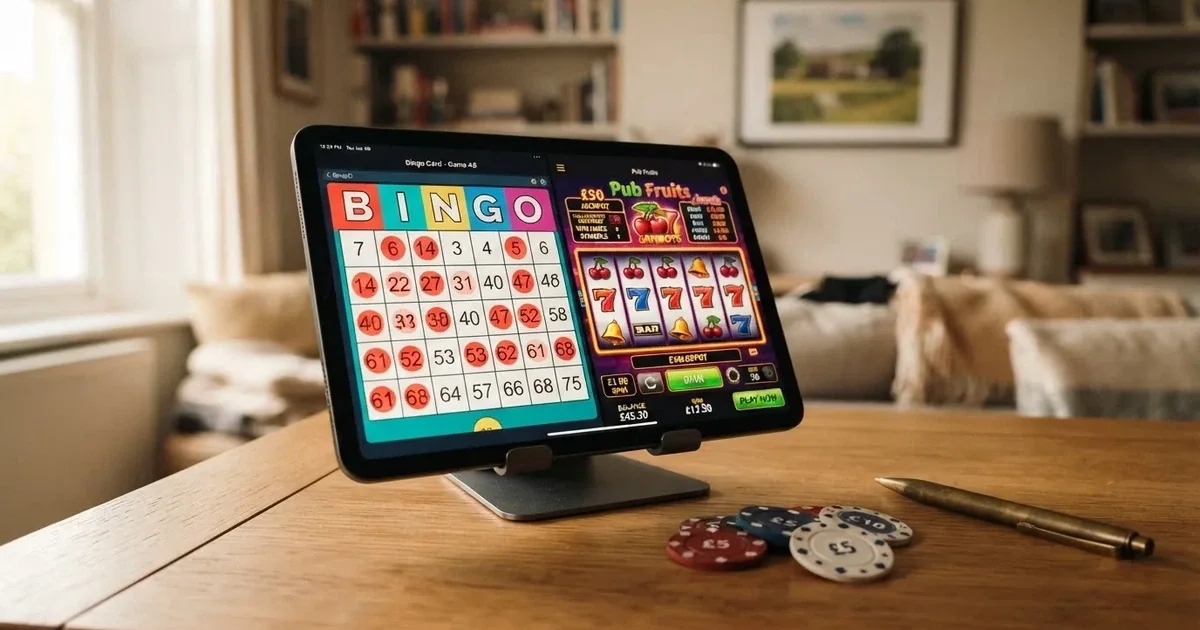
A bingo casino, in plain terms, is a Gambling Commission-licensed site where a 90-ball or 75-ball room sits beside a slot lobby rather than behind a separate tab. The player who walks in for a five-line ticket and stays for a couple of hundred spins is the customer the format was built for, and the licence is the thing that lets the site take a UK deposit in the first place. The ten brands covered below all hold a remote casino operating licence from the Gambling Commission, are listed on the public register as active or white-label domains, and run a bingo room alongside a slot catalogue. Several of them also run crash games and live dealer tables; those sit where the licence allows them, and the bingo room is the part of the offer that gives the site its name on this page.
The order below is set by §6 of the underlying research, not by who pays the most or who shouts loudest. Every brand is taken at its register entry: account number, licence number, the operating company behind the brand, and the domain status (Active or White Label) the register assigns to it. What each site then does with the licence — how heavy the bonus is, how fast it pays, whether it has a working app — is what the rest of the page works through.
- How the ten compare at a glance
- The legal frame every UK bingo casino sits inside
- What a Commission licence actually protects
- Responsible gambling at a bingo casino
- Payments and payout speed at a UK bingo site
- Bonuses and free spins at a bingo-and-slots site
- Mobile and app play
- Bingo-linked slots, crash games and live tables
- How each of the ten brands compares on its own terms
- How the offer translates into a play session
- The bottom line on choosing
- Frequently asked questions about UK bingo casinos
How the ten compare at a glance
The table below carries five columns of register data and one column for extra notes. Licence holder and remote casino licence come straight from the Gambling Commission’s public register as it stood on 18 September 2026. Domain status tells a reader whether a brand runs its own licence (Active) or trades under another company’s licence (White Label).

| Brand | Licence holder (GB account) | Remote casino licence | Domain status | Subject coverage |
|---|---|---|---|---|
| Paddy Power | PPB Games Limited (39411) | 039411-R-319335-010 | Active | — |
| kwiff | Eaton Gate Gaming Limited (44448) | 044448-R-323408-017 | Active | — |
| Betway | Betway Limited (39372) | 039372-R-319367-029 | Active | — |
| bet365 | Hillside (UK Gaming) ENC (55149) | 055149-R-331499-004 | Active | — |
| Unibet | Platinum Gaming Limited (45322) | 045322-R-324275-019 | Active | — |
| 888casino | 888 UK Limited (39028) | 039028-R-319297-014 | Active | — |
| Virgin Games | Gamesys Operations Limited (38905) | 038905-R-319430-022 | White Label | — |
| Midnite | Dribble Media Limited (42647) | 042647-R-321653-022 | Active | — |
| Betfred | Petfre (Gibraltar) Limited (39544) | 039544-R-319290-010 | Active | — |
| BetVictor | BV Gaming Limited (39576) | 039576-R-319370-028 | Active | — |
The White Label entry for Virgin Games is the table’s only structural oddity, and it is worth pausing on: a white-label domain trades under another company’s licence, so the player who signs up at Virgin Games is in fact a customer of Gamesys Operations Limited. Nine of the ten run their own licence. The remaining column is deliberately empty: no brand in this set has research-backed coverage of the bingo-specific subject, so the column does no work and stays out of the comparison it pretends to make.
The rest of the page works through what those columns cannot say — the legality behind every licence number, the responsible-gambling framework the licence binds the operator to, the payments and bonus rules that govern what a player actually gets, and the games the licences cover.
The legal frame every UK bingo casino sits inside
The Gambling Commission is the single regulator for online gambling in Great Britain. Online casino is licensable, the public register is the test of whether a brand holds a licence, and a Curaçao, Maltese or Gibraltar authorisation is not a substitute for it. Since the Gambling (Licensing and Advertising) Act 2014 any operator taking customers in Great Britain needs a Commission licence wherever the operator itself is based.

A remote casino operating licence number on the register takes a fixed shape: six digits for the licence account, an R marking it as remote, then a number and a suffix. Paddy Power’s is 039411-R-319335-010; the leading six digits, 039411, are the same as PPB Games Limited’s account number on the register, and the R is what flags the licence as one issued for online play. The register can be searched online or downloaded as a CSV or Excel file; on 18 September 2026 it held 139 businesses holding an active remote casino operating licence and 1065 active domain entries alongside 361 white-label ones.
Bingo has its own statutory treatment. The Gambling Act 2005 leaves bingo without a specific definition, stating only that “bingo means any version of that game, irrespective of by what name it is described”. Section 8 of the same Act requires bingo to be equal chance gaming — it cannot be played against a bank, and the chances of winning must be equally favourable to every participant. A remote bingo game host operating licence lets a software business provide bingo facilities by website or app, but the licence holder cannot contract directly with players; it supplies other licensed operators. Application fees for that host licence currently range from £3,168 to £68,765 depending on annual gross gambling yield, rising to £6,711 to £135,357 from 1 October 2026.
A bingo site that takes a UK deposit without a Commission licence commits an offence under section 33 of the Gambling Act 2005. The Commission disrupts such sites — cease-and-desist notices, search-engine delisting, payment and hosting referrals — but has no power to block them at ISP level. The penalty never lands on the player; what the player loses on an unlicensed site is the protection the licence buys, which is the subject of the next section.
What a Commission licence actually protects
The licence is the entry point, but the protection is the framework attached to it. Three layers sit between the player and the slot reel.
The first is identity. Since 7 May 2019, name, address and date of birth are verified before the first deposit or any play. Anonymous play is not possible at a licensed site, and a no-account or pay-and-play pitch from an unlicensed operator is the cue to leave.
The second is the safer-by-design rulebook the Commission has layered in since 2021. Online slot spin speeds may not be faster than 2.5 seconds, and that minimum is fixed regardless of what the game studio would prefer. Auto-play is permanently banned after Commission research indicated the feature caused players to lose track of their activity. Since 31 October 2021 operators have been barred from letting consumers re-gamble funds they had already requested to withdraw — the reverse-withdrawal ban that closed a long-standing loophole. Losses disguised as wins — a slot celebrating a payout smaller than the stake — are banned outright. Slots also carry a stake-per-game-cycle ceiling: £5 for players aged 25 and over since 9 April 2025, £2 for 18-to-24-year-olds since 21 May 2025, with the lower limit a response to the higher average problem gambling score among under-25s alongside lower disposable income and ongoing neurological development.
The third layer is the financial-vulnerability check the Commission brought in from 28 February 2025. Once a player has deposited £150 net in a rolling 30 days, the operator must run a vulnerability check using public data only. Broader financial risk assessments have been announced but were not in force at the time of the register snapshot. There is no state-set deposit or loss ceiling, but operators must prompt every customer to set a financial limit before the first deposit — a rule in force since 31 October 2025. Credit cards have been banned for gambling since 14 April 2020, including credit cards routed through e-wallets.
Responsible gambling at a bingo casino
Every online licence issued by the Gambling Commission carries GAMSTOP participation as a mandatory condition; the rule has been in force since 31 March 2020. A player who registers with GAMSTOP chooses a self-exclusion period of six months, one year or five years, and the period cannot be cancelled early. Every GB-licensed operator is bound to honour it. Bingo play falls inside the scheme exactly as slot play does, because the trigger is the operator’s licence type rather than the game played.
Two further protection routes sit beside the operator. GamCare runs the National Gambling Helpline; GambleAware funds treatment and research across Great Britain. Both are free, both are confidential, and either is the right first call for a player who feels the gambling is getting away from them. A player who wants to complain about a licensed operator has a Commission complaints route and an approved alternative dispute resolution (ADR) provider; an unlicensed operator offers neither.
Payments and payout speed at a UK bingo site
A bingo win is paid the same way a slot win is paid: by the operator’s standard withdrawal route, under the same operator-side controls. The credit-card ban covers deposit and any top-up of a gambling balance, including e-wallet top-ups funded by a credit card. The reverse-withdrawal ban means that once a player has asked for a withdrawal, the funds leave the playable balance and cannot be re-gambled.
Payout speed varies by operator and by method. E-wallet withdrawals are typically the fastest, bank transfers the slowest; the operator must run the financial vulnerability check at the £150 net deposit threshold before the first withdrawal above the trigger is released. The Commission does not set a payout-time ceiling, so the time a player waits is set by the operator’s own processing window plus the payment rail’s settlement time. A player who needs the same speed for a bingo win as for a slot win will get it, because the route is the same.
Three payment-side caveats matter for this market specifically. The first is that a UK-licensed site will not accept a credit card, and an offer that pitches a credit-card deposit as a feature is pitching against the law. The second is that the wagering cap discussed in the next section applies to the bonus, not to the deposit; a deposit without a bonus carries no playthrough requirement. The third is that an offshore site with no Commission licence offers none of these protections — no GAMSTOP, no ADR, no vulnerability-check trigger — and a payout that arrives is the only thing the player gets.
Bonuses and free spins at a bingo-and-slots site
Bonuses on UK bingo-and-slots sites took their present shape on 19 December 2025. The wagering cap is 10x: a bonus carries at most ten times its value in required turnover before the balance can be withdrawn, and mixed-product bonuses — the long-running “bet on sport, get casino spins” pattern — are banned. The cap binds every operator with a remote casino licence, including the ten reviewed here.
A worked example puts the cap in plain language. Take a £50 slots bonus carrying the maximum 10x wagering factor. The required turnover is £50 × 10 = £500. At a stake of £1 per spin, that is 500 spins. At the Gambling Commission’s 2.5-second minimum spin interval, 500 spins × 2.5 seconds = 1,250 seconds, or roughly 21 minutes of continuous slot play. At a 20p stake, the same £500 of turnover takes 2,500 spins, or about 1 hour 44 minutes. The same bonus staked at the £5 maximum for an over-25 player takes 100 spins and roughly 4 minutes 10 seconds. The cap fixes the multiple; the time depends on what the player stakes per spin and how long the spins take. None of these is a forecast of what a player will actually win or lose; the spin outcome is set by the game’s return-to-player, which is what the next section turns to.
For a player working through a £25 bingo bonus with a 4x wagering factor (a typical bingo-side figure), turnover is £100. At 25p a ticket, that buys 400 tickets. The 10x cap does not bind on the bingo side because bingo bonuses are not slot bonuses; the cap is the ceiling, not the floor, and bingo carries its own lower wagering factors as a rule. The thing the rule kills is the 35x and 50x offers that used to load the bingo-and-slots welcome page: those offers are not legal at a UK-licensed site as of 19 December 2025, and any pitch that still names one is either offshore or out of date.
Free spins, where the operator offers them, work the same way. A 10x cap on the bonus they sit inside means a £10 spin bundle with winnings treated as bonus money takes £100 of turnover to clear, regardless of how many individual spins the bundle contains. A free-spin offer with no playthrough on the winnings is rarer and more valuable, but the operator’s terms will say which kind it is; the player who assumes the rarer kind without checking is the player the wagering terms were written for.
Mobile and app play
A bingo casino app is, in practice, the brand’s main site wrapped in a native shell: the same licence, the same games catalogue, the same wallet. The Commission’s Remote Technical Standards cover both browser-based and app-based delivery, and there is no separate licence for an app. The differences that matter for a player are loading time on a phone, how the bingo room handles a dropped connection mid-ticket, and how quickly a slot lobby scrolls on a smaller screen.
The Commission does not certify apps; it certifies the operator. The app stores do not certify gambling apps in the way they vet a banking app, and an app downloaded from outside the official stores is the surest sign of an unlicensed operator. A player who values the convenience of a mobile room will find it at most of the ten sites below; a player who needs to play without installing anything will find a browser-only site at the same ten.
Dropout handling is where bingo apps diverge from slot apps. A 90-ball ticket bought before a connection drop is, by the rules of the room, a ticket the player has paid for: the operator’s server is the source of truth on the numbers drawn, and a reconnection simply re-syncs the ticket state. A slot spin in flight at the moment of dropout is resolved by the operator’s server as a completed spin or a voided spin according to its own logging. The player who has not been told which rule applies is the player who should ask before staking real money on a flaky connection.
Bingo-linked slots, crash games and live tables
The slot lobby of a UK bingo casino is a slots lobby in its own right. The bingo-linked slots — titles that put a bingo card on the reels — run on the same random-number generator as any other online slot, with the same 2.5-second minimum spin time, the same stake ceiling, the same return-to-player published in the game’s help file. A player who treats a bingo-linked slot as a softer version of bingo is mistaken about the maths: the game has a house edge, the edge is built into the return-to-player, and the bingo framing is a presentational choice rather than a structural one.
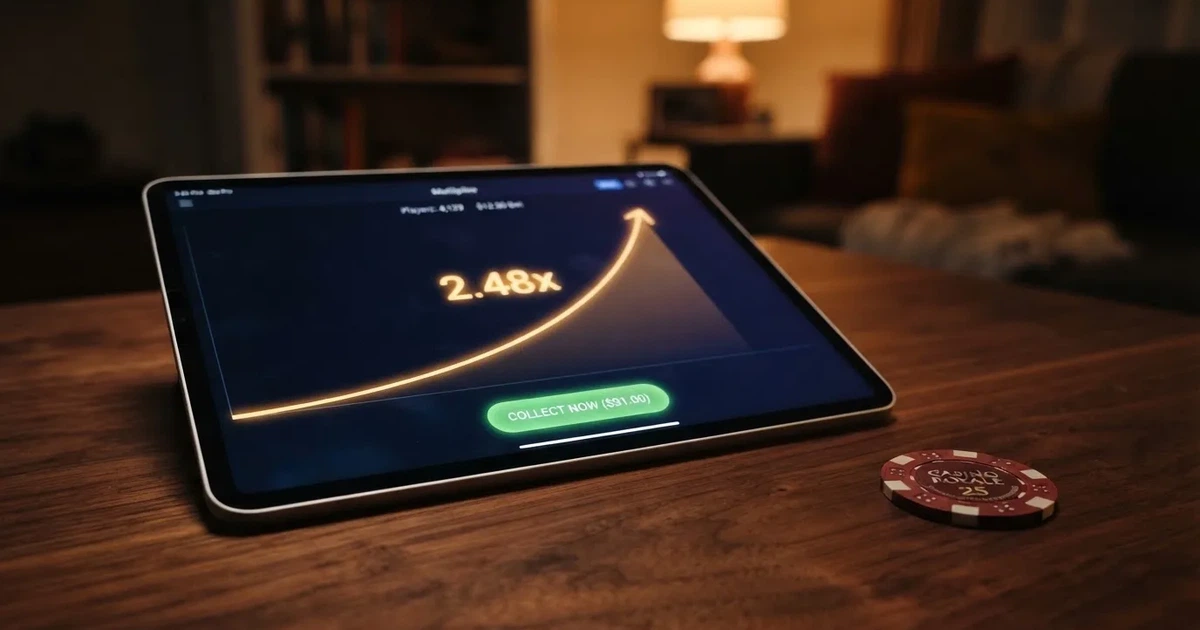
Crash games sit at the edge of the slot lobby. Aviator, developed by Spribe (a studio founded in 2018) and released in 2019, is the reference crash title: a multiplier curve rises from 1.00x until the round randomly crashes, and the player must cash out before the crash to win the stake multiplied by the current value. Spribe has reported more than 42 million active users for Aviator and around 350,000 bets per minute across more than 5,000 operators worldwide. The maths is the same as any other multiplayer game with a server-driven random event: the cash-out multiplier is decided by a random outcome the player cannot predict, and the longer a player waits the higher the payout — and the more likely the round is to crash first.
Baccarat sits in the live-dealer section. The modern Punto Banco variant, developed in Havana during the 1940s, is the form most sites run today: the casino banks the game at all times and both hands are dealt out according to fixed drawing rules, so the player makes no strategic decision. Chemin de Fer, the variant popular in France, gives players strategic choices and an element of skill — but a UK-licensed live casino runs Punto Banco far more often than Chemin de Fer. The origins of the game are disputed: some accounts trace it to nineteenth-century France, others to Italian soldiers who introduced a version at the end of the fifteenth century.
British 90-ball bingo, the format that gives most of the bingo rooms below their content, has a fixed shape. A standard ticket contains 27 spaces in nine columns by three rows, with five numbers and four blanks per row. Tickets are sold in strips of six covering every number from 1 to 90. Winning patterns are one line, two lines or a full house of all fifteen numbers on the ticket, with the last number called required to be part of the winning pattern. The game’s lineage runs from the Italian lottery Il Gioco del Lotto d’Italia around 1530, through Le Lotto in France and into Great Britain in the eighteenth century. Edwin S. Lowe patented the modern bingo card design in 1942, after the modern form had emerged at carnivals and fairs in the 1920s under Hugh J. Ward. The Betting and Gaming Act 1960 took effect on 1 January 1961 and legalised large cash prizes for bingo in Great Britain, sparking the rapid expansion of the dedicated bingo halls — many of them run by Mecca Bingo — that defined the high street for the next three decades.
How each of the ten brands compares on its own terms
Paddy Power
Paddy Power runs under PPB Games Limited (account 39411) on the Gambling Commission’s register, with remote casino operating licence 039411-R-319335-010. The domain Paddy Power is listed as an active domain against the licence. The brand sits in a wide gambling group with a sportsbook in the same wrapper, and the bingo room is one tab among several rather than the centre of the site.
A player who wants bingo as a side activity while a sports bet settles has the right shape here. A player who wants a bingo-first lobby with the slots clearly secondary might find the lobby layout less intuitive.
kwiff
kwiff is operated by Eaton Gate Gaming Limited (account 44448) on licence 044448-R-323408-017, and the kwiff brand is an active entry on the register. The brand is a smaller one than the bookmaker-led names around it and has built its identity around surprise mechanics rather than the conventional welcome offer.
The pitch is novelty; whether the surprise mechanics survive a long session is the question a returning player answers for themselves. A player who values a quieter lobby with fewer cross-sells from the sportsbook will find this an easier site to use than the larger names.
Betway
Betway Limited (account 39372) holds the licence 039372-R-319367-029 with Betway as an active domain. Betway’s bingo and slots sit inside the wider Betway sports and casino brand, and the player who already has a Betway sports account finds the casino games reachable from the same wallet.
A player who wants everything in one balance — sports, casino, bingo — has the right fit. If you are looking for bingo to be the primary game, you may prefer a more focused platform.
bet365
bet365 is the largest brand in this list by turnover and operates under Hillside (UK Gaming) ENC (account 55149) on licence 055149-R-331499-004, with Bet365 listed as an active domain. The bingo room sits beside one of the deepest slot and live-dealer catalogues a UK-licensed operator runs, and the same wallet moves between formats.
A player who wants the widest game range under one licence and a payments and support operation built for high volume has the right fit here. For a more intimate bingo experience, look toward brands that prioritize that game’s community feel.
Unibet
Unibet runs under Platinum Gaming Limited (account 45322) on licence 045322-R-324275-019, with unibet.co.uk as an active domain. Unibet’s bingo, casino and sportsbook sit together, and the brand carries a stronger European gaming-group pedigree than the UK-only names.
A player who likes a casino product shaped for a Nordic and continental European audience will find the lobby familiar. A player who prefers the UK-only brands’ narrower, more locally pitched product will find this site does things its own way.
888casino
888 UK Limited (account 39028) holds the licence 039028-R-319297-014 and 888casino is an active domain. 888’s bingo sits inside its casino brand; the slot catalogue is the centre of the product and the bingo rooms are a section rather than a destination.
A player who came for the slots and wants bingo available without leaving the site has the right shape here. A player who wants bingo as the headline will find the lobby laid out for someone else’s priorities.
Virgin Games
Virgin Games is the table’s only white-label entry: Gamesys Operations Limited (account 38905) holds licence 038905-R-319430-022 and Virgin Games is listed as a white-label domain of that account. A white-label site trades under the licence holder’s authorisation, so a player signing up at Virgin Games is, in regulatory terms, a Gamesys customer; the brand is a marketing wrapper around the Gamesys product.
A player who values the Virgin brand and is comfortable with the white-label arrangement has the right fit. A player who wants the operator to be the same company as the licence holder should look at one of the nine Active entries.
Midnite
Midnite runs under Dribble Media Limited (account 42647) on licence 042647-R-321653-022, and Midnite is an active domain. Midnite launched as a sportsbook-led product and has expanded into casino and bingo; the bingo room is part of a wider product rather than the centre of it.
A player who came from the sportsbook side and wants bingo and slots without opening a second account has the right fit here. For a player prioritizing a bingo-first experience, the site’s layout may prioritize sportsbook features over the bingo lobby.
Betfred
Betfred is operated by Petfre (Gibraltar) Limited (account 39544) on licence 039544-R-319290-010, with Betfred listed as an active domain. Betfred is the largest UK retail bookmaker and the online operation carries the weight of the high-street brand; the bingo room is a substantial product with a long history under the Betfred name.
A player who values a UK heritage brand with retail roots has the right fit. A player who wants a digital-first product may find the site shaped by the parent company’s history rather than by online-native design instincts.
BetVictor
BetVictor runs under BV Gaming Limited (account 39576) on licence 039576-R-319370-028, with BetVictor listed as an active domain. The brand is bookmaker-rooted and the casino and bingo products sit alongside the sportsbook; the bingo room is a competent product rather than a flagship one.
A player who wants a long-standing UK bookmaker’s casino and bingo products in one balance has the right fit. A player who wants bingo as the headline product will find it present but not central.
How the offer translates into a play session
The arithmetic below is the only calculation the regulator’s rules require. The bonus side carries the 10x cap discussed above; the play-time side is set by the Commission’s 2.5-second minimum spin interval.
A £25 slots bonus at the maximum 10x wagering factor requires £250 of turnover. At a £1 stake per spin, that is 250 spins, or roughly 10 minutes 25 seconds of continuous play. At a 20p stake, the same bonus takes 1,250 spins, or about 52 minutes. At the £5 maximum stake for an over-25 player, it takes 50 spins, or about 2 minutes 5 seconds.
The same bonus staked as a bingo side at a 4x wagering factor requires £100 of turnover. At 25p a ticket, that buys 400 tickets; at 50p a ticket, 200 tickets; at £1 a ticket, 100 tickets. Bingo tickets do not carry a fixed time interval the way slot spins do, so the time to clear the bonus depends on how often the player buys a strip.
The band the spec asks for runs across these three stake points. A £25 slots bonus clears between 50 spins and 1,250 spins depending on stake, which is between about 2 minutes and 52 minutes of play. The bonus’s real cost to the player is the slots’ house edge applied across that turnover: at a 96% return-to-player, the expected loss on £250 of wagering is £10. The cap puts a ceiling on the multiple; it does not change the edge built into the game itself.
The bottom line on choosing
A player who wants the widest game range under one licence and a payments operation built for high volume has the clearest fit at bet365. A player who values a UK heritage brand with retail roots fits at Betfred. A player who came for the sportsbook and wants casino and bingo in the same wallet has a working fit at Paddy Power, Betway, bet365, Unibet, Midnite or BetVictor depending on which sportsbook they already use. A player who wants a casino-first site with bingo given equal weight has the clearest fit at 888casino. A player who wants novelty mechanics over a conventional welcome offer fits at kwiff. A player who values the Virgin brand and is comfortable with the white-label arrangement fits at Virgin Games.
The licence is the constant; every site above holds one, every site is bound by GAMSTOP, every site runs under the same wagering cap and the same spin-speed floor. The differences are in the catalogue and in how the brand lays out the lobby, not in the regulatory floor under it.
Frequently asked questions about UK bingo casinos
What is the difference between a bingo room and a bingo-linked slot?
A bingo room runs the British 90-ball or 75-ball format with tickets, called numbers and a winning pattern; a bingo-linked slot is a standard online slot game that puts a bingo card on the reels and runs on a random-number generator. The first is equal chance gaming under section 8 of the Gambling Act 2005; the second carries a house edge set by the game’s return-to-player.
Are there bingo slots available with no deposit required to try?
A UK-licensed bingo casino will verify name, address and date of birth before any play, so fully anonymous no-deposit play is not possible at a licensed site. Where an operator offers a no-deposit bonus the identity check still applies; the offer simply removes the cash deposit from the entry requirement.
What wagering terms usually apply to a bingo site’s slots bonus?
Since 19 December 2025 the wagering requirement on any UK-licensed casino bonus is capped at 10x the bonus amount, and mixed-product bonuses are banned. Bingo bonuses typically carry lower factors than slot bonuses as a matter of practice, but the 10x ceiling applies to any casino bonus the operator runs.
Is there a dedicated app for bingo casinos, or only a browser site?
Both are common. A Commission-licensed operator’s mobile app is the same product as its browser site under the same licence and Remote Technical Standards; there is no separate app licence. An app downloaded from outside the official stores is the surest sign of an unlicensed operator.
How is a bingo casino’s payout speed compared with a standard slots site?
The payout route is the same: the operator processes the withdrawal through its payment rail. E-wallet withdrawals are typically the fastest, bank transfers the slowest. The Commission sets no payout-time ceiling, and the operator’s own processing window plus the payment rail’s settlement time is what the player waits.
Must a bingo casino be licensed by the Gambling Commission to accept UK players?
Yes. Any operator taking customers in Great Britain needs a Commission licence under the Gambling (Licensing and Advertising) Act 2014, regardless of where the operator itself is based. A Curaçao, Maltese or Gibraltar licence is not a substitute, and a Commission licence is the only route to GAMSTOP self-exclusion and the Commission’s complaints process.
Prepared by the cardcasinoguide editorial staff.