Best foreign casinos for UK players in 2026: where the Gambling Commission line falls
 Available in GB
Current as of 23 September 2026 · checked against the Gambling Commission’s public register of gambling businesses.

The phrase “foreign casino for UK players” looks like a market question. It is, mostly, a legal one. A site can run from Malta, Curaçao, Gibraltar or anywhere else and still take pounds from a customer in Manchester, but only one document lets it do that lawfully: a remote casino operating licence issued by the Gambling Commission and currently active on the Commission’s public register. Without that entry, every other licence the operator carries is a foreign permission for a foreign market, and the protections a UK player is used to — GAMSTOP self-exclusion, £5 and £2 stake caps, the 10x wagering ceiling, financial vulnerability checks, the Commission’s complaints route — do not travel with the deposit.
The ten brands set out below all hold that licence, and all of them are British operations in the legal sense even when their parent company sits abroad. Their pages look like a “foreign casino” page in casual speech; under the Gambling Act 2005 they are not. A reader who arrives here looking for offshore sites, or for a route around the GB regime, will not find one on this list — because the only honest answer to that question is to explain what the regime actually does, what leaving it costs, and which licensed brand each kind of player is most likely to settle on.
- What the Gambling Commission’s public register actually lists
- How “foreign” tends to be used, and what it usually means
- The licensed brands, side by side
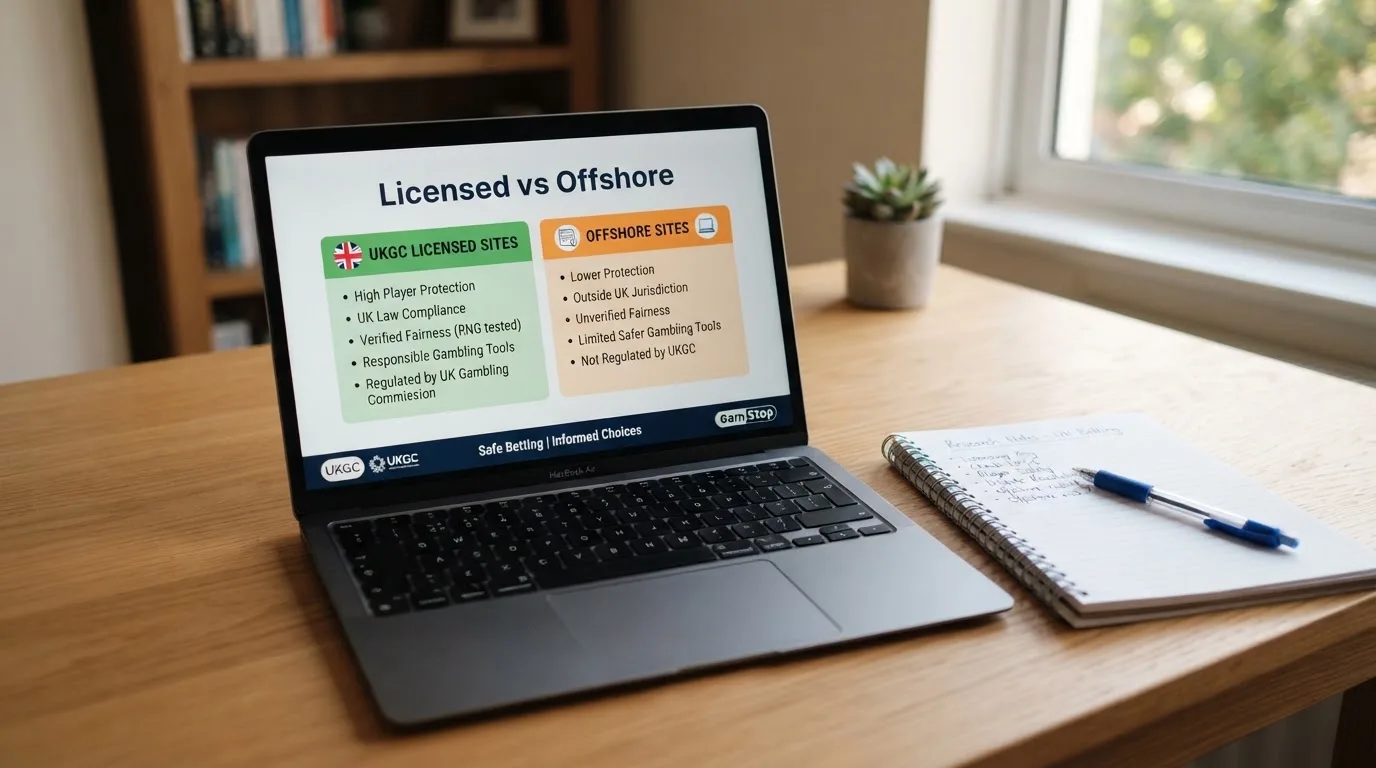
- What a UK player gives up on a site without a Gambling Commission licence
- The stake and wagering framework a licensed site works inside
- Payments and bonus mechanics at GB-licensed sites
- Self-exclusion, stake limits and the things a licensed site cannot opt out of
- Offshore brands and what the regulator does about them
- Reading an offer for the protections it carries, not the headline it opens with
- Unibet (unibet.co.uk): the longest-running GB-licensed brand on this list
- Betfair: the exchange heritage and the casino layer
- Sky Vegas: the broadcast-bundled casino
- MrQ: the small-licence-holder brand
- Betway: the multi-vertical sports and casino brand
- PokerStars: the poker-first brand with a casino layer
- Paddy Power: the share-licence brand with the bigger retail footprint
- Ladbrokes: the high-street brand under LC International
- BetVictor: the family-owned brand with a long GB history
- Betfred: the Gibraltar-incorporated, GB-licensed brand
- Picking a brand from this list
- Responsible gambling on a GB-licensed site
- The tax picture and what it means for the player
- Where to confirm any of this
- Frequently asked questions about foreign casinos for UK players
What the Gambling Commission’s public register actually lists
The Commission’s public register is the whole test of whether a brand is licensed to take remote casino play from Great Britain. On 18 September 2026 it listed 139 businesses holding an active remote casino operating licence, each one searchable online and downloadable as a CSV or Excel file. A licence number on that register follows a fixed shape: Account Number-R-Licence Number-Suffix, where the leading six digits repeat the licence holder’s account number and the R marks a remote (online) licence. Memorising the format matters less than knowing it exists: anyone can paste a licence number into the register’s search box and see, in seconds, whether a brand they have been told is “UK licensed” actually is.
The same register holds a separate domain list — every website address tied back to the licence account that runs it, with a status of Active, Inactive or White Label. On the same snapshot date the domain list held 1,065 active entries and a further 361 white-label entries. A white-label site is one that trades under another company’s licence rather than its own, and the register names the licence holder behind it. That detail catches out a reader who judges a brand by its homepage: the company whose logo sits at the top of the site is not always the company that answers to the Commission if something goes wrong.
How “foreign” tends to be used, and what it usually means
In ordinary gambling vocabulary, “foreign casino” usually means one of three things: a brand whose licence is issued somewhere other than the UK; a brand run by a company incorporated outside Britain; or a brand that markets itself from a non-UK domain. None of those is the test the regulator applies. Under the Gambling (Licensing and Advertising) Act 2014, any operator taking customers in Great Britain needs a Commission licence regardless of where it is based. A Curaçao or Maltese licence is a foreign permission for a foreign market. It is not a substitute, and treating it like one is the error at the centre of most “foreign casino” pages online.

Two related confusions are worth naming once. The first is between a brand’s domain and its licence: a .com address tells the reader nothing about who licensed the site, and the Commission’s register — not the URL bar — settles the question. The second is between parent company and licence holder. Betfair and Paddy Power both sit under PPB Games Limited. Ladbrokes sits under LC International Limited. A reader who treats these as ten independent operators is reading the register twice: once at brand level, once at licence-account level, and the second reading is the one that holds.
The licensed brands, side by side
The table below covers the ten brands carried in §6 of the research, each one cross-checked against the Gambling Commission’s public register as of 18 September 2026. The Subject support column is left blank: research does not carry a foreign-licence attribute for any of them, because all ten are GB-licensed under their own remote casino operating licence, and the column exists to mark the brands research does not describe on that axis. The reader should treat every entry here as a licensed UK remote casino, not as a foreign site.
| Brand | Licence holder and GB remote casino licence | Domain status on the register | Subject support |
|---|---|---|---|
| Unibet | Platinum Gaming Limited · 045322-R-324275-019 | Active | — |
| Betfair | PPB Games Limited · 039411-R-319335-010 | Active | — |
| Sky Vegas | Bonne Terre Gaming Limited · 065519-R-339675-002 | Active | — |
| MrQ | Tek Fox Ltd · 060629-R-337532-004 | Active | — |
| Betway | Betway Limited · 039372-R-319367-029 | Active | — |
| PokerStars | Stars Interactive Limited · 039108-R-319334-026 | Active | — |
| Paddy Power | PPB Games Limited · 039411-R-319335-010 | Active | — |
| Ladbrokes | LC International Limited · 054743-R-330863-014 | Active | — |
| BetVictor | BV Gaming Limited · 039576-R-319370-028 | Active | — |
| Betfred | Petfre (Gibraltar) Limited · 039544-R-319290-010 | Active | — |
Two patterns stand out from the register rather than from any marketing claim. First, eight of the ten brands are listed under UK-incorporated licence holders, with Betfred the clearest counter-example: Petfre (Gibraltar) Limited is a Gibraltar company, and it is on the GB register because the Gambling (Licensing and Advertising) Act 2014 removed the location exemption. The brand reads as offshore; the licence is British. Second, Betfair and Paddy Power share a licence number, which means the same Commission file answers for both, and a complaint about one is a complaint the same team handles for the other. Treating them as ten competing brands overstates the spread on this page.
What a UK player gives up on a site without a Gambling Commission licence
The honest reading of an unlicensed site is not that it is illegal in a vacuum; it is that the player is the one who loses when something goes wrong. Section 33 of the Gambling Act 2005 makes it an offence to provide gambling to people in Great Britain without a Commission licence, and the Commission’s enforcement tools are aimed at the operator: cease-and-desist notices, payment and hosting referrals, search-engine delisting. They do not include ISP blocking, and the penalty is not aimed at the player who placed the bet. What the player loses is the framework around the bet.
That framework has weight. Every GB-licensed online operator must take part in GAMSTOP, the national online self-exclusion scheme, which offers six-month, one-year or five-year exclusion periods that cannot be cancelled early. A player who has self-excluded because a session ran away from them gets no second chance on an offshore site that does not subscribe to the scheme, and the offshore site has no obligation to honour the exclusion in the first place. The credit-card ban, in force since 14 April 2020, applies at GB-licensed sites but not at unlicensed ones, which means an offshore site can still take the funding method a UK player has been barred from using elsewhere. The 10x wagering cap, the £5 and £2 slot stake limits, the financial vulnerability check at £150 net deposits in a rolling 30 days, the ban on mixed-product bonuses — every one of these is a GB-licence condition, not a universal feature of online play, and the offshore site is under no duty to mirror any of them.
A reader who has never used the Commission’s complaints route may not notice it is missing until the moment they need it. Licensed sites route disputes through an approved alternative dispute resolution (ADR) provider and, behind that, the Commission itself. An unlicensed site offers the reader its own customer-service team and whatever its own terms say; if the terms say the operator’s decision is final, that is the route. There is no Commission to escalate to, because the Commission does not recognise the brand as one of its own.
The stake and wagering framework a licensed site works inside
Three numbers, all from the Gambling Commission’s social responsibility code, do most of the work on this page. Online slots carry a maximum stake of £5 per game cycle for players aged 25 and over, in force from 9 April 2025, and £2 per game cycle for players aged 18-24, in force from 21 May 2025. A game cycle is the spin: each one is its own transaction, and the cap applies to it regardless of how the player funded the bet. Auto-play is banned since 31 October 2021; spins cannot run faster than one every 2.5 seconds; losses disguised as wins are banned as a category.
Wagering requirements on bonuses are capped at 10x since 19 December 2025. A £100 bonus must clear on at most £1,000 of qualifying play before any winnings become withdrawable; a £500 bonus, on £5,000; and the multiplier runs in one direction only. The framework also bans mixed-product bonuses — the kind that give a player casino spins in exchange for a sports bet — because the cross-subsidy makes the headline number harder to read. A reader comparing offers against a 10x ceiling should keep that ceiling in mind: anything above it is, on a GB-licensed site, not just steep, it is not allowed.
The arithmetic of the cap is a central part of this page’s analysis, and it earns its space here because the upper bound is fixed by the regulator rather than by any one operator. Take a £100 bonus at the 10x ceiling: required turnover is £1,000 in qualifying wagers, and on a typical online slot at the £5 per-spin cap that is 200 spins. The Commission sets a 2.5-second minimum interval between spins, so 200 spins is at minimum 500 seconds — about 8 minutes 20 seconds of continuous play. The same bonus at £2 per spin, on the lower 18-24 stake tier, becomes 500 spins, which at the 2.5-second floor is 1,250 seconds — just over 20 minutes. The lower stake does not lower the bonus; it stretches the time it takes to clear.
A reader who treats the band as a single number misses the difference. The same £100 bonus takes a different shape on a £5 slot than on a £2 one, and the same player on the same brand runs a longer clearing time on the lower stake. What the band actually says is that, under the regulator’s rules, the work of clearing a £100 bonus sits between roughly 8 minutes and 20 minutes of minimum-duration play, and that any bonus advertised with a much longer time commitment is being marketed on a stake above the cap or against a multiplier above it. Both of those are not allowed at a GB-licensed site, and a reader who is being offered either should check the licence.
Payments and bonus mechanics at GB-licensed sites
The 14 April 2020 credit-card ban covered every gambling product licensed in Great Britain, online and offline, with the narrow exception of non-remote lotteries paid for face-to-face. Debit cards and bank transfers were never within scope. The ban extends to credit cards routed through e-wallets, which means a deposit funded by a credit card via PayPal or Skrill is treated the same as a direct credit-card deposit. The Commission estimated, when it published the ban, that around 800,000 UK consumers used credit cards to gamble in 2018, and that 22% of online gamblers who used credit cards to gamble were classed as problem gamblers — a figure the Commission set out in the same consultation that introduced the ban, and which is the reason the ban applies across operators rather than as an opt-in for individual customers.
The Faster Payments Service, operated by Pay.UK since 2008, is the rail most UK bank-to-bank deposits now run on. It is open 24 hours a day, most payments arrive instantly or within a couple of minutes, and the scheme-level per-transaction limit is £1,000,000 — though individual banks impose lower limits on their own customers. None of that is a casino-side figure; it is the plumbing between the player’s bank and the operator’s account. A reader who has waited longer than two hours for a withdrawal has hit something else: an operator-side queue, a verification step, or a closure period the operator has set in its own terms.
The 31 October 2025 deposit-prompt rule requires operators to ask a customer to set a financial limit before the first deposit. There is no state-set deposit ceiling — the figure is one the customer chooses, with the operator required to ask — and the limit can be revised upward only after a cooling-off step. The same date brought in the formal financial vulnerability check at £150 net deposits in a rolling 30 days, run against public data only; the wider financial risk assessments the Commission has signalled are announced but not yet in force. Each of these is a feature a licensed site is required to provide, and the absence of any one of them is a fair reason to doubt that the site a reader is on is one of them.
Self-exclusion, stake limits and the things a licensed site cannot opt out of
GAMSTOP is mandatory. Every online operator licensed by the Commission is required to integrate the scheme and to refuse service to anyone who has registered a self-exclusion period — six months, one year or five years — until that period ends. The scheme runs at the customer level rather than the operator level: a self-exclusion applies across every participating site, which is why the absence of GAMSTOP on an offshore brand is more than a missing feature, it is the missing piece that the rest of the protections are built on.
The £5 and £2 stake caps and the 2.5-second spin interval apply to every online slot at a GB-licensed site, regardless of the operator. The ban on losses disguised as wins — slot animations that celebrate a payout smaller than the triggering stake — is the rule most readers notice only in passing, but it shapes what a slot looks like, and it is the kind of design choice the Commission has been willing to dictate where it sees player harm. Identity verification before the first deposit has been required since 7 May 2019, which means a licensed site collects name, address and date of birth on sign-up and verifies them before play. Anonymous play is not possible at a licensed site, and any site offering it is, by definition, not one of them.
Offshore brands and what the regulator does about them
The Commission’s enforcement against unlicensed sites is real but bounded. It can issue cease-and-desist notices, refer sites to payment processors and hosting providers, and ask search engines to delist them. It does not have the power to block sites at ISP level, and no penalty flows from the regulator to the player who used an unlicensed site. What flows instead is exposure: the player funds the site through channels that have not been screened for credit, the site has no obligation to apply a stake cap or a wagering ceiling, and there is no Commission complaints route if a payout is delayed or refused.
The economics of the unlicensed market are not hidden from anyone who reads the marketing. A bonus with a 40x wagering requirement, a slot with no £5 stake ceiling, anonymous registration and a withdrawal method the site alone chooses — these are not flaws in the product; they are the product. The same brand, licensed in Great Britain, would not be allowed to offer any of them. A reader who arrives at this page wondering whether the unlicensed route is faster, looser or simply more permissive is correct on every one of those counts, and should also reckon with what the looseness costs them when the thing goes wrong.
Reading an offer for the protections it carries, not the headline it opens with
A licensed site’s offer page tells the reader what they are getting; the register tells the reader what they are giving up by leaving it. The two readings need to be done together. A 200% matched bonus at a 10x wagering cap on a £5 slot is a different offer from the same headline at a 35x cap on a £10 slot, and the second one is not available at a GB-licensed site. The point of comparing brands on this list is not to find the one with the biggest bonus — the regulator has set the ceiling on what any of them can offer — but to find the one whose house style, payment mix and stake rules fit the reader’s bankroll and the reader’s appetite for the protections the regime imposes.
A reader who wants the lowest friction will end up on a different brand from a reader who wants the widest game library, and a reader who plays primarily on mobile will end up on a different brand again. The ten brands below are not differentiated by licence status — they all hold the same kind — but by everything else, and that is the comparison the rest of this page sets out.
Unibet (unibet.co.uk): the longest-running GB-licensed brand on this list
Unibet is listed on the Gambling Commission’s public register as an active domain of account 45322, with the remote casino operating licence 045322-R-324275-019 held by Platinum Gaming Limited. The licence number and the account number share the leading six digits, which is the format the register uses to tie a domain back to the licence holder, and the entry is the document a reader needs to confirm the brand is licensed at all. The card-data and identity checks that every licensed site runs at sign-up sit underneath that licence rather than on top of it.
For a reader who treats the register as the primary test, Unibet is the cleanest confirmation: a single brand, a single licence, a single active domain, and a licence holder whose parent company is established in the European market. The trade-off is the standard licensed-site trade-off rather than anything brand-specific — the stake cap, the GAMSTOP integration, the 10x wagering ceiling — and the reader who values the clarity of a single licensed entry over the breadth of a multi-brand portfolio will end up here by choice rather than by accident.
Betfair: the exchange heritage and the casino layer
Betfair appears on the register as an active domain of account 39411, with the remote casino operating licence 039411-R-319335-010 held by PPB Games Limited. The same licence number appears under Paddy Power further down this list, because the two brands sit under the same licence holder — a reader who treats them as two separate companies is reading the brand layer rather than the licence layer, and the licence layer is the one that matters for any question about who answers to the Commission.
The casino offering sits on top of an exchange-shaped business, and the practical difference shows up in how the site handles pricing and market depth rather than in the licence terms the reader encounters at sign-up. A reader who arrived at Betfair through the exchange and treats the casino as a side product should expect a casino experience shaped by that heritage — odds-led layouts, faster in-play turnover, fewer of the slot-led design choices that dominate brands built primarily around casino play — and the protections on every deposit and withdrawal are the same GB-licence protections every other brand on this list offers.
Sky Vegas: the broadcast-bundled casino
Sky Vegas is recorded as an active domain on the register for account 65519, with the remote casino operating licence 065519-R-339675-002 held by Bonne Terre Gaming Limited. The licence holder is a single-purpose company, which is the standard structure for a brand whose parent wants the casino operation walled off from the rest of the group. The site bundles into the wider Sky customer relationship, which matters less for the licence than for the account and payment mechanics — a reader whose Sky identity carries over to Sky Vegas inherits the verification work, and the rest of the licensed-site framework applies on top.
For a reader who already has a Sky account and treats Sky Vegas as a natural extension of it, the brand is the easy choice. For a reader who does not, the bundle is not an advantage; it is a payment-and-verification flow that adds an account they did not need to set up. The stake and wagering framework is identical to the rest of this list, because the framework is set by the Commission rather than by Bonne Terre Gaming.
MrQ: the small-licence-holder brand
MrQ has its domain entry listed as Active on the register for account 60629, with the remote casino operating licence 060629-R-337532-004 held by Tek Fox Ltd. The licence holder is a smaller company than the ones behind the bigger names on this list, and the active-domain entry is the same kind of entry the register holds for every other brand. The shape of the entry — a single domain, a single licence, a small account number — is what the Commission’s register looks like for a brand that has not been through the multi-licence consolidation that bigger operators have.
The trade-off for the reader is straightforward: a smaller licence holder is not a weaker licence, because the Commission holds all remote casino operating licences to the same operating standards. What it does mean is that the operator’s product, marketing and customer-service operations are run by a smaller team, and the breadth of game providers and payment methods is what that team has chosen to integrate. A reader who likes the proposition of a focused single-brand operation is the reader MrQ is shaped for; a reader who wants the breadth of a multi-brand portfolio should look at the bigger names on this list.
Betway: the multi-vertical sports and casino brand
Betway holds an active domain status on the register for account 39372, with the remote casino operating licence 039372-R-319367-029 held by Betway Limited. The licence holder is the operating company rather than a single-purpose special vehicle, which is the structure most multi-vertical brands use when their casino arm is large enough to support its own operating company. The active-domain entry is the single brand rather than a portfolio of white-label sites, and the brand sits inside a wider sportsbook that the same company runs.
For a reader who already plays on Betway’s sportsbook, the casino layer is the next step rather than a separate account, and the verification work the licence requires carries across. For a reader arriving at the casino cold, the multi-vertical structure does not bring an advantage; it brings an account setup and a payment flow shaped by the sports side rather than the casino side. The Commission’s protections apply identically to every licensed site, and the choice between Betway and the smaller brands above is one of scale and integration rather than one of regulatory standing.
PokerStars: the poker-first brand with a casino layer
PokerStars maintains an active domain status on the register for account 39108, with the remote casino operating licence 039108-R-319334-026 held by Stars Interactive Limited. The licence holder is the same operating company that runs the poker product, and the casino is the brand’s second vertical rather than its first. The .uk domain rather than the .com is the GB-licence signal the Commission uses, and the active entry on the register is the document the reader needs to confirm the brand is licensed in Great Britain.
For a reader who came to PokerStars through the poker client, the casino is a familiar account with a different product on top of it, and the verification and payment mechanics are the same. For a reader who arrived at the casino cold and treats PokerStars as one of several casino brands, the poker-shaped design is a friction rather than an advantage. The stake cap, the GAMSTOP integration and the 10x wagering ceiling apply to the casino play on the same terms they apply to every other brand on this list.
Paddy Power: the share-licence brand with the bigger retail footprint
Paddy Power shows an active domain status on the register for account 39411, with the remote casino operating licence 039411-R-319335-010 held by PPB Games Limited. The licence number is the same one Betfair sits under on this list, because the two brands share a licence holder, and the Commission’s complaints route and ADR pathway are the same for both. The retail heritage is the part of the brand that travels into the casino product — a familiar layout, a focused game mix — and the licensed-site framework applies on top.
For a reader who plays on Paddy Power in a shop and treats the casino as an extension of the brand, the integration is the point. For a reader who has never used the retail product, the casino competes with the other nine on this list on the same terms, and the shared licence with Betfair is a back-office fact rather than a product differentiator. The protections are the GB-licence protections, and the choice between Paddy Power and the rest of the list is one of brand familiarity rather than regulatory standing.
Ladbrokes: the high-street brand under LC International
Ladbrokes is listed on the register as an active domain of account 54743, with the remote casino operating licence 054743-R-330863-014 held by LC International Limited. The licence holder is the same operating company that runs Coral and Gala Bingo, and a reader who treats the three as separate companies is again reading the brand layer rather than the licence layer. The casino product sits inside a wider group portfolio, and the active-domain entry on the register is the single brand rather than the wider group.
The retail heritage is the same shape as Paddy Power’s, and the licensed-site framework applies on the same terms. A reader who shops the comparison between the bigger names on this list is mostly shopping brand recognition and product mix rather than licence status, because every brand on this list carries the same kind of licence. The question to ask of Ladbrokes specifically is whether the multi-brand licence holder structure is a feature (a wider group with shared compliance and customer-service operations) or a friction (an account that does not match the brand on the front).
BetVictor: the family-owned brand with a long GB history
BetVictor is listed on the register as an active domain of account 39576, with the remote casino operating licence 039576-R-319370-028 held by BV Gaming Limited. The licence holder is the operating company rather than a special-purpose vehicle, and the brand carries a multi-decade GB history that predates the current licensing regime. The active-domain entry is the single brand rather than a wider portfolio, and the Commission’s register is the place the reader confirms the licence is current.
The brand’s reputation in pricing and customer service is the differentiator that the licence cannot speak to, and the licensed-site framework applies on the same terms as every other entry on this list. For a reader who treats BetVictor as a known quantity and wants the casino layer on top of a familiar sportsbook, the brand is the easy choice. For a reader who arrived here without prior knowledge of the brand, the comparison is between BetVictor and the rest of the list on the standard licensed-site terms.
Betfred: the Gibraltar-incorporated, GB-licensed brand
Betfred’s licence is held by Petfre (Gibraltar) Limited for account 39544, with the remote casino operating licence 039544-R-319290-010. The licence holder is a Gibraltar company, which is the clearest example on this list of a non-UK-incorporated operator that nevertheless holds a GB remote casino operating licence — the location of the licence holder is not the test under the Gambling (Licensing and Advertising) Act 2014; the entry on the register is.
For a reader who came to this page looking for a “foreign casino” and wants the closest legal equivalent — a brand run by a non-UK company, but licensed in Great Britain — Betfred is the cleanest example. The licensed-site framework applies on identical terms to every other brand on this list, and the Gibraltar incorporation is a corporate fact rather than a regulatory one. A reader who treats “foreign” as a regulatory category is asking the wrong question; “foreign” as a corporate category is what Betfred actually is.
Picking a brand from this list
The comparison above does not narrow to a single brand because the regulator has done the narrowing already: every brand on this list holds the same kind of licence, and the differences between them are differences of product mix, payment flow and brand familiarity rather than differences of regulatory standing. A reader who wants the cleanest single-brand licence entry ends up at Unibet or MrQ; a reader who wants the multi-vertical integration ends up at Betway or BetVictor; a reader who wants the broadcast-bundled experience ends up at Sky Vegas; a reader who wants the shared-licence multi-brand group ends up at the Betfair-Paddy Power pair or at the LC International stable. Betfred is the test case for the corporate-foreign, regulatorily-British pattern.
The right question is which of these shapes fits the reader’s bankroll and the reader’s appetite for the GB-licence protections the regulator imposes on all of them. A reader who values the protections more than the marketing freedom ends up here; a reader who values the marketing freedom more than the protections ends up somewhere the Commission’s register does not cover, and that is a different page with different costs.
Responsible gambling on a GB-licensed site
The responsible-gambling framework a licensed site operates inside is not optional, and it is worth setting out what it covers, because the absence of any one item is a credible signal that the site a reader is on is not a licensed one. GAMSTOP self-exclusion runs at the customer level across every participating site; the National Gambling Helpline (GamCare) and GambleAware are the publicly funded routes a reader can use without going through the operator at all; the financial vulnerability check runs at a rolling 30-day net deposit threshold of £150; the deposit prompt runs before the first deposit; and the stake caps on slots apply on every spin. A licensed site is required to integrate every one of these.
A reader who feels their play has run away from them has several routes, and the right one depends on what they want to stop. GAMSTOP is the route that covers every licensed site at once; an operator-level self-exclusion covers the single site; GamCare is the route for advice and treatment rather than for the practical block; the time-out and reality-check features the licence requires are the lighter-touch options. None of them is a substitute for any other, and the licensed site is required to make all of them available.
A reader who is on an unlicensed site has none of this. The site may offer its own self-exclusion, but the offer sits inside the site’s own terms, with no Commission enforcement behind it. The route back to a licensed site is the route the rest of this page has been setting out: check the register, confirm the licence, and the protections travel with the deposit.
The tax picture and what it means for the player
UK players pay no tax on gambling winnings, regardless of the size of the win or the licence of the operator that paid it. The tax sits on the operator rather than on the player, in the form of Remote Gaming Duty, which the government raised from 21% to 40% from 1 April 2026. The figure is a model rather than a calculation the reader needs to run, and the practical effect on the licensed-brand comparison is that the operator absorbs the duty into its pricing rather than passing it through to the player. A reader who has heard that a higher duty “drives brands offshore” should note that the duty applies to every operator the Commission licenses, regardless of where the operator is incorporated, and the offshore route is not a tax-saving route for the player.
The HMRC point is the one that matters at the player level: winnings are untaxed, and the duty is the operator’s problem. A reader who is offered a “tax-free” line on an unlicensed site is being offered a feature the UK already provides, and the absence of the UK line on the unlicensed site is not a benefit, it is the same untaxed status with a different brand attached to it.
Where to confirm any of this
The Gambling Commission’s public register is the place. The licence number and the licence holder on this page are all entries the reader can verify in the register’s search box; the domain list confirms whether the brand’s URL is active, inactive or white-label; the CSV download is the full dataset the figures above are drawn from. The reader who takes the page at its word has done the easier job; the reader who takes five minutes in the register has done the one that matters when a payout is delayed and the customer-service team is not answering.
The figures on this page are a snapshot of the register at 18 September 2026. The register updates continuously, and a licence that is active on one snapshot may have moved to Inactive by the next. The brand comparisons on this page are a snapshot too: the licence numbers are fixed, the brand experiences evolve, and the Commission’s own publications are the place the regulatory changes show up first. A reader who treats this page as the starting point of a check rather than the end of one is using it the way it is meant to be used.
Frequently asked questions about foreign casinos for UK players
What does it mean for a casino site to be based outside the UK?
It means the company behind the site is incorporated or headquartered somewhere other than the UK, which is a corporate fact rather than a regulatory one. Under the Gambling (Licensing and Advertising) Act 2014, the test of whether a site can lawfully take customers in Great Britain is whether it holds an active remote casino operating licence on the Gambling Commission’s public register, regardless of where the company behind it sits. Betfred, on the list above, is the clearest example: Petfre (Gibraltar) Limited is a Gibraltar company, and it holds a GB licence. A reader who treats “based outside the UK” as a synonym for “unlicensed” is reading the wrong test.
Do foreign casino sites accepting UK players hold a Gambling Commission licence?
Some do and some do not, and the register is the only way to tell. The brands on this list all hold an active remote casino operating licence, and their domains are listed as Active on the register’s domain list. A site that markets itself to UK players without a register entry is operating outside the GB regime, and the protections the regime provides — GAMSTOP, the stake caps, the 10x wagering ceiling, the ADR route — do not travel with the deposit.
What protections does a UK player lose by using a foreign casino site?
The practical list runs: no GAMSTOP self-exclusion across other GB-licensed sites; no £5 or £2 slot stake cap; no 10x wagering ceiling on bonuses; no financial vulnerability check at £150 net deposits in a rolling 30 days; no Commission complaints route or approved ADR; no automatic ban on credit-card deposits; no enforceable age-verification standard. The list is what the player is buying when they choose a licensed site, and it is what they give up when they do not.
Is a Malta or Curaçao licence the same as a UK Gambling Commission licence?
No, and the two are not interchangeable. A Malta Gaming Authority or Curaçao licence is a permission for the operator to take customers in those jurisdictions under those jurisdictions’ rules. It does not authorise the operator to take customers in Great Britain. A reader who is offered a “Malta-licensed” site as a substitute for a GB-licensed one is being offered a different product with a different regulatory standing, and the GB-licence protections do not transfer.
Can a UK player self-exclude through GAMSTOP on a foreign casino site?
Only if that site has integrated the GAMSTOP scheme, and there is no obligation on an unlicensed site to do so. GAMSTOP integration is a condition of every GB-licensed remote casino operating licence, and a site without a GB licence has no Commission-enforced duty to honour a GAMSTOP registration. A player who has self-excluded and finds an offshore brand is, in practice, choosing to bypass their own self-exclusion, because the brand has no obligation to recognise it.
Why would a foreign casino site still market itself to UK players?
Because the GB regime is restrictive and the offshore regime is not. An offshore site can offer bonuses at wagering multiples above 10x, slots without a £5 stake ceiling, credit-card deposits, anonymous registration and a marketing line that the GB regulator would not allow. The trade-off is the protections the GB regime provides, and the question a reader needs to answer is whether the marketing freedom is worth the protections given up. For most UK players, the protections are the point of using a licensed site, and the marketing freedom is not worth the cost.
Created by the ”cardcasinoguide” editorial team.