Casino Sites That Accept Credit Card UK 2026: The Real Picture Behind the Headline
 Available in GB
Current as of 23 September 2026, checked against the Gambling Commission’s public register of gambling businesses.
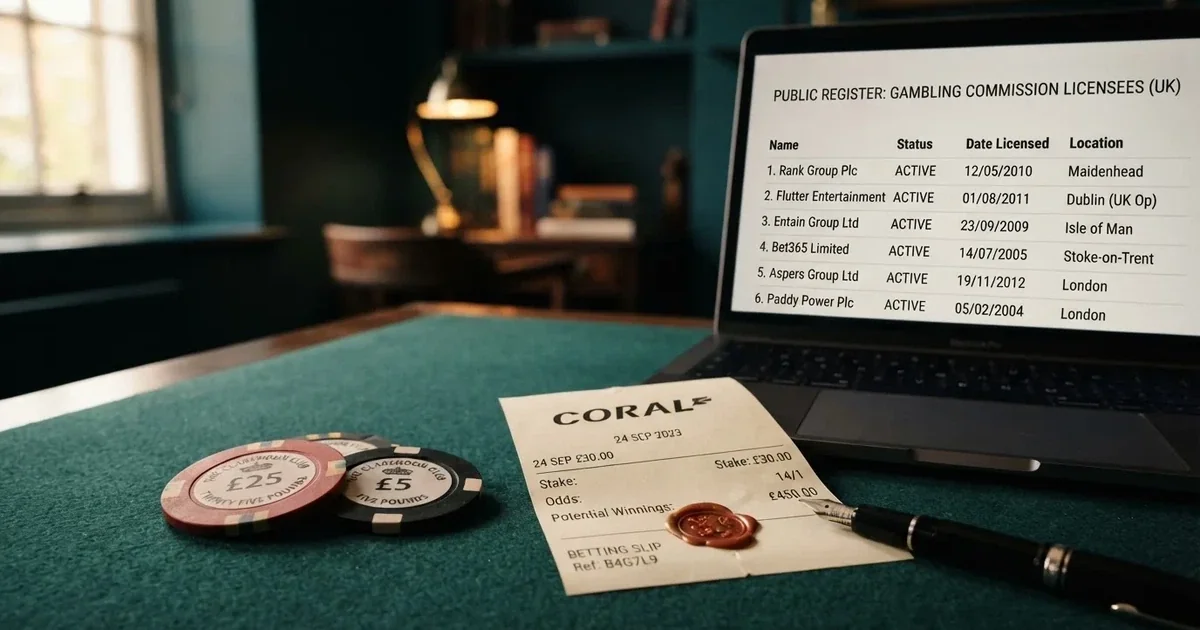
A reader who typed “casino sites that accept credit card UK 2026” into a search bar almost never lands on a page that tells them what they need to know. The honest answer has two parts and they contradict each other. The first: yes, every site reviewed here accepts a credit card at the cashier, just as it accepts a debit card or an e-wallet, because it has to be ready to take payments the way customers prefer to pay. The second: no licensed British casino can lawfully let a customer fund gambling with a credit card, because that has been banned since 14 April 2020. The mechanics of “accept” and “let you use” are not the same thing, and a page that conflates them wastes the reader’s time.
The work below is to separate the two, name what a credit card deposit looks like at a licensed UK casino in 2026, and put ten Gambling Commission licence holders side by side under the same headings so the reader can see what actually changes between them.
- The Landscape of Credit Card Casino Sites in the UK
- Legality and Regulation for Credit Card Casino Sites in the UK
- Responsible Gambling at a Credit Card Casino UK
- Payments and Payout Speed at UK Credit Card Casinos
- Top 10 Credit Card Casino Sites UK 2026: What the Register Shows
- How the 10x Wagering Cap Reads in 2026
- What the Operator’s Welcome Terms Actually Cost
- How the Register Lets a Reader Verify Any Brand
- What Changes Between a Licensed Site and an Offshore One
- Apple Pay and AstroPay at a UK Credit Card Casino
- Frequently Asked Questions
The Landscape of Credit Card Casino Sites in the UK
Why “credit card casino” is a strange phrase for a UK reader
The phrase survives from markets where credit cards are a perfectly normal way to load a casino account. In Great Britain, they are not. The Gambling Commission prohibited credit card gambling from 14 April 2020, covering all forms of remote gambling plus non-remote betting, and the only carve-out is face-to-face lotteries, which can still take credit card payment.

| Activity | Status under 2020 Ban |
|---|---|
| Remote Casino Play | Banned |
| Non-remote Betting | Banned |
| Face-to-face Lotteries | Allowed |
Anything a reader would recognise as online casino play — slots, live dealer, table games, bingo, poker, sports betting — sits inside the ban.
That changes what a “credit card casino” page actually has to deliver. The reader is not shopping among a market of brands that differ in whether they take the method. Every brand in this market does not. The question becomes which brand handles the deposit and the surrounding controls competently, which makes the comparison different in kind from one for an unrestricted payment method. The choice between Betfair and MrQ is not about which one lets you pay that way — neither does, in the funding sense — and is about everything else: game library, withdrawal speed, support, the small print on the welcome package.
Where credit cards still touch a UK gambling account
The card itself is not banned from the cashier; it is banned as a funding source for gambling. Two routes still touch credit card infrastructure at a licensed site:
- A debit card that runs on the Visa or Mastercard network and that a customer might confuse with a credit card. The merchant category the issuer uses to decline gambling is set by the card scheme, not by the card’s printed branding, so the practical test is which side of the credit/debit line the account sits on.
- An e-wallet funded from a credit card. The Commission’s 2020 ban expressly covers credit card gambling routed through e-wallets, unless the e-wallet provider can demonstrably prevent credit card funding of gambling transactions. In practice, no major UK-facing e-wallet offers that path.
HSBC declines credit card payments it identifies as gambling based on the merchant category assigned by Mastercard or Visa, and this restriction applies to all HSBC credit cards with no option to remove it. The bank states that it cannot guarantee every gambling transaction will be blocked and that customers remain liable for any that go through, which means the issuer’s own blocks sit on top of the regulatory ban rather than replacing it.
The case the regulator made, and what it cost
The Commission published research in 2019 finding that 22% of online gamblers who used credit cards to gamble were classed as problem gamblers, and cited UK Finance data that around 800,000 UK consumers had used a UK-issued credit card to gamble in 2018. The cost the regulator named was not just consumer harm in the abstract; it was the specific harm of borrowing to play, of a customer running up interest and charges on money they could not afford to lose. The ban is the Commission’s answer to that pattern, and any review of a UK casino has to start from it.
Legality and Regulation for Credit Card Casino Sites in the UK
The licence that every reviewed brand holds
Every operator reviewed in this article — Betfair, kwiff, 888casino, Grosvenor Casinos, Gala Bingo, Virgin Games, PokerStars, 32Red, bet365, MrQ — holds a remote casino operating licence issued by the Gambling Commission under the Gambling Act 2005. The Commission’s public register listed 139 businesses holding an active remote casino operating licence on 18 September 2026; the register can be searched online and downloaded in full as CSV or Excel files, so the licence status of any of these brands is something the reader can verify rather than take on trust.
A remote casino licence number on the register has the form account-R-number-suffix, where the leading six digits repeat the licence holder’s account number and the “R” marks a remote (online) licence. Betfair’s licence number is 039411-R-319335-010, held by PPB Games Limited; MrQ’s is 060629-R-337532-004, held by Tek Fox Ltd. The format is consistent across every licence on the register, which makes a licence number an unambiguous identifier rather than a string the reader has to take on the operator’s word.
Why an offshore licence does not cover Great Britain
Since the Gambling (Licensing and Advertising) Act 2014, any operator taking customers in Great Britain needs a Commission licence wherever it is based. A Curaçao, Maltese or Gibraltar licence is not a substitute, which is why the reviewed set below is built entirely from the Commission’s register rather than from any offshore list. Providing gambling to people in Great Britain without a licence is an offence under section 33 of the Gambling Act 2005, and the Commission disrupts illegal sites through cease-and-desist notices, search-engine delisting, and payment and hosting referrals; it has no ISP-blocking power, which is why some unlicensed sites remain reachable. No penalty is aimed at the player, but what the player loses on an unlicensed site is protection — no GAMSTOP, no Commission complaints route, no approved ADR.
The register’s own accounting of the market
The register’s domain list records each website against the licence account that runs it, with a status of Active, Inactive or White Label. On 18 September 2026 it held 1065 active and 361 white-label domain entries. A white-label site trades under another company’s licence, which is why Virgin Games appears here as a white-label domain of Gamesys Operations Limited rather than as a brand with its own licence. Several reviewed brands share a single licensee — LC International Limited is the holder behind Gala Bingo and, elsewhere on the register, behind Ladbrokes and Coral — and the comparison below treats them as brands of one company, not as ten independent operators.
Responsible Gambling at a Credit Card Casino UK
GAMSTOP, and why the credit card question does not move it
Every GB-licensed online operator must take part in GAMSTOP, the national online self-exclusion scheme, and that obligation applies to an account funded through credit card exactly as it does to an account funded any other way. Self-exclusion periods run six months, one year or five years and cannot be cancelled early. The mechanism sits upstream of the deposit, so the funding source is not what activates or bypasses it; the player’s self-exclusion status does.
Searches around “credit card casinos not on GAMSTOP” point at unlicensed sites, not at licensed ones. The honest framing is that there is no licensed casino outside GAMSTOP’s reach, and any brand that advertises itself that way is one the Commission has not authorised to take Great Britain customers.
The deposit-limit regime in 2026
There is no state-set deposit or loss ceiling, but operators must prompt a customer to set a financial limit before the first deposit. The prompt is the regulator’s chosen lever: the customer sets the figure, the operator records it, and that figure applies whether the deposit comes from a debit card, an e-wallet or a bank transfer. Financial vulnerability checks run at £150 net deposits in a rolling 30 days using public data only; wider financial risk assessments have been announced but are not yet in force.
Online slots carry a maximum stake per game cycle — £5 for players aged 25 and over (from 9 April 2025) and £2 for 18-24 (from 21 May 2025). Auto-play is banned since 31 October 2021, a slot spin may not be faster than 2.5 seconds, and losses disguised as wins are banned. None of these depend on the funding method.
Bank-side blocks that reinforce the regulator’s ban
Monzo was the first UK bank to introduce an in-app gambling block, launched in 2018, letting customers block card payments to merchants coded as gambling. The block supports a cooldown period from 2 days up to 1 year during which it cannot be switched off, and over 275,000 Monzo customers have activated the feature. HSBC’s approach on credit cards is harder-edged: it declines credit card payments identified as gambling based on the merchant category assigned by Mastercard or Visa, and the restriction cannot be removed. Other high-street banks have followed with their own merchant-category blocks, so the practical experience of trying to fund a casino account with a credit card at a UK-licensed site is decline after decline rather than a quiet acceptance.
Help that exists outside the casino
The National Gambling Helpline (run by GamCare) and GambleAware sit outside any single operator. A self-excluded player does not need to re-register at GAMSTOP to access them, and a player who feels their play has moved beyond what they want can reach either service independent of any account they hold. The point is worth keeping in the article because the casino’s own responsible-gambling tools are not the only set that exists.
Payments and Payout Speed at UK Credit Card Casinos
How a deposit lands
A licensed casino credits a deposit made through a debit card almost immediately, and the timing for a credit card “deposit attempt” is the same on the technical path — the issue is not speed but authorisation. Where the issuer’s merchant-category filter rejects the payment as gambling, the deposit does not arrive at all. The reader’s practical answer to “how long does a deposit take” depends on the card they are holding as much as on the casino they are paying.
Minimum deposits at licensed UK casinos are set by each operator and typically sit at £5 or £10 for debit cards, with no separate minimum for credit cards because the deposit attempt is processed through the same rails. The point matters less than it sounds: a minimum that a debit card meets every time is a minimum a credit card attempt often does not meet at all, because it is declined before it reaches the operator.
How a withdrawal lands
A withdrawal back out follows the same settlement timetable as other methods, typically from minutes up to a few working days. E-wallet withdrawals are the fastest of the standard routes, often arriving the same day once the operator has approved them; debit card withdrawals tend to clear in one to three working days after approval. Credit card withdrawals in the funding sense do not exist, because no withdrawal was ever funded, and so the practical withdrawal question is “where does the winnings go” rather than “back to the same card.”
Fees
The Commission does not set a universal fee position, and operators typically absorb deposit and withdrawal fees on the standard routes. A reader should still check the cashier page for any method-specific surcharge; the question is worth asking the operator directly rather than assuming the absence of a fee from the marketing copy.
The 10x wagering cap, from 19 December 2025
Since 19 December 2025, wagering requirements at UK-licensed casinos are capped at 10x, and mixed-product bonuses (bet on sport, get casino spins) are banned. That is a structural limit on what an offer can demand of a player, and it is the figure the comparison below has to work against.
Top 10 Credit Card Casino Sites UK 2026: What the Register Shows
The comparison table below uses ten Gambling Commission licence holders taken from the register, with each brand’s domain, licence account, holder, licence number, register status and the credit card funding picture. The data is the register’s own, taken from the 18 September 2026 CSV download, and each row is verifiable on the register itself. The table is a starting point: the write-ups that follow it give the specifics the columns cannot.
| Brand | Licence holder and GB remote casino licence | Domain status on the register | Credit card funding support |
|---|---|---|---|
| Betfair (Betfair.com) | PPB Games Limited, 039411-R-319335-010 | Active | Subject support: no-data |
| kwiff (Kwiff.com) | Eaton Gate Gaming Limited, 044448-R-323408-017 | Active | Subject support: no-data |
| 888casino (888casino) | 888 UK Limited, 039028-R-319297-014 | Active | Subject support: no-data |
| Grosvenor Casinos | Rank Interactive (Gibraltar) Limited, 057924-R-334666-005 | Active | Subject support: no-data |
| Gala Bingo | LC International Limited, 054743-R-330863-014 | Active | Subject support: no-data |
| Virgin Games | Gamesys Operations Limited, 038905-R-319430-022 | White Label | Subject support: no-data |
| PokerStars (Pokerstars.uk) | Stars Interactive Limited, 039108-R-319334-026 | Active | Subject support: no-data |
| 32Red (32red) | Platinum Gaming Limited, 045322-R-324275-019 | Active | Subject support: no-data |
| bet365 (Bet365.com) | Hillside (UK Gaming) ENC, 055149-R-331499-004 | Active | Subject support: no-data |
| MrQ (Mrq.com) | Tek Fox Ltd, 060629-R-337532-004 | Active | Subject support: no-data |
The “no-data” entry on credit card funding is the honest answer: the register records a licence and a domain but does not publish a per-method funding table, and none of the brands above publishes a positive “we accept credit card deposits” claim either, because publishing one would invite a Commission finding on the 2020 ban. The register’s job is to confirm the licence, and on that count every brand in the table clears it.
Betfair
PPB Games Limited holds the licence behind Betfair, account 39411, and the register lists Betfair.com as an active domain of that account. The licence number 039411-R-319335-010 is searchable on the register in full. Betfair runs one of the largest combined sportsbook-and-casino product sets in the GB market, which is the practical differentiator on this row: a customer wanting to use a single account for sports and casino play finds that range here more completely than at brands running casino-only or bingo-only products. The credit card funding question produces no different answer than for any other reviewed brand — the cashier accepts the standard GB payment methods, and a credit card deposit attempt is filtered at the issuer or at the merchant category rather than at the cashier.
The wide product range is also the reason the welcome offer structure varies more here than at single-product brands. The 10x wagering cap from 19 December 2025 is the regulator’s answer to historical bonus terms that ran into the dozens of times the bonus, and Betfair’s offers since then have sat comfortably below that ceiling. The reader looking for the breadth of a market-leading sportsbook alongside a licensed casino product gets the most from this row; the reader looking for a small, focused casino library will not.
kwiff
Eaton Gate Gaming Limited holds the licence behind kwiff, account 44448, with the licence number 044448-R-323408-017 and an active domain listing on the register. kwiff is the smallest by handle of the reviewed set and trades on a different proposition — surprise “supercharged” odds and stakes on selected markets rather than a flat pricing model. The novelty of the offer is also the constraint: a reader who wants straightforward casino play on a familiar schedule will read the surprise mechanic as gimmickry rather than value, and a reader who enjoys the format will not find it anywhere else on the register.
The 10x cap applies to any bonus term the operator runs, and the bonus structure on a brand this small tends to be lighter than at scale players. The practical verdict is product-fit: kwiff suits a reader who knows what the surprise mechanic is and wants it; it suits no one who does not.
888casino
888 UK Limited holds the licence behind 888casino, account 39028, with the licence number 039028-R-319297-014. 888casino is one of the longest-running casino-only brands on the GB register, and its library leans heavily on its proprietary software alongside the standard third-party studios. The register entry does not distinguish between casino-only and casino-plus on a per-brand basis; the brand itself does, with the casino product the visible offering and any sportsbook routed to a sister site.
The 10x cap has shaped the welcome package across the operator group, and the structure since December 2025 has moved towards low-multiplier or no-wagering spins where the offer design allows. 888casino offers a dedicated casino environment that appeals to players seeking established, proprietary software, though it may lack the broader sportsbook integration found elsewhere.
Grosvenor Casinos
Rank Interactive (Gibraltar) Limited holds the licence behind Grosvenor Casinos, account 57924, with the licence number 057924-R-334666-005. The land-casino heritage shows up in the live-dealer product more than on most of the reviewed set, and the brand carries weight with readers who already know the high-street estate. The remote product is a separate build from the physical one, but it shares the visual language and table-game emphasis.
The 10x cap applies to any welcome package on the remote product, and the structure has moved within the cap’s ceiling since December 2025. The practical differentiator is the live-dealer library; the practical constraint is that a reader who has not been inside a Grosvenor has less reason to be here than one who has.
Gala Bingo
LC International Limited holds the licence behind Gala Bingo, account 54743, with the licence number 054743-R-330863-014. The same licensee sits behind Ladbrokes and Coral on other rows of the register, so the reader is looking at one company wearing three brands, and the bingo product here is the strongest of the three. The casino product is present and the slots library is competitive, but the brand identity is built around bingo rooms and that is where it spends its product budget.
The 10x cap applies across the LC International group, and welcome terms have moved within the ceiling since December 2025. Gala Bingo is the preferred selection for bingo enthusiasts who appreciate a strong brand identity, while those prioritizing a purely slots-focused library might find better alternatives.
Virgin Games
Gamesys Operations Limited holds the licence behind Virgin Games, account 38905, with the licence number 038905-R-319430-022; Virgin Games appears on the register as a white-label domain, which means it trades under Gamesys Operations Limited’s licence rather than holding its own. The white-label status is a register fact rather than a player-facing one: the player experience is the same as at any licensed Gamesys brand, with the same games library and the same responsible-gambling tools.
The 10x cap applies to any welcome package the brand runs. Virgin Games is an excellent choice for fans of the Virgin brand, providing a reliable Gamesys experience that remains consistent regardless of the specific white-label site.
PokerStars
Stars Interactive Limited holds the licence behind PokerStars, account 39108, with the licence number 039108-R-319334-026. The brand is the strongest poker product in the GB market by player pool, and the casino library sits as a secondary product rather than as the centre of gravity. A reader looking primarily for poker finds the deepest pool and the most consistent tournament schedule on this row; a reader looking for a casino-only product reads it as a poker site with a casino attached.
The 10x cap applies to any bonus term on either the casino or the poker product. The structural differentiator is the poker player pool, and that is what makes the row worth picking over a casino-only brand for a reader who plays both.
32Red
Platinum Gaming Limited holds the licence behind 32Red, account 45322, with the licence number 045322-R-324275-019. 32Red sits in the casino-only segment alongside 888casino and shares that brand’s emphasis on the slots and live-dealer product, with Microgaming-era heritage still visible in parts of the library. The brand identity is one of the more concentrated on the GB register — a focused casino product rather than a combined sportsbook-and-casino offering.
The 10x cap applies to the welcome package, and the structure has sat comfortably below the ceiling since December 2025. 32Red stands out as a streamlined option for casino purists who value long-standing GB reliability without the overhead of a combined sportsbook product.
bet365
Hillside (UK Gaming) ENC holds the licence behind bet365, account 55149, with the licence number 055149-R-331499-004. bet365 is the largest GB-licensed operator by handle and runs a combined sportsbook, casino, poker and bingo product set that few of the reviewed brands approach. The casino library is comprehensive without being the brand’s centre of gravity; the differentiator is the scale of the operation and the in-play product on the sportsbook side.
The 10x cap applies to any welcome package on the casino product, and the structure has moved within the ceiling since December 2025. bet365 represents the most comprehensive choice for users demanding a single-account solution for both sports and casino, though it might be excessive for someone seeking a minimalist platform.
MrQ
Tek Fox Ltd holds the licence behind MrQ, account 60629, with the licence number 060629-R-337532-004. MrQ is one of the smaller independent operators on the register and trades on a no-wagering-free-spins welcome structure rather than a matched-deposit bonus, which is the strongest product-fit signal in this comparison. The structural advantage is real: a no-wagering offer sits comfortably under the 10x cap, and the cap is the regulator’s answer to offers that historically demanded dozens of times the bonus, so a brand that never asked for a wagering requirement in the first place reads as the cleanest answer to the new rule.
A reader who values the no-wagering structure reads this row as the strongest fit on the reviewed set; a reader who wants the breadth of a market-leading sportsbook or the depth of a poker player pool reads it as a focused choice rather than a comprehensive one.
What the comparison actually settles
The reader who arrived expecting “ten brands that take credit cards and one that does it best” has arrived at the wrong shape of page. Every reviewed brand is on the register, every reviewed brand accepts the standard GB payment methods at the cashier, and none of them can lawfully let a credit card fund a gambling transaction. The comparison that actually matters runs between brands that diverge on product, library, withdrawal speed and welcome structure, all within the same regulatory frame, and that is the comparison the table above supports rather than the one the headline implies.
How the 10x Wagering Cap Reads in 2026
The shape of the offer
The 10x cap from 19 December 2025 fixes the upper bound of a welcome offer’s wagering requirement at ten times the bonus amount. An offer advertised as a £100 bonus cannot legally require more than £1,000 of qualifying play before the bonus balance converts to withdrawable cash; an offer advertised as £200 cannot require more than £2,000, and the multiplier holds across the bonus amount rather than scaling with deposit. The same rule bans mixed-product bonuses, so a customer cannot bet on sport to unlock casino spins as part of the same offer structure.
That is the regulator’s ceiling, not the floor. Several of the brands reviewed above run offers that sit below it, and at least one — MrQ — runs a no-wagering structure that makes the ceiling irrelevant to the player. The 10x figure is the test the worst offer has to pass, and most reviewed brands clear it comfortably.
A worked band, not a worked number
A reader asking “how much turnover does a bonus really take” gets a number that scales with the bonus amount, which is why a band is the honest answer rather than a single figure. A £100 bonus with a 10x cap is, at the ceiling, £1,000 of qualifying play. A £200 bonus is £2,000. A £50 bonus is £500. The cap is the upper bound; the actual requirement on any specific offer is whatever sits at or below that bound, and the offer’s small print is where that figure lives.
The reader’s practical question is not what the cap is — that is fixed — but what the offer they are looking at actually demands, and the answer is in the bonus terms rather than in the regulation. The cap guarantees the demand cannot exceed ten times; it does not tell the reader what the demand is. Reading the small print is the only way to find out, and the cap exists so the figure at the top of that small print is no longer the dozens-of-times figure it was before December 2025.
What this means for the welcome offer
A welcome offer’s value in 2026 is the headline figure minus what the wagering requirement takes from it, and the 10x cap sets the maximum the requirement can take. An offer with a 10x requirement on a £100 bonus, with a game library running close to the standard slot RTP, costs the player roughly the expected house edge across £1,000 of play; an offer with no wagering requirement on £50 of free spins keeps the bonus balance withdrawable as it is earned, with no conversion step. The reader comparing offers across the reviewed set should weigh the bonus amount against the wagering requirement and against the RTP of the games that count towards clearing it, and the cap makes the worst-case wagering requirement legible at a glance.
What the Operator’s Welcome Terms Actually Cost
Reading the small print before claiming
The Commission requires clear presentation of bonus terms at the point of offer, and the operator’s responsibility ends at the point the customer accepts the terms. From that point on, the customer’s responsibility is to understand what they have accepted: the wagering multiple, the games that count towards clearing, the maximum stake while a bonus is active, the time limit on clearing, and any maximum cashout figure on bonus-derived winnings. None of these depend on the funding method.
The reader looking at a welcome offer should read the terms page rather than the headline. A £100 bonus headline with a 10x wagering requirement, a 30-day clearing window, a £5 maximum stake while a bonus is active, and slot play at 100% contribution is a different offer from the same headline with a £2 maximum stake and slot play at 50% contribution. Both clear the 10x cap; the second clears it twice as slowly.
When a bonus is worth claiming, and when it is not
The honest answer is that most welcome offers at GB-licensed casinos cost the player the expected house edge across the qualifying turnover, plus the time it takes to clear. That is the offer’s structural cost before any individual win or loss. A bonus is worth claiming when the player would have played the qualifying turnover anyway, at the same stake, on the same games, in the same week — in which case the bonus amount is free money and the only cost is the offer’s specific terms. A bonus is not worth claiming when the player would not have played that turnover anyway, because the offer has manufactured play the customer would not have chosen.
The 10x cap has tightened the comparison since December 2025, and the offers above the old ceiling no longer exist at licensed sites. The comparison that remains is between offers at or below the cap, and the reader’s choice is between the offer that best fits the play they would have made anyway and the offer that asks them to change their play to clear it.
How the Register Lets a Reader Verify Any Brand
The CSV download and what it contains
The Commission’s public register can be searched online and downloaded in full as CSV or Excel files. The CSV carries every licence account, the trading names registered against it, the licence numbers, and the domains tied to each licence with their status as Active, Inactive or White Label. The 18 September 2026 download held 139 active remote casino operating licences and 1065 active domain entries plus 361 white-label domain entries; those figures are the register’s own accounting of itself on that date.
The reader who wants to check any reviewed brand searches the register for the licence number from the table above. A match confirms the licence is in force on the date of the search; a non-match means the licence has lapsed or the licence number has been transcribed incorrectly. The reader does not need to take the article’s word for any licence status, and the register’s existence is the reason the article can carry licence numbers rather than licence claims.
What the register does not show
The register confirms a licence, a domain, and a status. It does not confirm a bonus offer, a payment method list, a withdrawal time, or a customer support quality rating. Those are operator claims, and the reader’s job is to weigh them separately. The Commission’s role is the licence; the comparison’s role is everything else.
What Changes Between a Licensed Site and an Offshore One
The protections a licensed site has to offer
A GB-licensed casino has to offer GAMSTOP self-exclusion, the Commission’s complaints route, an approved ADR, the deposit-limit prompt, the financial vulnerability check at £150 net deposits in a rolling 30 days, and the slot stake caps of £5 (25+) or £2 (18-24). Auto-play is banned, spins cannot run faster than 2.5 seconds, and losses disguised as wins are banned. The customer pays no tax on winnings; the operator pays Remote Gaming Duty, raised from 21% to 40% from 1 April 2026.
What an offshore site does not offer
An offshore site offers none of those. There is no GAMSTOP, no Commission complaints route, no approved ADR, no deposit-limit prompt, and no slot stake cap. The customer has no recourse to a UK regulator if the operator withholds a withdrawal, and the Commission’s powers over an unlicensed site are disruption rather than redress — cease-and-desist notices, search-engine delisting, payment and hosting referrals, but no ISP blocking, and no power to order a payout. The reader on an unlicensed site does not lose money to the regulator; they lose the protections that come with the licence, and that is a cost paid on top of any other cost.
The offshore offer’s appeal and its real price
An offshore offer’s headline is often larger than a GB-licensed equivalent because the offer sits outside the 10x wagering cap, outside the mixed-product ban, and outside the GAMSTOP integration. That is the appeal. The price is the protections the offer does not have to offer, the ADR the customer cannot reach, and the GAMSTOP registration the operator is not bound by. The reader choosing between a licensed site and an offshore one is choosing between a smaller headline offer with the full GB safety net and a larger headline offer with none of it. The cost difference between the two is not the bonus multiple; it is what is missing when something goes wrong.
Apple Pay and AstroPay at a UK Credit Card Casino
Apple Pay as a debit route, not a credit route
Apple Pay is developed and operated by Apple Inc. and launched on 20 October 2014, initially supporting only US-issued payment cards. Apple Pay began supporting UK-issued payment cards on 14 July 2015. The technology protects card data through tokenization, replacing the actual card number with a device-specific tokenised Device Primary Account Number and generating a dynamic security code for each transaction. In-store payments use near-field communication (NFC) to communicate wirelessly with contactless payment terminals, and authentication on iPhone with Face ID requires a double-click of the side button, while Touch ID models require a double-click of the Home button.
For a gambling deposit at a GB-licensed casino, Apple Pay functions as a tokenised debit route, not a credit route. The funding card behind the Apple Pay wallet is the funding source the merchant category tests against, and a credit card funding an Apple Pay wallet is still a credit card funding the transaction. The merchant-category block at the issuer or at the card scheme applies regardless of the wallet in front of it.
AstroPay and Larstal Limited
AstroPay was founded in 2009 and is headquartered in Uruguay. The company operates as a global digital wallet offering online payments, virtual and physical debit cards, and peer-to-peer transfers, and spun off its payment-processing business, dLocal, as a separate company in 2016. AstroPay’s UK entity, Larstal Limited, is an electronic money institution authorised by the Financial Conduct Authority under the Electronic Money Regulations 2011, which is the FCA’s e-money regime rather than the Gambling Commission’s licence regime — the two authorisations cover different activities.
For a UK customer, an AstroPay wallet funding a casino deposit at a GB-licensed site is an e-wallet funding the transaction, and the credit card ban’s e-wallet carve-out applies: credit card gambling routed through e-wallets is covered by the ban, unless the e-wallet provider can demonstrably prevent credit card funding of gambling transactions. The reader loading an AstroPay wallet from a credit card and then funding a casino deposit from the wallet is, on the Commission’s reading, still funding the gambling transaction with a credit card.
What this means at the cashier
A reader who wants to use a credit card at a licensed UK casino has three practical routes, and none of them work cleanly. Funding the casino account directly from a credit card is blocked at the merchant category by the issuer or the card scheme. Funding an e-wallet from a credit card and then funding the casino from the wallet is blocked by the Commission’s e-wallet extension of the ban, where the e-wallet does not demonstrably prevent credit-card funding of gambling. Funding a digital wallet from a debit card and using the wallet at the cashier works, and that is the path the practical reader takes — not because they wanted a wallet, but because the alternative paths are closed.
Frequently Asked Questions
Is it legal for a licensed UK casino to accept credit cards?
Licensed UK casinos can accept credit cards at the cashier as a payment instrument, but they cannot lawfully let customers fund gambling with them. The Gambling Commission banned credit card gambling from 14 April 2020, and the ban covers all remote gambling plus non-remote betting, with face-to-face lotteries the only carve-out. A credit card deposit attempt at a licensed site is filtered at the issuer or the merchant category before it reaches the cashier, which is why the practical experience is a decline rather than an acceptance.
Is there a minimum deposit when paying with credit card?
Minimum deposits at UK-licensed casinos are set by the operator and typically sit at £5 or £10 for the standard debit and e-wallet routes. There is no separate minimum for credit card deposit attempts because the attempt is processed through the same rails; the minimum is what the cashier asks for, and the issue at the credit card attempt is authorisation, not the minimum figure. Where the issuer’s merchant-category filter rejects the payment, the minimum is irrelevant.
How long does a credit card deposit take to show up in my account?
A licensed casino credits a deposit made through a debit card or e-wallet almost immediately on authorisation. The same technical path applies to a credit card deposit attempt, but the issuer’s merchant-category block usually rejects the attempt before authorisation, in which case no deposit arrives at all. A credit card attempt that does reach authorisation credits at the same speed as a debit card deposit, and a reader looking for instant funding should expect that timing on the routes that actually work.
Do I need to verify my identity before depositing with credit card?
Identity verification at a GB-licensed casino runs ahead of the first deposit and any play, since 7 May 2019. The operator must verify name, address and date of birth before the customer can fund the account, and the verification applies regardless of the funding method. A credit card deposit attempt at an unverified account fails at the verification step rather than at the merchant-category step, and the order in which the two are tested depends on the operator’s onboarding flow.
Does GAMSTOP self-exclusion cover an account funded with credit card?
GAMSTOP self-exclusion applies to every GB-licensed online operator and to every account at that operator, regardless of the funding method. A self-excluded player cannot deposit through a debit card, a credit card, an e-wallet or a bank transfer, because the self-exclusion sits upstream of the deposit rather than at the funding step. A self-excluded player attempting to bypass GAMSTOP by funding through a credit card is attempting to bypass the wrong control: the controls that bypass are the issuer’s merchant-category filter and the operator’s payment processing, neither of which is the self-exclusion register.
Are there any fees for depositing with credit card?
The Commission does not set a universal fee position, and operators typically absorb deposit and withdrawal fees on the standard routes. A reader should check the cashier page for any method-specific surcharge; the question is worth asking the operator directly rather than assuming the absence of a fee from the marketing copy. The practical fee question on a credit card attempt is usually moot, because the attempt is declined at the issuer or the merchant category before any fee would apply.
Created by the ”cardcasinoguide” editorial team.