What no-wagering sign-up offers at UK casinos actually deliver — and what the rules quietly change
The phrase “no wagering” gets used as if it were a marketing badge. On a UK-licensed casino it is closer to a specific contract: anything you win from the offer can be withdrawn without you first having to cycle the money through the games a set number of times. The catch rarely sits in the headline. It sits in how big the offer tends to be, how the operator has shaped the game choice, and what the Gambling Commission now obliges the operator to do before you can even place a stake. This page works through those moving parts in the order they bite — payments, bonuses, the ranking itself, the wider landscape, the licence and the safer-gambling frame around it.
Current as of 7 November 2026 · verified against the Gambling Commission’s public register of remote operating licences
- Payments and payout speed: where a no-wagering offer lives or dies
- Bonuses and free spins: how a no-wagering sign-up offer is structured in 2026
- The ranked comparison: ten licensed brands side by side
- The wider UK online casino landscape in 2026
- The licensing jurisdiction: what a Gambling Commission licence actually obliges
- Safer-gambling protections around a no-wagering sign-up offer
- Frequently asked questions about no-wagering sign-up offers in the UK
Payments and payout speed: where a no-wagering offer lives or dies
A no-wagering offer does nothing if the money you win from it cannot reach you. On a UK-licensed site the payments stack is decided upstream of the bonus page, by who the operator is, where it holds its licence, and what it has wired up to Faster Payments. The choices the reader makes on this front often matter more than the headline number on the offer.
Deposits that get a UK player to a no-wagering bonus
Three methods cover the bulk of UK casino deposits: debit card, bank transfer and a small set of regulated e-wallets. Apple Pay runs through a tokenised card number rather than storing the card itself, launched in the United States in October 2014 and supporting UK-issued cards from 14 July 2015; in practice it sits behind whatever bank or card issuer the player already has, and on iPhone with Face ID a casino deposit is confirmed by a double-click of the side button. AstroPay, founded in 2009 and headquartered in Uruguay, runs a parallel option: the UK arm, Larstal Limited, is authorised by the Financial Conduct Authority as an electronic money institution under the Electronic Money Regulations 2011, and the company also holds licences through the Isle of Man Financial Services Authority, the Danish Financial Supervisory Authority and the Brazilian Central Bank. For most readers this means AstroPay behaves like an FCA-supervised wallet on deposits and withdrawals — relevant because offshore wallets have been a long-running source of friction for UK customers.
The first hard line is the one the Gambling Commission drew on 14 April 2020: credit cards are banned for gambling across all online and offline products in Great Britain. The ban includes credit cards routed through e-wallets, which is why every method above settles through a debit instrument. Around 800,000 UK consumers used credit cards to gamble in 2018, and 22% of online gamblers who used credit cards were classed as problem gamblers — the figures behind that ban. For a reader, the practical reading is that “no-wagering” never reaches them through a credit card, full stop.
Withdrawals and the Faster Payments ceiling
Bank transfers within the UK move through the Faster Payments Service, launched in 2008 and operated by Pay.UK.
| Payment Method | Key Feature | Regulatory Status |
|---|---|---|
| Debit Card | Direct payment | Authorised |
| Bank Transfer | Faster Payments | Authorised |
| Apple Pay | Tokenised debit | Authorised |
| AstroPay | Electronic money | FCA-authorised |
The real drag on payout speed is not the scheme. It is the identity check the operator has to run before sending money out. Since 7 May 2019 every UK licensee must verify name, address and date of birth before the first deposit or any play, and the verification gate applies to withdrawals as well. A reader who has uploaded documents at sign-up and reused the same payment method sees a fast payout; a reader who paid by debit card and asks for a bank transfer has to pass through the bank’s own controls on top.
What this means for a no-wagering offer in particular
Because no wagering means winnings are withdrawable from the moment they land, the deposit and withdrawal methods matter twice over. A no-wagering bonus paid onto a debit card and withdrawn back to the same card generally clears Faster Payments in minutes once the verification gate is open. A no-wagering bonus paid onto a regulated e-wallet such as AstroPay is no faster than the wallet’s own rail, and AstroPay’s wallet-to-bank leg adds its own step. The phrase “no wagering” does not shortcut the operator’s compliance work, and a reader who treats it as a fast-track to a payout will end up disappointed by the part the bonus cannot fix.
Bonuses and free spins: how a no-wagering sign-up offer is structured in 2026
The shape of a UK no-wagering sign-up offer is narrower than the marketing suggests. Almost everything distinctive about it comes down to the 10x cap that took effect on 19 December 2025 and to what the offer has had to drop to fit underneath it.
What “no wagering” means on a UK site
On a UK-licensed casino, a no-wagering offer means that whatever you win from the bonus — bonus cash, free-spin winnings, or both — can be withdrawn once the minimum conditions are met. The minimum is normally an identity check, a payment method in the player’s name, and a one-off playthrough where the operator confirms the bonus has been claimed by a real account rather than an automated one. There is no turnover requirement. The distinction matters because the alternative — a 10x, 20x or 40x turnover requirement — forces the player to bet the bonus money, or the bonus plus deposit, a set number of times before any winnings become withdrawable.
The market consequence is that no-wagering offers tend to be smaller than their wagered cousins. A wagered offer can be £100 with a 40x requirement; the operator is partly betting that most of it will be lost before the wagering clears. A no-wagering offer has to be priced to be paid out, so it lands closer to £10 to £30 in bonus cash, or in free spins whose total face value sits below the wagered alternative. This is not the operator being stingy. It is what the offer has to look like when it cannot lean on turnover to take most of it back.
The 10x cap, and what sits beside it
Since 19 December 2025, wagering requirements on UK-licensed casino bonuses have been capped at 10x. The cap closes the gap between “no wagering” and “wagered” sharply: an offer that would once have carried a 30x or 40x turnover now has at most a 10x figure to clear. Mixed-product bonuses — the kind that offer casino free spins in return for a sports bet — were banned in the same reform package. For a reader choosing between a no-wagering offer and a 10x wagered offer of the same headline value, the wagered offer still has to clear £10 of staking for every £1 of bonus before it pays out, and the time cost is real.
The deposit-gating pattern is also common. A no-wagering offer may not need a wagering cycle, but it almost always needs a minimum deposit of £10 or £20, set by the operator as a fraud and bonus-abuse guard. A no-deposit variant exists: a small bonus, often free spins, credited before any deposit, with the same no-wagering terms attached. The catch is that the bonus is small (frequently 10 to 50 free spins on a single named slot) and the maximum cashout from a no-deposit offer is often capped well below the headline face value of the spins. The terms on this are worth reading before claiming.
The numbers behind a typical no-wagering bonus
The arithmetic for what a no-wagering bonus is worth to the operator — and therefore to the player — sits in three steps: the bonus amount, the wagering factor that does not apply, and the house edge on the slot the offer points at. With the 10x cap in force since 19 December 2025, the worst case for any UK-licensed bonus is ten times the bonus amount in required turnover.
To take a worked band rather than one figure: a £10 no-wagering bonus on a slot with a 96% return to player has, in the abstract, an expected value to the player of about £9.60 in cash and £0.40 in edge — paid out in full because there is no wagering to deduct it from. A £30 no-wagering bonus on the same slot has an expected value of about £28.80, paid out the same way. The band matters because the offer’s face value is not the same as what the operator has priced it at; the £30 offer is closer to its face value than the £100 wagered offer at 10x, where £10 of bonus requires £100 of staking before it pays out, and most of that £100 is expected to come back to the operator before the wagering clears. The comparison collapses to a single question for the reader: is the time and slot restriction on the no-wagering offer worth avoiding the £100 of staking the wagered offer requires?
The slot restriction is the other quiet cost. A no-wagering offer is almost always locked to a small set of named games — frequently one or two slots from a single provider. The reason is that the operator needs to know the house edge on the games the offer points at, so it can price the bonus accordingly. A reader who would rather play a different slot will usually find the no-wagering offer does not transfer.
Where free spins sit in this picture
Free spins are the most common form of no-wagering sign-up offer on a UK-licensed casino. They carry their own quirks: a set of spins, often 10 to 50, on a specific slot, at a fixed stake per spin that is usually the lowest stake on the game. The winnings are bonus cash with no wagering requirement, but they often carry a maximum-cashout cap. A 20-free-spin offer on a slot where each spin returns an average of 24p at the lowest stake, with a maximum cashout of £5, pays out at most £5 regardless of how the spins actually land — a cap that turns a hot streak into a £5 payout without warning.
The other quirk is stake size. Since the per-spin stake limit took effect — £5 for players aged 25 and over from 9 April 2025 and £2 for 18-24 from 21 May 2025 — every free-spin offer has to sit underneath those caps on the games it points at. A free-spin offer that names its stake is giving the reader an exact number; one that does not is asking the reader to assume the lowest stake on the game, which is the safest reading.
The ranked comparison: ten licensed brands side by side
The ten brands below are taken from the Gambling Commission’s public register of remote casino operating licences. Each is a GB-licensed operator with an active or white-label domain against a named licence account. None of them is recommended over the others on this page; the comparison is structural, and it sets up the close reading that follows.
| Brand | Licence holder and GB remote casino licence | Domain status on the register | Subject support |
|---|---|---|---|
| Grosvenor Casinos | Rank Interactive (Gibraltar) Limited · 057924-R-334666-005 | Active | — |
| Betfred | Petfre (Gibraltar) Limited · 039544-R-319290-010 | Active | — |
| 32Red | Platinum Gaming Limited · 045322-R-324275-019 | Active | — |
| BetVictor | BV Gaming Limited · 039576-R-319370-028 | Active | — |
| William Hill | WHG (International) Limited · 039225-R-319373-015 | Active | — |
| Virgin Games | Gamesys Operations Limited · 038905-R-319430-022 | White Label | — |
| Ladbrokes | LC International Limited · 054743-R-330863-014 | Active | — |
| Paddy Power | PPB Games Limited · 039411-R-319335-010 | Active | — |
| Betfair | PPB Games Limited · 039411-R-319335-010 | Active | — |
| Jackpotjoy | Gamesys Operations Limited · 038905-R-319430-022 | Active | — |
Several brands share a single licence account. Ladbrokes sits under LC International Limited alongside Coral and Gala Bingo; Paddy Power and Betfair both run under PPB Games Limited; Virgin Games and Jackpotjoy both run under Gamesys Operations Limited. This matters when reading the column, because two brands on the same licence are not two independent operators for compliance or dispute purposes — they are two brands operated by one company, with one set of safer-gambling controls.
The subject-support column is empty across the board. Research did not carry a verified no-wagering sign-up offer for any of the ten, and the page does not invent one. What the table does carry is the licence-and-domain shape the rest of the page works from.
Grosvenor Casinos — a high-street name on a Gibraltar-licensed operator
Grosvenor Casinos is listed on the register as an active domain of account 57924, Rank Interactive (Gibraltar) Limited, holding remote casino operating licence 057924-R-334666-005. The high-street presence sets reader expectations; the Gibraltar holding company is the structural reality behind it. For a reader who wants a no-wagering sign-up offer, the relevant test is whether the offer sits on the licence’s terms — including the 10x cap and the GAMSTOP enrolment — rather than on the brand’s reputation.
Betfred — a single-licence bookmaker with a casino stack on top
Betfred sits on the register against account 39544, Petfre (Gibraltar) Limited, on licence 039544-R-319290-010. The licence covers a bookmaker’s full online stack, and the casino sits underneath the same compliance umbrella. The cost of single-licence operation is that a single compliance failure — a stake-limit breach, a missing GAMSTOP check — hits the whole stack rather than a single product.
32Red — a casino-first brand under a Gibraltar-licensed operator
32Red (32red) is the active domain of account 45322, Platinum Gaming Limited, on licence 045322-R-324275-019. Casino-first brands tend to be where no-wagering offers first appear, partly because the product mix is narrower and the pricing easier to model. The reader’s job is the same — check that the offer’s terms sit under the licence.
BetVictor — a sports-led operator with a casino product
BetVictor’s domain sits against account 39576, BV Gaming Limited, on licence 039576-R-319370-028. The mixed-product bonus ban that took effect alongside the 10x cap closes off the kind of cross-product offers sports-led brands used to use to draw casino players in. A reader who arrived at BetVictor through a sports offer and expected to be handed free spins on the way will find that route closed.
William Hill — the longest-running GB-licensed brand in the set
William Hill runs under account 39225, WHG (International) Limited, on licence 039225-R-319373-015. The “001” suffix on the licence indicates a long-running licence; the company has been through several restructurings. For a reader, the practical point is the same — the licence is current, and the operator’s safer-gambling obligations sit underneath it.
Virgin Games — a white-label domain under a larger operator
Virgin Games is listed as a white-label domain of account 38905, Gamesys Operations Limited, on licence 038905-R-319430-022. A white-label domain trades under another company’s licence. The reader’s recourse for complaints is the licence holder, not the brand — Gamesys Operations Limited, not Virgin.
Ladbrokes — one of three brands under LC International
Ladbrokes sits on the register as the active domain of account 54743, LC International Limited, on licence 054743-R-330863-014. The same licence covers Coral and Gala Bingo. A no-wagering offer promoted on Ladbrokes is structurally the same offer as the one promoted on Coral or Gala Bingo, and the safer-gambling controls apply to all three brands through the same licence.
Paddy Power — the cleaner half of a shared licence
Paddy Power is the active domain of account 39411, PPB Games Limited, on licence 039411-R-319335-010. The same licence covers Betfair. A reader comparing the two brands is comparing two front ends for the same operator; the no-wagering terms, the payout rules and the verification work are identical underneath.
Betfair — the same licence, a different brand front
Betfair sits against the same account 39411 and the same licence 039411-R-319335-010 as Paddy Power. The two brands were originally separate operators; the merger under PPB Games Limited means a reader picking between them is picking a product surface, not a different compliance regime.
Jackpotjoy — the active sibling of a white-label brand
Jackpotjoy sits against account 38905, Gamesys Operations Limited, on the same licence 038905-R-319430-022 as Virgin Games. Unlike Virgin Games, Jackpotjoy is listed as an active domain rather than a white-label — the same compliance regime, but a different commercial relationship with the licence holder. For a reader, the dispute route and the GAMSTOP enrolment work the same way.
The wider UK online casino landscape in 2026
On 18 September 2026 the Gambling Commission’s public register listed 139 businesses holding an active remote casino operating licence. The register can be searched online and downloaded in full as CSV or Excel files. The domain list against the same register held 1,065 active and 361 white-label domain entries. A white-label site trades under another company’s licence — it is a brand running on infrastructure the licence holder owns, with the licence holder carrying the compliance load.
The 139 licensees and the 1,426 domains give a sense of how the market looks structurally: a small number of large licence holders account for most of the recognised brands. Flutter Entertainment, Entain, Evoke (the 888/William Hill group), Rank, Gamesys and a handful of others hold the licences behind the bulk of the brands a UK reader would recognise. Most of the licence accounts a reader has never heard of carry a single white-label domain and a niche audience. The top ten on this page are drawn from the larger end of that distribution — the brands whose licence accounts cover the most ground.
The other half of the landscape is the operators a reader will never see on this list because they do not hold a UK licence. The Gambling Commission’s register is the whole test of whether a brand holds a licence; an offshore brand on a Curaçao, Maltese or Anjouan licence is not licensed to take customers in Great Britain. Since the Gambling (Licensing and Advertising) Act 2014, providing gambling to people in Great Britain without a Commission licence is an offence under section 33 of the Gambling Act 2005. The Commission disrupts illegal sites — cease-and-desist notices, search-engine delisting, payment and hosting referrals — but has no power to block ISPs, and a reader on an unlicensed site has no Commission complaints route and no approved alternative dispute resolution.
The licensing jurisdiction: what a Gambling Commission licence actually obliges
The Gambling Commission (UKGC) is the regulator, sponsored by the Department for Culture, Media and Sport, and operates under the Gambling Act 2005. The Act covers Great Britain — England, Scotland and Wales — rather than the United Kingdom as a whole; Northern Ireland runs its own regime. Since the Gambling (Licensing and Advertising) Act 2014 any operator taking customers in Great Britain needs a Commission licence wherever it is based. A Curaçao or Malta licence is not a substitute, and that is the structural difference between a UK-licensed brand and an offshore one.
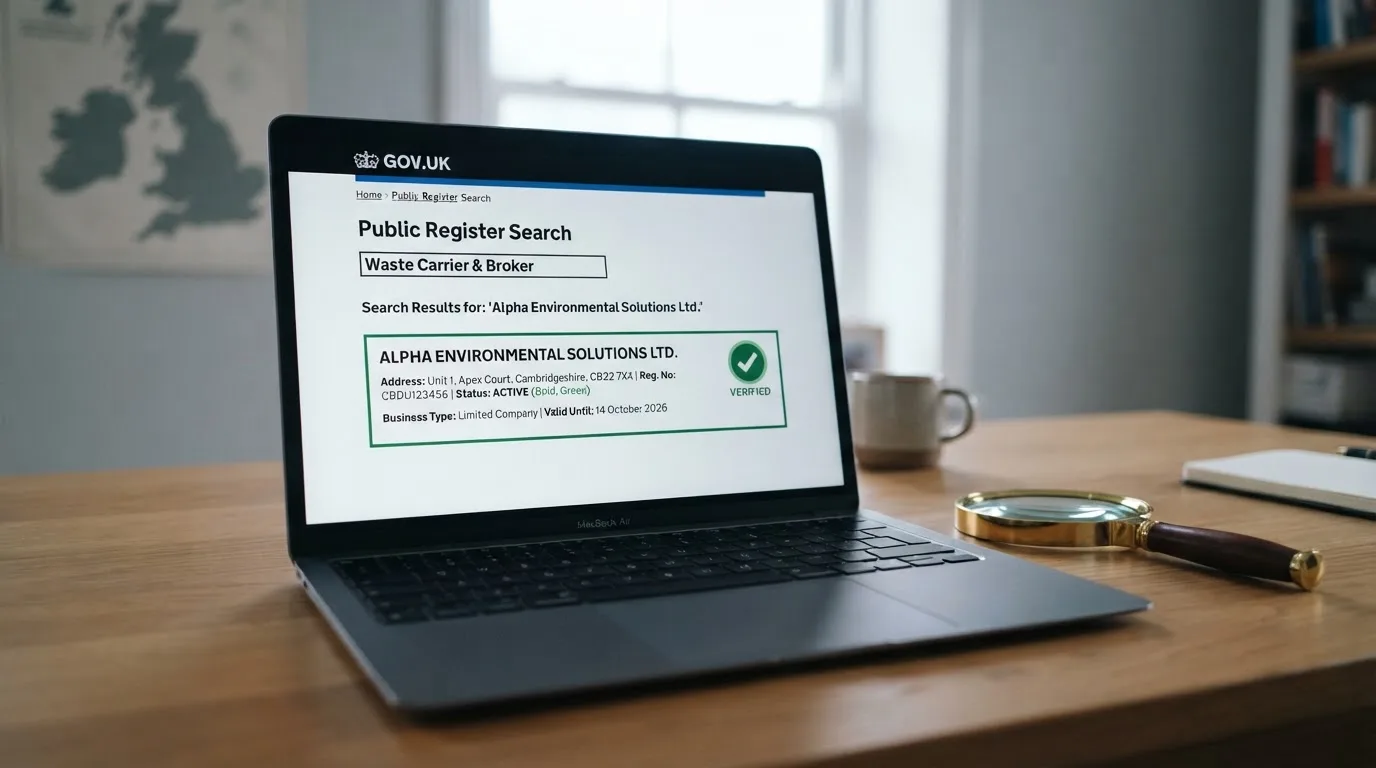
A remote casino operating licence is granted to a business, not a website. The licence number on the register has the form 123456-R-123456-000: the leading six digits repeat the licence holder’s account number, the “R” marks a remote (online) licence, and the final part counts revisions. The licence holder then lists one or more domains against the account, and the reader’s brand is one of those domains. This is why Ladbrokes and Betfair can be different brands but sit on the same licence: they are different domains against the same account.
The minimum age is 18. Name, address and date of birth are verified before the first deposit or any play — a rule in force since 7 May 2019. The verification gate is the same one a UK reader meets on every GB-licensed site; it is also the reason an account can take 24 hours to become “live” for play, and why the fastest sign-up is the one where the verification has already been done. Anonymous play is not possible at a licensed site, and the offer the reader is claiming is notional until the verification has cleared.
The licence conditions go further than the verification gate. The Licence Conditions and Codes of Practice (LCCP) and the Remote Technical Standards bind the operator on game design, stake limits, advertising, complaints handling and reporting. The codes are not optional, and a finding against an operator is published. For a reader, this is the layer that turns “no wagering” from a marketing line into a regulated promise: the operator’s offer has to match what the licence allows, and a no-wagering offer that does not is a finding waiting to happen.
Safer-gambling protections around a no-wagering sign-up offer
The safer-gambling frame around a no-wagering offer is the part the offer page itself never mentions. Every GB-licensed online operator must take part in GAMSTOP, the national online self-exclusion scheme, and enrolment is mandatory under every online licence since 31 March 2020. The self-exclusion periods are six months, one year or five years, and cannot be cancelled early. GAMSTOP blocks new account openings across the whole licensed market for the duration of the exclusion; a reader who has self-excluded cannot claim a sign-up offer at any GB-licensed site for the period they have chosen.
The stake and deposit rules sit underneath the licence. Online slots carry a maximum stake per game cycle: £5 for players aged 25 and over, in force from 9 April 2025, and £2 for 18-24, in force from 21 May 2025. There is no state-set deposit or loss ceiling, but operators must prompt the customer to set a financial limit before the first deposit — a rule that took effect on 31 October 2025. Since 31 October 2021 auto-play is banned, a slot spin may not be faster than 2.5 seconds, and losses disguised as wins are banned on UK-licensed games. The reader sees these rules as the floor of the product: the stake cap limits the size of any spin, the spin-duration cap limits how fast a session can run, and the financial-limit prompt is the moment a no-wagering offer becomes a question about budget rather than a question about the offer.
The financial vulnerability checks run at £150 net deposits in a rolling 30-day window, in force from 28 February 2025, using public data only. The wider financial risk assessments have been announced but are not yet in force. A reader crossing the £150 line will see a check on top of any offer they have claimed, regardless of whether the offer is no-wagering or wagered.
The support routes are the same on every licensed site. GAMSTOP for self-exclusion. GamCare and the National Gambling Helpline for advice and counselling. GambleAware for information and treatment. The Commission’s complaints route runs against the operator first, then an approved alternative dispute resolution (ADR) provider. On an offshore site there is no ADR; on a GB-licensed site, the ADR is the last step the reader has to take inside the UK.
A reader who has read this far is in a better position to make the call than one who has not. The licence frame means a no-wagering sign-up offer at a GB-licensed casino is paid out under regulated terms, the GAMSTOP enrolment closes the door on parallel accounts while a self-exclusion is active, and the deposit-limit prompt is the moment the offer’s value gets compared to the budget a player has set for the month. None of that is the offer’s selling point; all of it is what makes the offer worth the click.
Frequently asked questions about no-wagering sign-up offers in the UK
How does a casino sign-up offer with no wagering actually work?
A no-wagering sign-up offer pays out bonus winnings without requiring the player to cycle them through the games a set number of times first. The minimum conditions are normally an identity check, a payment method in the player’s name, and the offer’s own terms — frequently a maximum cashout, a slot restriction, or a deposit floor. Once those are met, anything won is withdrawable.
Which UK casino has the fastest sign-up process for claiming an offer?
The fastest sign-up is the one where the verification work has already been done — name, address and date of birth verified before the first deposit, as every UK licensee must do since 7 May 2019. Several of the larger brands pre-fill the verification through their sportsbook or retail stack, and the time saved is minutes rather than hours. The rest of the speed depends on the payment method and the operator’s own onboarding queue.
Are no-wagering sign-up offers usually smaller than offers with wagering attached?
Yes, almost always. A wagered offer can be priced at £100 with a 30x or 40x turnover requirement, on the assumption that most of it will be lost before wagering clears. A no-wagering offer has to be priced to be paid out, so it tends to land at £10 to £30 in bonus cash, or in free spins whose face value sits below the wagered alternative. The 10x cap that took effect on 19 December 2025 has narrowed the gap.
Can a no-deposit sign-up offer also carry no wagering requirement?
Yes. A small bonus — usually free spins on a single named slot — can be credited before any deposit and carry no wagering on the winnings. The catch is the size: 10 to 50 free spins is typical, and a maximum-cashout cap is common. Reading the terms before claiming is the only way to know what the offer will actually pay out.
What should a player check before assuming a sign-up offer has zero wagering?
The terms. The maximum cashout, the slot restriction, the deposit floor and the verification status. A no-wagering offer that pays onto a different payment method than the one used to deposit will not pay out as fast; a no-wagering offer with a £5 maximum cashout on a 50-free-spin package will not pay out what the spin value suggests. The 10x cap that took effect on 19 December 2025 means any figure above 10x in the small print is a signal that the offer is not what the headline describes.
Do UK casino sign-up offers change from month to month?
Yes. Operators refresh their sign-up offers routinely — seasonally, around major sports events, and when a new slot is launched. A reader comparing offers is comparing a snapshot, and the snapshot can change within weeks. The structural frame — the 10x cap, the mixed-product bonus ban, the verification gate — has held since 19 December 2025.