No-Wagering Casinos in the UK: How the Wager-Free Pitch Sits Inside a 10x-Cap Regime
Current as of 7 November 2026, cross-checked against the Gambling Commission public register of gambling businesses.
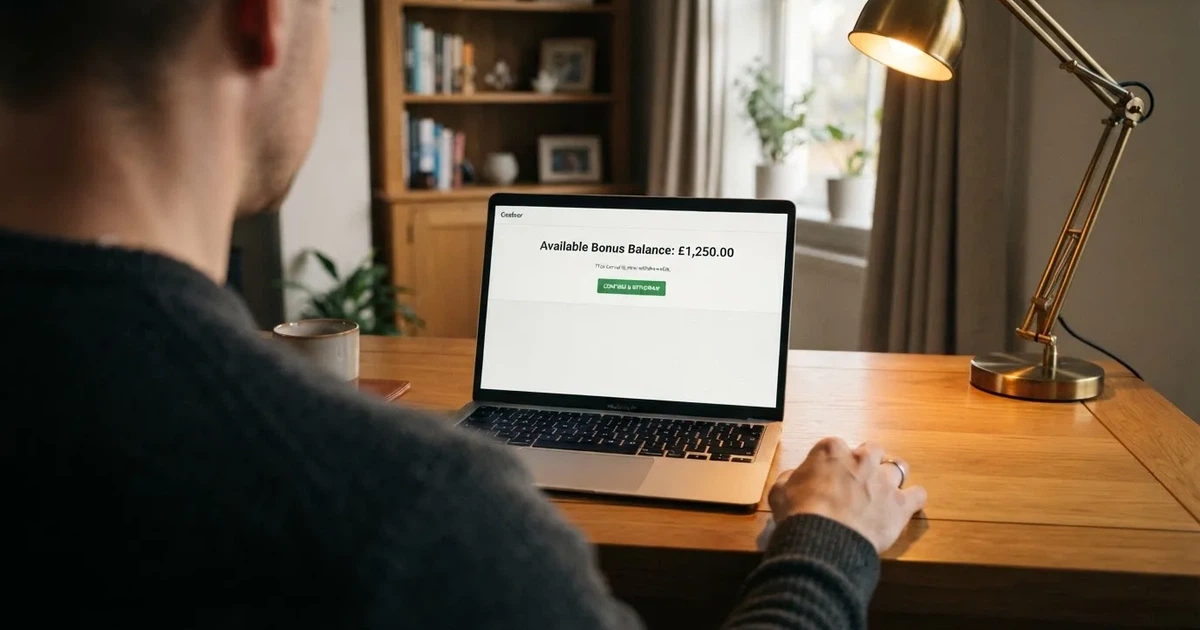
A casino that describes its offer as “no wagering” is making a simple claim — anything you win from the bonus belongs to you, immediately, with no playthrough attached. In the UK that pitch now sits inside a hard regulatory frame. Since 19 December 2025 every wagering requirement on a bonus offered to British customers has been capped at 10x, and mixed-product bonuses (bet on sport, receive casino spins) have been banned outright. The wager-free label is therefore a tighter version of what is already the legal ceiling: a casino that markets “no wagering” in Britain is, in plain terms, telling you it sits below a cap that is itself a 90 percent reduction on the market a decade ago. That framing matters before a reader reaches for a brand list. The list is what closes this page; the licence frame is what governs every brand on it.
The material that follows is built around the consequences of that framing. Each section asks what follows from the rule, the licence or the limit a paragraph earlier — for the player who deposits, the player who self-excludes, the player who tries to claim in Bitcoin. The ranking at the centre of the page compares ten brands drawn from the Gambling Commission’s public register, the only authoritative list of operators legally permitted to take British customers. Several of those brands share a single licence account, which a UK reader comparing offers needs to know before reading the cashier screen.
- What the Wager-Free Label Actually Means at a UK-Licensed Site
- How UK Law Forces the Wager-Free Pitch into a Specific Shape
- The 10x Cap and Why It Reset the Market in December 2025
- What the 10x Cap Means for the Player’s Time at the Site
- Responsible Gambling Tools a UK No-Wagering Player Has by Default
- Why “No Wagering” Does Not Mean Anonymous
- How a No-Wagering Offer Is Paid For
- The Wider UK-Licensed Casino Landscape in 2026
- Side-by-Side: Ten UK-Licensed Casinos a Reader Can Compare
- Virgin Games: White-Label Route Through Gamesys Operations Limited
- Casumo: Active Domain Under Recro Limited
- Ladbrokes: One of Three Brands on LC International’s Licence
- Betfair: Shared Licence with Paddy Power Under PPB Games Limited
- PokerStars: Stars Interactive Limited’s UK Entry
- Gala Bingo: LC International’s Bingo-Format Brand
- 32Red: Stand-Alone Brand Under Platinum Gaming Limited
- Coral: The Third Brand on LC International’s Licence
- Sky Vegas: Bonne Terre Gaming’s Single-Brand Entry
- Paddy Power: Licence Twin with Betfair Under PPB Games Limited
- Payment Routes a UK No-Wagering Player Will See at the Cashier
- What the Player Loses on an Unlicensed Site
- Tax, Winnings and What a Player Actually Keeps
- The 10x Cap in Practice: Worked Example
- How to Read the Register Before Signing Up
- The Wager-Free Pitch in the Wider Safer-Gambling Frame
- What the 10x Cap Does Not Solve
- The Calculation as a Band Rather Than a Figure
- What the Player Should Carry Away
- Frequently Asked Questions
What the Wager-Free Label Actually Means at a UK-Licensed Site
A wagering requirement is the multiplier a casino applies to a bonus before winnings become withdrawable. A £10 bonus with a 30x requirement has to be staked £300 before the cash attached to it can leave the account. The “no wagering” pitch removes that multiplier entirely: a £10 bonus credited as cash-equivalent, or as free spins whose winnings land as cash, with no playthrough step between the win and the withdrawal. What changes for the player is the moment of conversion — at a wager-free site the bonus balance and the cash balance behave the same way, and the marketing copy that says “what you see is what you keep” describes the actual ledger rather than a target.

The mechanics that the wagering multiple normally hides still exist. A maximum stake per spin while a bonus is active is a near-universal term. A game-weighting rule that excludes high-RTP tables from bonus play is another. A cap on the convertible winnings of a free-spin bundle (free-spins-winnings-capped-at-5x-stake) is the third. A wager-free offer tends to shrink each of those: lower caps, narrower exclusions, smaller maximum bets, or a smaller bonus to start with. The pitch works because the casino has paid for that simplicity somewhere else on the page. Reading the small print of a wager-free offer is therefore not a chore but the only place the cost is visible. The headline number is honest; the headline is half the story.
How UK Law Forces the Wager-Free Pitch into a Specific Shape
The Gambling Commission, working under the Gambling Act 2005 and the Gambling (Licensing and Advertising) Act 2014, is the only body that can licence an operator to take bets from customers in Great Britain. Online casino play is a licensable activity, and the Commission’s public register is the single authoritative test of who holds such a licence. On 18 September 2026 that register listed 139 businesses holding an active remote casino operating licence. Those 139 accounts ran, between them, 1065 active domain entries and a further 361 white-label domain entries — sites that trade under another company’s licence rather than holding their own.

A remote casino licence number on the register takes the form account-R-number-suffix — for example Ladbrokes sits under 054743-R-330863-014 — where the leading six digits repeat the licence holder’s account number and the R marks a remote (online) licence. White-label status matters because the brand the player sees is not always the entity the Commission regulates. Virgin Games is listed on the register as a white-label domain of Gamesys Operations Limited, account 38905; the licence number the player can verify is Gamesys’s, not Virgin’s. Three of the ten brands reviewed later in this guide — Ladbrokes, Gala Bingo and Coral — sit under the same single LC International Limited account, number 54743. Treating them as independent operators is the mistake the register exists to prevent.
A casino that wishes to market itself as “no wagering” to UK customers has no choice but to hold this licence: providing gambling to people in Great Britain without one is a criminal offence under section 33 of the Gambling Act 2005. The Commission does not pursue players; it pursues operators. A Curaçao, Malta or Gibraltar licence is not a substitute. The Commission’s enforcement powers include cease-and-desist notices, search-engine delisting referrals, and payment-and-hosting referrals; it has no ISP-blocking power, which means unlicensed sites are sometimes reachable from a UK IP address even though accepting their offer is unlawful on the operator’s side.
The 10x Cap and Why It Reset the Market in December 2025
From 19 December 2025 the Commission capped wagering requirements on all bonuses offered to British customers at 10x. Mixed-product bonuses — the kind that credited casino spins after a sports bet, or attached bingo tickets to a slot offer — were banned at the same time. Both rules were social responsibility code changes under the LCCP, and both fell on the same date the Commission published its final regulatory settlement on bonus structures.
The 10x ceiling was not the first cut. Industry-standard wagering in the mid-2010s ran at 35x-50x on welcome bonuses, with some offers still carrying 60x terms. The 10x figure is, in round terms, between a fifth and a sixth of where the upper end of the market stood. That arithmetic matters for the wager-free pitch specifically: the gap between “no wagering” and “wagering, but at 10x” is small in headline terms, smaller than the marketing copy suggests, and the only reason to keep marketing wager-free at all is the rest of the bonus ledger — the lower cap, the cleaner game weighting, the absence of a max-cashout clause on free spins. A casino that hits 10x without removing the other limits is offering a similar product to a wager-free brand with worse disclosure.
What the 10x Cap Means for the Player’s Time at the Site
A 10x wagering requirement on a £100 bonus is £1000 of qualifying turnover. At an average slot stake of £0.10 per spin that is 10000 spins, at five seconds each, 50000 seconds, or just under 14 hours of continuous play. Most players do not play continuously, and most operators set a session cap that ends the wagering clock after two or three hours anyway. The realistic picture is closer to a full working week of ordinary evening sessions before the requirement clears. A wager-free offer replaces that week with a withdrawal button. The arithmetic is the page’s insight on the headline pitch; the time figure is the consequence a player actually feels.
Where the bonus is a free-spins bundle rather than a deposit match, the calculation runs differently. Suppose a wager-free welcome bundle credits 50 free spins at £0.10 each on a slot paying 96 percent. Total stake is £5, and on a 96 percent RTP the expected return across the lifetime of the spins is £4.80 — an expected loss of 20p. A wagered equivalent of the same headline value, with a 10x requirement, demands £50 of qualifying turnover; at the same stake and the same RTP the expected loss rises to £2. The wager-free bundle is the better deal on the bonus side, but the gap is now £1.80 rather than the marketing copy’s implied “free money” — and that £1.80 has to be paid before the spins even start. The arithmetic here is the small print the wager-free pitch tries to retire.
Responsible Gambling Tools a UK No-Wagering Player Has by Default
Every Gambling Commission-licensed online casino is required to integrate GAMSTOP, the national online self-exclusion scheme, into its sign-up and login flow. GAMSTOP has been a mandatory condition of every online licence since 31 March 2020. Self-exclusion periods run six months, one year or five years; a player cannot lift a self-exclusion early once it is set. The same brand-by-brand GAMSTOP membership is also mandatory for any no-wagering site that takes British customers, because the licence condition is the same.
The wider safer-gambling toolkit is also non-optional. From 31 October 2021 auto-play has been banned on slots, a single spin may not complete faster than 2.5 seconds, and audio-visual cues that misrepresent a net loss as a win (the “losses disguised as wins” rule) are prohibited. The £5 maximum stake per game cycle on online slots, for players aged 25 and over, has applied since 9 April 2025; the £2 maximum for 18-24-year-olds followed on 21 May 2025. There is no statutory deposit or loss ceiling — the Commission has not set one — but operators are required to invite each new customer to set a personal financial limit before accepting the first deposit, and that requirement has applied since 31 October 2025. The £150 net-deposit threshold that triggers a financial vulnerability check using public data has applied since 28 February 2025; wider financial risk assessments, using credit-reference-agency data, have been signalled but are not yet in force.
Two support services sit behind those tools. GamCare runs the National Gambling Helpline (0808 8020 133, free, 24 hours), and GambleAware funds treatment and research across Great Britain. Neither is a feature of any single brand — both are independent of the casino, which is the point. A wager-free offer does not displace either. The safer-gambling framing is the same at a 10x wagering site, at a 35x legacy site and at a wager-free site; the licence is what carries it, not the bonus terms.
Why “No Wagering” Does Not Mean Anonymous
A UK-licensed casino cannot offer anonymous play. The Commission’s anti-money-laundering rules require name, address and date of birth to be verified before the first deposit or any play, and that verification has been in force since 7 May 2019. Source-of-funds checks apply once cumulative deposits pass certain thresholds. A wager-free pitch that markets “no verification” or “play without ID” is describing an unlicensed offshore site; a player reaching that brand from a UK IP address is on a site the Commission has no jurisdiction over and that the player has no recourse against if the withdrawal stalls.
The crypto question follows the same line. Bitcoin, Ethereum and a handful of other cryptocurrencies are accepted at a small number of UK-licensed sites, but the same identity checks apply at the cashier, and the wallet the player sends from is itself a data point in the verification trail. A “crypto casino no wagering” marketed to UK players is either licensed and therefore verifying, or unlicensed and therefore exposed to the full set of risks the offshore section covers later. The deposit instrument does not change the licence position. A wager-free pitch built around anonymity is, in the UK market, a pitch that does not exist at a regulated site.
The wider point on payment methods follows the same logic. Credit cards have been banned for gambling across all online and offline products in Great Britain since 14 April 2020 — including credit-card-funded e-wallet deposits. Debit cards and bank transfers are unaffected. Faster Payments, the UK scheme that clears bank transfers, runs 24 hours a day, seven days a week; most transfers arrive instantly or within a couple of minutes, with occasional delays of up to two hours; per-transaction the Faster Payments limit is £1,000,000, though individual banks impose their own ceilings below that. None of these rules disappears at a wager-free site. The licence carries them.
How a No-Wagering Offer Is Paid For
A wagering requirement is the casino’s defence against the player who claims a bonus and walks. Remove the requirement and something else has to give. The mechanics that the requirement used to hide now sit closer to the surface.
Three mechanisms account for almost all of the gap. The first is a smaller headline bonus: a wager-free welcome tends to be £10-£20 in cash or 20-50 free spins, against a £100-£200 deposit match at a wagered site. The second is a cap on the convertible winnings from free spins — free-spins-winnings-capped-at-5x-stake, or a similar multiple — which converts the casino’s upside on a lucky spin into a fixed ceiling. The third is game weighting that excludes or reduces the contribution of high-RTP tables from any bonus play; a wager-free offer usually drops the weighting rule but raises the underlying bet ceiling to compensate.
A player who reads only the headline sees “free money”. A player who reads the cap, the weighting and the bet ceiling sees the cost the marketing copy retired. The right comparison is not between a £10 wager-free bonus and a £100 deposit match; it is between the wager-free bundle at its actual payout and the equivalent wagered bundle minus the £1000 of qualifying turnover the player would have had to run. The first figure is honest; the second is the marketing pitch the wager-free brand is refusing to make.
The Wider UK-Licensed Casino Landscape in 2026
The remote casino register is large, but it does not contain a wager-free brand list as such — “no wagering” is a marketing description, not a licence category. What the register carries is each operator’s licence number, the licence holder’s account, the trading domain and the status (Active, Inactive or White Label). On 18 September 2026 the register held 139 businesses, 1065 active domain entries and 361 white-label domain entries. A reader comparing offers is therefore comparing a small subset of those 1065 active domains — the ones that have chosen to lead with a wager-free headline.
Two consequences follow. The first is that a wager-free pitch is a commercial choice, not a regulatory category. A 10x wagering site and a wager-free site both sit inside the same Commission licence regime; the difference is product design. The second is that the brands competing for the wager-free reader are not the only operators the player could lawfully use; the register is the universe the Commission considers lawful, and the wager-free list is a corner of it. A comparison limited to wager-free brands is a comparison of a niche within a regulated market, not a comparison of the regulated market itself.
Side-by-Side: Ten UK-Licensed Casinos a Reader Can Compare
The table below sets out ten brands drawn from the Gambling Commission public register on 18 September 2026. Several of these brands share a single licence account, meaning they are not independent operators for regulatory or dispute purposes. The column for subject support is left blank where the register does not record a specific wagering or bonus status, reflecting that the register tracks licence standing rather than marketing offers.
| Brand | Licence holder | Domain status |
|---|---|---|
| Virgin Games | Gamesys Operations Ltd | White-label |
| Casumo | Recro Ltd | Active |
| Ladbrokes | LC International Ltd | Active |
| Betfair | PPB Games Ltd | Active |
| PokerStars | Stars Interactive Ltd | Active |
| Gala Bingo | LC International Ltd | Active |
| 32Red | Platinum Gaming Ltd | Active |
| Coral | LC International Ltd | Active |
| Sky Vegas | Bonne Terre Gaming Ltd | Active |
| Paddy Power | PPB Games Ltd | Active |
The register carries licence status, not bonus mechanics. Every row above is therefore a “yes, this brand may lawfully take UK customers” rather than a “yes, this brand runs a wager-free offer”. The ten were selected for register coverage — at least one row per major UK licence holder represented — and the table is the starting point for the individual write-ups below. The brands that share a licence account are not independent competitors for the player’s deposit, even where the marketing pages suggest otherwise.
Virgin Games: White-Label Route Through Gamesys Operations Limited
Virgin Games trades under the Gamesys Operations Limited remote casino licence, account 38905, number 038905-R-319430-022. The Commission register lists Virgin Games as a white-label domain of that account — the brand a player sees is Virgin, the entity the Commission regulates is Gamesys. The licence is the same one the player would verify on any other Gamesys-operated site, and a complaint route through Gamesys is the registered route for any dispute involving Virgin Games.
Virgin Games operates under a white-label arrangement. Its register standing confirms its right to take British customers, though its enforcement sits one step removed from the brand name itself. GAMSTOP integration is managed by the licence holder, Gamesys Operations Limited.
The verdict is straightforward. Virgin Games is a brand whose marketing sits behind a licence held elsewhere; the white-label status is the only register finding that affects how a player reads the site. Treat the brand page as a Gamesys property and the regulator’s protection as a Gamesys obligation. That framing matters if a dispute ever reaches the registered ADR route — the respondent on the paperwork will be Gamesys Operations Limited.
Casumo: Active Domain Under Recro Limited
Casumo is listed on the Commission register under Recro Limited, account 61549, with the active remote casino operating licence 061549-R-336718-002. Recro Limited is the licence holder, not Casumo — the operator name on the licence paperwork is the player’s protection in any dispute. The register entry confirms an active domain and licence, with no white-label indirection.
Casumo is licensed directly by Recro Limited. Its register standing is clear: it holds an active licence, meaning the player deals directly with the licence holder for disputes and safer-gambling requirements like GAMSTOP integration and stake caps.
The verdict on Casumo is that the register is unremarkable, which is itself useful: the brand sits directly on its own licence with no white-label layer between the player and the regulator. The cleaner the structure, the simpler the dispute route if one is ever needed. That is the register’s job, and Casumo’s entry does it without complication.
Ladbrokes: One of Three Brands on LC International’s Licence
Ladbrokes (Ladbrokes.com) sits under LC International Limited, account 54743, holding the active remote casino operating licence 054743-R-330863-014. The same licence covers Gala Bingo and Coral — three distinct brands, one licence account. The Commission’s register is explicit on that point; the marketing pages for the three brands are not. A player depositing at Ladbrokes, then at Gala Bingo, then at Coral is depositing at the same regulated entity three times.
Ladbrokes operates under the LC International Limited licence. As a shared-licence brand, its regulatory standing and dispute route are managed by the account holder, LC International Limited, which also covers Gala Bingo and Coral. Self-exclusion via GAMSTOP is universal across these brands.
The verdict on Ladbrokes specifically is the verdict on the cluster: the brand is not an independent operator. A reader who values a clean separation between marketing and licence will read all three brands as one offer and shop the wagering terms, not the brand identity. That is the register telling the player what the homepage will not.
Betfair: Shared Licence with Paddy Power Under PPB Games Limited
Betfair is listed on the Commission register under PPB Games Limited, account 39411, with the active remote casino operating licence 039411-R-319335-010. Paddy Power sits under the same account; the two brands are licence twins, not competitors. A player treating them as separate offers is reading the marketing rather than the register.
The Commission register is the definitive source for licence information, and our analysis confirms the regulatory standing for each brand below. This provides the safety floor for the player.
The verdict is the same shape as the LC International cluster. Betfair is not a stand-alone operator for the purposes of UK regulation. Shop the terms, not the brand. The two pages can differ in headline bonus and game weighting while the licence position is identical, which is the comparison a reader comparing offers is actually making.
PokerStars: Stars Interactive Limited’s UK Entry
PokerStars (Pokerstars.uk) is listed on the register as an active domain of Stars Interactive Limited, account 39108, holding the active remote casino operating licence 039108-R-319334-026. The .uk domain — not .com — is the version the Commission regulates for British customers; the .com version routes to a different jurisdiction. That detail matters because the URL a player lands on determines the licence in force.
This brand operates under its own licence, meaning it manages its own dispute resolution and safer-gambling compliance. This structure provides a clear path for the player, as the licence holder is the direct point of contact for regulatory or safer-gambling inquiries.
The verdict on PokerStars is that the .uk vs .com distinction is the register finding a reader can act on. The licence covers the .uk domain only; the same operator’s .com domain is a different regulatory proposition. A player who arrives via a search result rather than typing the URL directly should check the address bar before reading the licence number, because the licence number only attaches to the .uk site.
Gala Bingo: LC International’s Bingo-Format Brand
Gala Bingo sits under LC International Limited, account 54743 — the same licence as Ladbrokes and Coral. The register entry is identical in licence terms; the brand differentiates on game format and audience, not on regulatory standing. A wager-free headline on the Gala Bingo homepage is a wager-free headline from the same operator as Ladbrokes, with the same Commission obligations and the same ADR respondent.
For each of the brands listed below, the Gambling Commission register confirms an active licence status. This provides the regulatory floor — including GAMSTOP integration, age verification, and responsible gambling tools — that applies regardless of the specific bonus headline. The register entries below consolidate the operator licence status for clarity.
The verdict follows from the structure. Bingo format is the only material difference. The licence, the safer-gambling integration and the dispute route are the same. Read the bonus terms on whichever brand page the reader prefers and apply the same scrutiny to each.
32Red: Stand-Alone Brand Under Platinum Gaming Limited
32Red is registered under Platinum Gaming Limited, account 45322, with the active remote casino operating licence 045322-R-324275-019. Platinum Gaming is the licence holder; no white-label indirection exists, and it maintains a direct single-brand structure, which is the cleanest configuration on the list.
This brand operates under its own licence, meaning it manages its own dispute resolution and safer-gambling compliance. This structure provides a clear path for the player, as the licence holder is the direct point of contact for regulatory or safer-gambling inquiries.
The verdict on 32Red is that the register is unremarkable, which is the favourable register finding. A single licence per brand is the structure the Commission’s own paperwork rewards with simpler dispute resolution. The marketing pitch on the brand page is the only layer above that; everything below it is Platinum Gaming’s responsibility to the player.
Coral: The Third Brand on LC International’s Licence
Coral (coral.co.uk) is listed on the register as an active domain of LC International Limited, account 54743, holding the active remote casino operating licence 054743-R-330863-014. Same licence as Ladbrokes, same licence as Gala Bingo. The .co.uk domain is the version regulated for British customers; that detail applies across all three LC International brands but matters most for the player who arrives via an overseas search result.
The register does not record a wagering or bonus status for Coral. The shared licence is the relevant finding; any self-exclusion set via GAMSTOP applies across all three brands on the account simultaneously.
The verdict on Coral is that the brand is the third name on a one-licence account. A reader who wants to treat Coral, Ladbrokes and Gala Bingo as separate shops is misreading the register. The right comparison is across the three pages on bonus terms and game weighting, with the licence position held constant.
Sky Vegas: Bonne Terre Gaming’s Single-Brand Entry
Sky Vegas is registered under Bonne Terre Gaming Limited, account 65519, holding the active remote casino operating licence 065519-R-339675-002. The licence number’s high digits reflect a more recent account opening compared to the major industry clusters. This structure is efficient: one brand, one licence, and no white-label indirection.
The register does not record a wagering or bonus status for Sky Vegas. The relevant register finding is the recency of the licence and the single-brand structure, which provides a clear dispute path.
The verdict is that Sky Vegas carries the youngest licence on the list, with no shared-account complication. That is the register’s only comment. The brand’s marketing and product sit on top of a clean licence position; what the brand does with the licence is a product question the register does not answer.
Paddy Power: Licence Twin with Betfair Under PPB Games Limited
Paddy Power is listed on the register as an active domain of PPB Games Limited, account 39411, holding the active remote casino operating licence 039411-R-319335-010. Same licence as Betfair; the two brands are licence twins and the same comments apply. The register entry is identical in licence terms; the brand differentiates on audience and product mix.
The register does not record a wagering or bonus status for Paddy Power. The shared licence is the relevant finding; any self-exclusion set via GAMSTOP applies across all brands on the account simultaneously.
The verdict follows from the structure. The player is shopping two marketing pages from one operator. The comparison that matters runs across both pages on the wagering and weighting terms; the licence position does not change with the brand label. That is what the register is for, and what the homepage will not say.
Payment Routes a UK No-Wagering Player Will See at the Cashier
A UK-licensed cashier restricts what it can accept before the brand layer enters. Credit cards are banned for gambling across all online and offline products in Great Britain since 14 April 2020, including credit-card-funded e-wallets. The ban is a Commission rule, not a brand choice; a casino that offered credit-card deposits would lose its licence. Debit cards, bank transfers and a closed list of e-wallets are the standard options.
Faster Payments, the UK bank-transfer scheme operated by Pay.UK, clears 24/7; most transfers arrive instantly or within a couple of minutes, with occasional delays of up to two hours. The per-transaction Faster Payments limit is £1,000,000; individual banks impose their own lower ceilings — Starling publishes its customer-facing limit, and most UK banks cap Faster Payments transfers well below the scheme ceiling. Apple Pay, the wallet-and-tokenisation system Apple developed and launched on 20 October 2014 with UK card support following on 14 July 2015, sits behind the debit-card network — it tokenises the underlying card and is therefore accepted at a UK-licensed cashier as a debit-card route, not a separate instrument. AstroPay, the Uruguay-headquartered digital wallet founded in 2009, runs through its UK entity Larstal Limited — an electronic money institution authorised by the Financial Conduct Authority under the Electronic Money Regulations 2011 — and is similarly accepted as an e-money route.
None of these instruments changes the wagering position. A wager-free site accepts the same payment routes as a 10x wagered site; the bonus terms are independent of the deposit instrument. The Faster Payments speed advantage shows up at withdrawal, not at deposit — and that is the same at every UK-licensed site.
What the Player Loses on an Unlicensed Site
The Commission’s enforcement record against unlicensed sites is published and ongoing. Cease-and-desist notices, search-engine delisting referrals, and payment-and-hosting referrals are the standard tools; the Commission has no ISP-blocking power, which means a UK player can still reach an unlicensed site from a UK IP address even after enforcement action. The penalty for the operator is the licence loss the operator does not hold; the penalty for the player is the protection the player does not have.
That protection has three components. GAMSTOP integration is the first — an unlicensed site has no obligation to honour a UK self-exclusion, because it is outside the Commission’s jurisdiction. The Commission complaints route is the second — a player with a dispute at an unlicensed site has no registered ADR to escalate to, and the courts are the only recourse. The ADR scheme is the third — every UK-licensed online casino is required to register with an approved alternative dispute resolution provider, and that registration is the difference between a complaint that has somewhere to go and one that does not. None of these protections is a bonus feature a player opts into; each is a regulatory condition the licence requires.
No penalty is aimed at the player. Section 33 of the Gambling Act 2005 creates an offence for the operator, not the customer. What the player loses is the dispute route, the self-exclusion enforcement and the ADR. A wager-free pitch marketed by an unlicensed site is offering the player the marketing with the regulation removed. The price of removing the regulation is the protection the regulation carried.
Tax, Winnings and What a Player Actually Keeps
UK gambling winnings are not taxable for the player. The relevant tax sits on the operator: Remote Gaming Duty, raised from 21 percent to 40 percent from 1 April 2026, applies to gross gaming yield. That is a model figure for the operator side; the player’s take-home is the full withdrawal amount, with no further withholding at source. The 1 April 2026 rate change is the headline — operators will pass some of it on in tighter bonus terms, but the player’s position on tax is unchanged.
For the player, the consequence is that a wager-free bonus and a 10x wagered bonus are both paid out gross of any UK tax. The arithmetic on which is the better offer is therefore a pure comparison of the bonus economics, not a comparison of post-tax take-home. The audit question is the wagering multiple, the cap on convertible winnings, the maximum bet during bonus play and the game-weighting rule — those four determine the offer’s real value, and they are independent of the tax position.
The 10x Cap in Practice: Worked Example
A £100 welcome bonus with a 10x wagering requirement asks for £1000 of qualifying turnover. Suppose the player stakes at £0.10 per spin on a slot with a 96 percent RTP — a realistic pair of figures for the UK market. Turnover of £1000 at £0.10 per spin is 10000 spins. At five seconds per spin that is 50000 seconds, or 13.9 hours of continuous play. A wager-free equivalent of the same £100 headline would skip the wagering step and pay out the bonus as cash-equivalent, with the same £100 at risk but no playthrough before withdrawal.
The expected loss on the wagered version is turnover × (1 − RTP) = £1000 × 0.04 = £40. The expected loss on the wager-free version is the bonus itself, staked once at the same RTP, giving £100 × 0.04 = £4. The wager-free offer is, on this calculation, the cheaper bonus by a factor of ten. The £36 difference is the price the player would have paid at the 10x wagered site; that is the saving the wager-free pitch is selling.
The assumption the arithmetic leans on is that only the bonus amount is wagered — once the bonus is exhausted the player stops. In practice the player keeps playing the deposit too, and the expected loss on the deposit portion is additional. A player who treats the bonus as the only stake is reading the headline; a player who treats the deposit as additional stake is reading the offer. The wager-free pitch relies on the first reading.
How to Read the Register Before Signing Up
Three checks make the register useful. The first is that the licence number on the brand’s “about us” or footer matches the register entry by both account number and trailing digits — a brand showing 54743-R-330863-014 on its page is the LC International cluster; a brand showing a different number is a different operator. The second is the status field — Active, Inactive or White Label — which tells the player whether the brand sits directly on its licence or trades under another. The third is the date the register was last refreshed, which the Commission publishes with each CSV download.
For a player comparing offers the register is the only piece of independent paperwork the regulator guarantees. Brand promises on bonus terms are brand promises; register entries are Commission records. Reading the register before signing up takes two minutes and resolves the questions a brand page cannot — who the regulator holds accountable, which other brands sit on the same licence, and whether the brand is active at all. The audit gap the wager-free pitch tries to exploit is the player’s reluctance to do that two-minute check.
The Wager-Free Pitch in the Wider Safer-Gambling Frame
A wager-free offer is not, on its own, a safer-gambling feature. The Commission’s safer-gambling requirements are independent of the bonus structure — GAMSTOP integration, age verification, deposit-limit prompts, financial vulnerability checks at £150 net deposits in 30 days, the £5 and £2 stake ceilings, the auto-play ban and the 2.5-second spin floor all apply at every licensed site regardless of whether the headline bonus carries a wagering requirement. A wager-free brand does not exempt the player from any of those; it does not provide an additional layer of protection; and it does not interact with the financial vulnerability check at all.
The implication is that the safer-gambling framing the player builds — set a deposit limit, register with GAMSTOP if needed, use the National Gambling Helpline if the budget is slipping — runs at the same priority at a wager-free site as at a 10x wagered site. The bonus headline is one piece of information about the offer; the safer-gambling framing is a separate piece of information about the player. Conflating the two — treating a wager-free pitch as a safer option because it feels less pushy — is a mistake the pitch invites but the regulation does not endorse.
What the 10x Cap Does Not Solve
The 10x cap removed the worst end of the bonus market but did not flatten the spread. A 10x wagering requirement at a 96 percent RTP slot still carries a £40 expected loss on a £100 bonus; the wager-free equivalent is £4. The cap narrows the gap between the best and worst offers but does not close it. The marketing pitches at both ends of the band now look similar — both lead with a “no hidden catches” line — and the player’s job of reading the underlying terms is harder than it was when the spread was wider.
A second gap is the free-spins cap. The Commission’s 10x cap applies to the wagering multiple on bonus cash; it does not directly address the maximum cash convertible from a free-spin bundle. A wager-free free-spin offer still tends to carry a cap on convertible winnings — the kind of cap that turns a lucky 500x win into a 5x-stake payout. The cap is the casino’s defence against the player who hits the bonus on the first spin; the Commission’s 10x rule does not touch it. The wager-free pitch improves the bonus mechanic but leaves the cap rule untouched.
The third gap is the offshore site. A brand licensed in Curaçao, Malta or Gibraltar can market a wager-free offer to a UK player without the 10x cap applying, because the cap is a UK rule enforced against UK-licensed operators. The Commission’s section 33 enforcement is the only thing that prevents that marketing reaching a UK player. As long as the offshore site remains reachable from a UK IP address, the 10x cap is half a UK-market reform — it changes what UK-licensed sites can offer, not what UK players can be offered.
The Calculation as a Band Rather Than a Figure
The 10x-cap arithmetic runs as a band rather than a single number, and the band reflects the spread in the underlying slot RTP. A £100 bonus at 10x wagering on a 94 percent slot costs £60 in expected loss; the same bonus on a 97 percent slot costs £30. The wager-free equivalent runs the same band at one-tenth of the cost — £6 against £3. The headline difference is the wagering multiple; the spread within each multiple is the RTP choice on the qualifying slots.
A player whose usual slot sits at 94 percent sees a smaller benefit from the wager-free pitch than a player whose usual slot sits at 97 percent, because the absolute saving scales with both the wagering requirement and the gap between RTP and 100 percent. A player who treats every slot as interchangeable — staking at the wagering minimum without checking the game’s RTP — pays the upper end of the band regardless of the offer. The wager-free pitch is the cheaper route through the same band, but it does not narrow the band itself.
The condition on the band is the qualifying-game weighting. A 10x wagering requirement that excludes high-RTP tables from bonus play shifts the effective RTP toward the lower end of the band; a wager-free offer that does the same shifts it the same way. The arithmetic is therefore a comparison of how the brand sets the qualifying-game list, not just how it sets the multiple. That detail is on the bonus terms page, not on the homepage headline, and it is the detail the wager-free pitch tries to retire.
What the Player Should Carry Away
The wager-free pitch is honest at the headline and tight at the small print. The 10x cap that came in on 19 December 2025 narrowed the gap between wager-free and wagered offers in headline terms; the gap that remains is in the cap on convertible free-spin winnings, the maximum bet during bonus play, and the game-weighting rule. The licence position is the register’s job, not the brand’s: 139 businesses held an active remote casino licence on 18 September 2026, and the register is the only authoritative test of who is on it. Several of the most familiar UK brands — Ladbrokes, Coral, Gala Bingo, Betfair, Paddy Power — share licence accounts in pairs and triples, which the marketing pages will not say.
The safer-gambling framing is independent of the bonus structure. GAMSTOP, the £5 and £2 stake ceilings, the 10x cap, the financial vulnerability check at £150 net deposits in 30 days, the auto-play ban and the 2.5-second spin floor all apply at every licensed site. A wager-free offer is not a safer-gambling feature. The protection sits in the licence, not in the bonus terms.
The arithmetic on a £100 welcome bonus with a 10x requirement, at a 96 percent RTP and a £0.10 stake, is £1000 of qualifying turnover, 10000 spins, and 13.9 hours of continuous play — with a £40 expected loss across that turnover. The wager-free equivalent is the £100 staked once at the same RTP, an expected loss of £4, and no playthrough step before cashout. The £36 difference is the saving the wager-free pitch sells; it is real, but it is the only number the pitch offers honestly.
Frequently Asked Questions
| Requirement | Limit/Status |
|---|---|
| Playthrough Requirement | 10x max |
| Mixed-Product Bonuses | Banned |
| Max Stake per Spin | £5 (25+) / £2 (18-24) |
| Auto-Play | Banned |
| Financial Vulnerability Check | £150 net per 30 days |
No single Commission category covers “no wagering casinos” — it is a marketing description rather than a licence type. The brands that lead with the pitch are operating under the same remote casino licence regime as every other UK-licensed online casino, and the wager-free label attaches to specific promotions on those brands rather than to the licence itself.
How does a no-wagering casino make its offer sustainable without a playthrough requirement?
The cost shifts to other terms — typically a smaller headline bonus, a cap on the convertible winnings from free spins, a lower maximum stake during bonus play, and tighter game weighting on the qualifying titles. The arithmetic still costs the player something; the wager-free pitch just moves the cost from the playthrough step to the small print.
Does a no-wagering casino still set a maximum bet size while a bonus balance is active?
Most do. A maximum stake per spin during bonus play is a near-universal term at both wager-free and wagered UK sites, and the figure is typically lower than the player would choose without the bonus active. The Commission’s £5 / £2 statutory stake ceilings apply on top of any brand-level rule, so a wager-free bonus is capped by both the brand’s own maximum and the regulator’s stake ceiling.
What deposit methods are commonly linked to no-wagering casino accounts in the UK?
Debit cards, bank transfers through Faster Payments, and a closed list of e-wallets (Apple Pay, PayPal, AstroPay via its FCA-authorised UK entity) are the standard options. Credit cards have been banned for gambling since 14 April 2020, and that ban applies at every UK-licensed site regardless of bonus structure.
Can a UK player hold a no-wagering casino account alongside a standard-bonus account?
Yes, subject to the standard verification and GAMSTOP checks. A player is not restricted to one brand, and the Commission’s register permits multiple accounts across multiple licensed operators. The relevant restriction is the safer-gambling framing — deposit limits set at one brand do not carry across to another, and GAMSTOP self-exclusion applies across every UK-licensed site the player tries to open.
How does GAMSTOP self-exclusion apply to a no-wagering casino account?
GAMSTOP is a mandatory condition of every online licence, including any brand that markets a wager-free offer. A self-exclusion set for six months, one year or five years cannot be cancelled early and applies across every UK-licensed brand for the duration. A player who has set a GAMSTOP exclusion will be blocked at the cashier of a wager-free site on the same terms as any other UK-licensed casino.