Slot tournaments at UK casinos in 2026: formats, rules, prizes
Current as of 7 November 2026 — figures cross-checked against the Gambling Commission’s public register of gambling businesses.
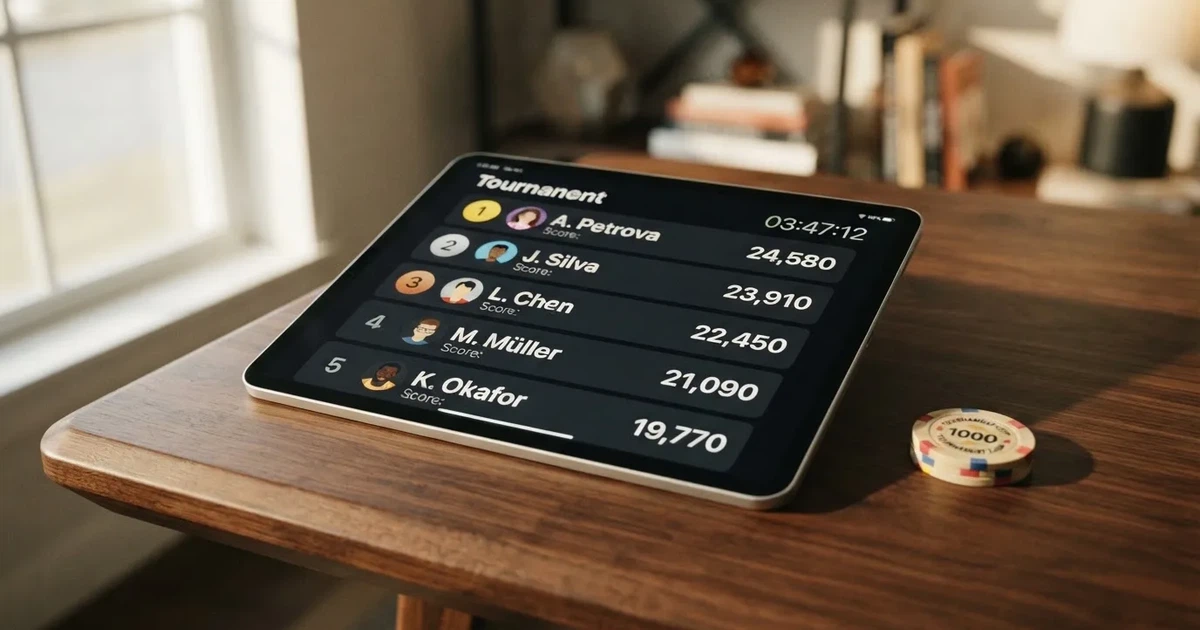
Slot tournaments at a UK-licensed casino are not a separate product. They are a promotional format bolted onto the same slot games the operator already runs, with the same stake caps and the same house edge. What changes is the score: instead of keeping what you win, you bank points, climb a leaderboard and take a share of a fixed prize pool. That one shift — from cash to ranking — is the entire mechanic, and it explains why tournaments exist at all. They give an operator a reason to keep a player at one game, on one stake, for a fixed window, when a normal bonus would have ended on its own. For a player, that same window is where the cost lives, and the rest of this page is about where that cost lands.
- The ten UK casino sites reviewed for slot tournaments
- How slot tournaments actually work at UK casinos
- The legal frame for running a tournament in Great Britain
- Responsible play inside a tournament window
- Crypto, anonymity and tournament entry
- Payments, payout speed and the tournament prize
- Bonuses, free spins and the tournament prize pool
- Slot titles, providers and the leaderboard mechanic
- Reading the rulebook before you enter
- The shape of the market and what it costs to be in it
- What the table cannot tell you
- How long to clear a tournament bonus: a worked band
- Where the format will move next
- Paddy Power
- Ladbrokes
- MrQ
- Coral
- bet365
- Betfred
- Casumo
- 888casino
- Jackpotjoy
- Gala Bingo
- What the comparison does not settle
- Closing the comparison: what a player takes away
- Frequently asked questions about slot tournaments at UK casinos
The ten UK casino sites reviewed for slot tournaments
The ranking below is not a recommendation and it carries no bonus terms. It is a comparison of the ten GB-licensed brands that most often run slot tournaments for British players, with their licence holder, their remote operating licence number, and the standing of their domain on the Commission’s public register. Every brand listed is licensed, every one takes part in GAMSTOP, and every one of them carries the £5 maximum stake for players aged 25 and over.
The shape of the table is deliberate: a remote operating licence number looks opaque until you have seen one. The format is <six-digit account>-R-<five-digit>-<three-digit suffix>, where the leading six digits repeat the licence holder’s account number, the R marks a remote (online) licence, and the suffix counts how many related licences that holder has. Spotting it is half the test of whether a brand is what it says it is.
| Brand | Licence holder and GB remote casino licence | Domain status on the register | Tournament support |
|---|---|---|---|
| Paddy Power | PPB Games Limited · 039411-R-319335-010 | Active domain on the public register | — |
| Ladbrokes | LC International Limited · 054743-R-330863-014 | Active domain on the public register | — |
| MrQ | Tek Fox Ltd · 060629-R-337532-004 | Active domain on the public register | — |
| Coral | LC International Limited · 054743-R-330863-014 | Active domain on the public register | — |
| bet365 | Hillside (UK Gaming) ENC · 055149-R-331499-004 | Active domain on the public register | — |
| Betfred | Petfre (Gibraltar) Limited · 039544-R-319290-010 | Active domain on the public register | — |
| Casumo | Recro Limited · 061549-R-336718-002 | Active domain on the public register | — |
| 888casino | 888 UK Limited · 039028-R-319297-014 | Active domain on the public register | — |
| Jackpotjoy | Gamesys Operations Limited · 038905-R-319430-022 | Active domain on the public register | — |
| Gala Bingo | LC International Limited · 054743-R-330863-014 | Active domain on the public register | — |
Three brands on this list share a single licence holder. Ladbrokes, Coral and Gala Bingo all sit under LC International Limited, on the same remote operating licence 054743-R-330863-014. They are not separate operations for the purposes of regulation — they are three front doors to one account. That matters when a promotion is run by one of them and not the others, and it matters when a complaint is raised, because the licensee the Commission answers to is the same in each case.
The rightmost column is the one a reader cares about most and the one this comparison cannot fill. The Commission’s public register records who is licensed and which domains they run. It does not record which operator is running a tournament this week, on which slot, with which prize pool. That information lives on the operator’s own promotions page and changes constantly, which is why the cells read as em dashes: a value would be wrong by the time the page is read.
Why licence status matters more than promotion volume
A casino does not need a UK licence to advertise a slot tournament to UK searchers. It does need one to take a deposit from one. The Commission can disrupt sites that target British customers without a licence — cease-and-desist notices, payment referrals, search-engine delisting — but it cannot block them at the ISP layer. What a player loses on an unlicensed site is the protection that comes with the licence: GAMSTOP self-exclusion, the Commission’s complaints route, and approved alternative dispute resolution. The promotion on the page looks the same; the safety net behind it does not.

What the register tells you and what it does not
The public register records three things that matter here. It records the licence holder (the company the Commission regulates). It records the remote operating licence number, which is what any dispute is raised against. And it records each domain the holder runs, with a status of Active, Inactive or White Label — a white-label site trading under another company’s licence. On the snapshot used for this comparison, the register held 1065 active domains and 361 white-label entries, across 139 businesses holding an active remote casino operating licence. That is the universe of legally run online casinos in Great Britain, and the ten brands above are a fraction of it.
How slot tournaments actually work at UK casinos
A tournament has four moving parts and one of them is hidden. The four visible parts are the window, the game, the score and the prize. The hidden part is the stake, and the stake is what turns a promotion into a cost.
The window is the time the leaderboard is open — usually an afternoon, sometimes a weekend, occasionally a full week. During that window, only spins on the named game count. The game is the slot itself, sometimes one title, sometimes a small set, and the score is whatever the operator decides to measure. Most often it is total win amount from a fixed number of spins. Sometimes it is a multiplier — biggest win divided by stake. Sometimes it is points, where every £1 of winnings converts to a fixed point value. The prize is a tiered share of a fixed pool: the top finisher takes the largest slice, the next four or nine take progressively smaller slices, and the rest of the pool goes to a wider band below.
The stake is hidden because most tournaments are played at a fixed spin value the operator sets, and most players never think to ask what it is. It is also the only number the operator publishes that is not negotiable. The game cycle stake caps that came into force in 2025 apply to every spin on a UK-licensed site, including spins inside a tournament: £5 per spin for players aged 25 and over, £2 for 18-24. The house edge does not pause for a tournament either. The same return-to-player percentage that applies in ordinary play applies in tournament play, with one twist: in a tournament you are not collecting your winnings, so the RTP only matters as the engine that produces the score. A higher-variance slot produces a wider spread of outcomes, which produces more noise on the leaderboard, which can be a feature or a hazard depending on how much time the player has.
Freerolls, paid entry and the deposit question
Tournaments split by whether you pay to enter. A freeroll is free — the operator funds the prize pool and absorbs the cost of the spins, usually by giving every entrant a fixed number of tournament credits. A paid entry costs a fixed stake per spin and the player funds the spins themselves; the prize pool is the aggregate of those stakes, sometimes with the operator adding a top-up. The third option, and the one the deposit question turns on, is the deposit-gated tournament: the player must have made a deposit in a stated window to qualify, but the spins themselves are credited.
The Commission treats all three as the same product for regulatory purposes. Stake caps apply, wagering caps apply, and the operator must verify the player’s identity before any prize is paid. The difference between a freeroll and a paid entry is whose money is at stake, not what the rules permit.
Auto-play and the 2.5-second spin rule
Two Commission rules shape what a tournament spin looks like. Auto-play has been banned on UK-licensed slots since 31 October 2021 — every spin is a deliberate press of the button. A spin may not complete faster than 2.5 seconds, and that minimum interval is the floor of the tournament mechanic as well as ordinary play. A leaderboard that ran a hundred spins a minute would breach both rules. The tournaments that actually run at UK-licensed sites respect both, which means a typical tournament allows several hundred spins over its window, not several thousand.
The practical effect is that the cost of a tournament is bounded by the window as much as by the stake. A four-hour freeroll at £2 per spin, even with several hundred spins, runs to a few hundred pounds at the upper end — not thousands. That is the arithmetic that keeps a promotional format inside the Commission’s affordability frame, and it is why paid-entry tournaments at licensed sites tend to cap spin volume as well as stake.
The legal frame for running a tournament in Great Britain
The Gambling Commission regulates online casino in Great Britain under the Gambling Act 2005, which covers England, Scotland and Wales but not Northern Ireland. The Gambling (Licensing and Advertising) Act 2014 closed the previous loophole: from that point on, any operator taking customers in Great Britain needs a Commission licence regardless of where the operator is based. A Curaçao, Maltese or Gibraltar licence is not a substitute. The Commission has no power to block unlicensed sites at the ISP layer, but it does disrupt them — cease-and-desist notices, payment referrals, search-engine delisting — and providing gambling to people in Great Britain without a licence is an offence under section 33 of the Act.
What this means for a tournament promotion is that the format is licensed with everything else. A Commission licensee can run a tournament; an unlicensed operator targeting the same British customers is committing the offence whether the format is a tournament or not. There is no separate tournament licence to apply for.
Stake, age and the rules every tournament inherits
A tournament inherits every consumer-protection rule that applies to ordinary slot play. The stake caps that came into force in April and May 2025 apply inside the tournament window: £5 per game cycle for players aged 25 and over, £2 for 18-24. The minimum 2.5-second spin interval applies. The credit-card ban that has been in force since 14 April 2020 applies, including credit cards routed through e-wallets. The auto-play ban applies. The Commission’s wider affordability frame applies — operators must prompt a customer to set a financial limit before the first deposit, since 31 October 2025 — and the financial vulnerability check at £150 net deposits in a rolling 30 days, in force since 28 February 2025, runs on public data only.
For a tournament specifically, what this adds is a constraint on the promotion’s design. A tournament that requires several thousand spins to clear a prize cannot run at a £2 or £5 cap, because the player cannot accumulate enough turnover in the window. That is why most paid-entry tournaments either cap the number of spins the player is allowed, or run on a stake value below the £5 cap, or both. The promotion that asks for unrestricted play at the maximum stake is the one to be wary of: it is the one that assumes a stake the regulation will not allow.
Wagering requirements and the December 2025 cap
The wagering requirement is the condition that turns bonus money into withdrawable cash. Before 19 December 2025 a Commission licensee could set any multiple it liked. Since that date the multiple is capped at 10x. Mixed-product bonuses — a bet on sport that returns casino spins, for example — are also banned.
The cap matters most at the moment a tournament prize is paid out. Some tournaments credit winnings as bonus funds subject to wagering; others credit them as cash. The 10x cap is the ceiling on how heavy the wagering condition can be, not a guarantee of how light it is. A tournament that credits winnings as cash with no wagering condition is the cheapest to clear; one that credits as bonus with a 10x condition is the most expensive the regulation allows. Where a tournament sits on that spectrum is the single most important term to read before entering, and it is rarely the term the marketing puts at the top of the page.
Responsible play inside a tournament window
A tournament is the promotional format most likely to push a player past the budget they set. The reason is structural: the window is fixed, the game is fixed, the stake is fixed, and the only variable the player controls is how long they keep playing. Most players keep playing until the window closes. The Commission’s response is not to ban the format but to make the task of stopping easier. A reality check pops up at fixed intervals on every UK-licensed slot, including inside a tournament, and the player can set a time-out or self-exclude via GAMSTOP without leaving the game.
The number that makes the format hazardous is also the number that makes it work. A leaderboard rewards volume, and volume rewards time, and time is what most players do not budget for. A player who plans to spend £100 on a tournament and leaves it running for four hours will find the spend is the same — the stake caps prevent runaway cost — but the time cost is not what they planned. The honest reading of the rule is that the £100 was spent in the way the player intended; the dishonest reading is that the four hours were not.
Where to get help if the format has gone wrong
GamCare runs the National Gambling Helpline, and GambleAware funds treatment and research across Great Britain. Both are independent of the operators listed above. GAMSTOP self-exclusion covers every site on the Commission’s public register and runs for six months, one year or five years; it cannot be cancelled early. A player who has self-excluded and then tries to open a new account at any licensed site will be blocked at the verification stage.
The affordability frame, in plain terms
The Commission’s affordability frame has three triggers. First, a deposit limit prompt before the first deposit, since 31 October 2025. Second, a financial vulnerability check at £150 in net deposits over a rolling 30 days, since 28 February 2025, run on public data only. Third, the wider financial risk assessments the Commission has announced but not yet brought into force. The first two apply now. None of them are a deposit ceiling — there is no state-set deposit or loss cap at a UK-licensed site — but the first deposit a player makes is gated by a prompt, and the operator may set a lower limit on its own initiative.
For a tournament, what this adds is a check that fires before the player enters, not after. A player who has set a £50 weekly deposit limit cannot enter a paid-entry tournament that requires a £100 stake, and the operator is responsible for blocking the attempt, not the player for raising it.
Crypto, anonymity and tournament entry
Cryptocurrency deposits are not anonymous at a UK-licensed casino. The Commission requires name, address and date-of-birth verification before the first deposit or any play, and that requirement has been in force since 7 May 2019. The requirement applies to whatever payment method the player uses, including digital coins. A licensed operator that accepted a crypto deposit without verification would be in breach of its licence conditions, and the consequences — suspension, revocation — are the operator’s, not the player’s.
What this means for a tournament is that the question of whether crypto counts is settled by the payment, not the format. If the licensed operator accepts the payment method for ordinary deposits, it accepts it for tournament entry. If the operator does not, it does not. The tournament rule is downstream of the payment rule, not the other way around.
The unlicensed route and what it costs
The route that does offer crypto-anonymity is the unlicensed route, and the cost is the protection the licence provides. An unlicensed site is not on GAMSTOP. A player who has self-excluded and opens an account at an unlicensed crypto casino will not be blocked at verification because there is no verification. The Commission’s complaints route does not apply. Approved alternative dispute resolution does not apply. If the operator declines to pay a tournament prize, the player has no recourse that the licence framework recognises. The marketing pitch for the unlicensed crypto casino is the anonymity; the price is every consumer protection the licence carries, and the comparison is not close.
Payments, payout speed and the tournament prize
A tournament prize is paid out the same way any other withdrawal is paid out. The payment method is the one on the player’s account, the speed is the speed that method delivers, and the rules are the rules the operator publishes for withdrawals. The Faster Payments Service, launched in 2008 and operated by Pay.UK, is the rail most UK bank transfers move through, with most payments arriving instantly or within a couple of minutes and a small share taking up to two hours. The service runs 24 hours a day, seven days a week, and the per-transaction limit is £1,000,000, although individual banks do impose lower limits on their customers. The Bank of England oversees the system but is not a direct participant; its role is the safety and stability of the rail and final settlement.
For a tournament, the practical question is which payment method on the player’s account is the one the prize lands in. A player who deposited by debit card will usually be paid back to that card. A player who deposited by bank transfer will be paid by bank transfer. A player who deposited by an e-wallet — Apple Pay, AstroPay, PayPal or another — will be paid back to the e-wallet, with the e-wallet then responsible for onward transfer. The Commission’s anti-money-laundering rules require the operator to pay the prize to the same method the deposit came from, which limits the player’s choice of payout rail at the moment the prize is awarded.
How long a prize actually takes
Three numbers matter and none of them are the operator’s. The operator’s own payout time is the queue length — the time between a withdrawal request being approved and the funds being released to the payment rail. The rail’s own delivery time is what happens after release. The receiving bank’s processing time is what happens after the funds land. For a Faster Payments transfer, the first of those is the only variable; the second is measured in seconds or minutes, and the third is usually nothing. For a card refund, all three can matter, and the experience is closer to a purchase-to-refund scheme than a bank transfer.
The figure an operator quotes — “within 24 hours”, “instant” — is the first of the three. The figure the player experiences is the sum. A player who wants to know how long a tournament prize really takes needs to know both.
E-wallets, cards and the credit-card ban
Credit cards have been banned for gambling across all online and offline products in Great Britain since 14 April 2020, including credit cards routed through e-wallets. Debit cards and bank transfers were unaffected. The ban is the operator’s responsibility to enforce: a licensed operator that accepted a credit-card deposit — directly or via an e-wallet — would be in breach of its licence conditions.
Apple Pay and AstroPay illustrate the breadth of the ban. Apple Pay, developed by Apple Inc. and launched on 20 October 2014, supports UK-issued cards from 14 July 2015, and protects card data by replacing the actual card number with a tokenised Device Primary Account Number and a dynamic security code. The fund the user spends at a casino is, ultimately, the fund on the underlying card. If that card is a credit card, the deposit is a credit-card deposit even though the payment goes through a wallet. The same logic applies to AstroPay, which operates as a global digital wallet offering online payments, virtual and physical debit cards and peer-to-peer transfers, founded in 2009 and headquartered in Uruguay, with UK entity Larstal Limited authorised by the Financial Conduct Authority as an electronic money institution under the Electronic Money Regulations 2011. The wallet does not change what the underlying source of funds is.
Why a deposit matters to a no-deposit tournament
The no-deposit tournament is the format where the deposit question is most often misunderstood. A no-deposit tournament does not require a deposit to enter — that is the meaning of the word — but the player’s account still has to be verified, the prize still has to be paid to a verified method, and the player’s identity still has to pass the Commission’s affordability frame. A player who has never deposited at the site cannot have a verified withdrawal method, which is why a no-deposit tournament prize is almost always paid as bonus funds or as tournament credits that must be wagered before withdrawal. The deposit is not required to enter; the deposit is required to cash out.
Bonuses, free spins and the tournament prize pool
The prize pool is the part of a tournament the marketing puts at the top. The wagering condition on the prize is the part the player discovers afterwards. Since 19 December 2025, the wagering condition is capped at 10x, which is the ceiling the regulation permits — not a guarantee of how light the condition actually is. A tournament prize paid as cash has no wagering condition; a tournament prize paid as bonus funds has whatever condition the operator publishes, up to the 10x maximum.
The arithmetic behind a bonus worth clearing is the same arithmetic behind any other bonus: required turnover is the bonus amount times the wagering factor, the number of spins at a stated stake is the turnover divided by the stake per spin, and the play time in hours is the spins times the 5-second interval divided by 3600. For a £100 bonus with a 10x wagering condition, that gives a required turnover of £1,000, a spin count of 200 at the £5 maximum stake, and a play time of roughly 17 minutes. For a £500 bonus at the same 10x condition, the turnover is £5,000, the spin count is 1,000 at the £5 cap, and the play time is roughly 1 hour and 23 minutes. For a £1,000 bonus at 10x, turnover is £10,000, spin count is 2,000, and play time is about 2 hours and 47 minutes.
The band the page publishes is not one of these three figures. It is the band that runs from the smallest bonus the market offers to the largest the same regulation will allow, with the wagering multiple held at the 10x cap. As of 2026 a tournament prize paid as bonus with a 10x condition means clearing somewhere between a few hundred pounds of turnover for the smallest prize and several thousand pounds of turnover for the largest, with play time running from minutes for the smallest to most of an afternoon for the largest. The exact figure depends on the bonus amount the operator sets and the wagering multiple it attaches, both of which can vary inside the regulatory cap.
Free spins, paid entries and the deposit-gated variant
A free-spins tournament credits the spins and the player keeps the winnings — usually as bonus funds subject to wagering. A paid-entry tournament takes a stake per spin and the player keeps the net result. A deposit-gated tournament requires a deposit in a stated window but the spins are credited. The wagering condition applies to all three; the difference is whose money funds the prize.
For a player, the comparison is straightforward. A free-spins tournament with no wagering condition on the winnings is the cheapest, because the stake is the operator’s. A paid-entry tournament with a wagering condition on the net result is the most expensive, because the stake is the player’s and the condition is on top. A deposit-gated tournament with a moderate wagering condition sits between, because the stake is the operator’s but the condition is on the winnings.
What the marketing page usually leaves out
Three things the marketing page usually leaves out, all of which matter to the cost. First, the maximum cashout — the cap on what can be withdrawn from a free-spins or no-deposit win, which is independent of the wagering condition and which the regulation does not cap. Second, the eligible games — the wagering condition is often restricted to a small set of slots, and spins on the wrong game do not count. Third, the time limit on the wagering — typically seven days, sometimes thirty, and sometimes as short as twenty-four hours, which is the condition that turns a manageable 10x condition into an unmanageable one if the player has other plans for the week.
Slot titles, providers and the leaderboard mechanic
The slot title inside a tournament is rarely the player’s choice. The operator picks the title because it wants a particular volatility profile, a particular minimum spin value, and a particular jackpot mechanic that produces dramatic wins — the ones that move a player up the leaderboard in a single spin. A high-variance slot is more likely to produce the dramatic win that pushes a player into the prize band, but it is also more likely to produce the long quiet stretch that leaves the same player outside it. The operator is buying the spread; the player is taking the bet.
The studio matters less than the title, because studios differ in house edge as much as they differ in theme. Two slots from the same studio can have different RTPs, and the RTP of a tournament slot is rarely published on the operator’s promotion page — it is on the game’s own paytable, behind the help button, and it is the figure the player should check before entering. The 2.5-second minimum spin interval applies regardless of the title, and so does the £5 stake cap.
Live-dealer tournaments and what they share with slot tournaments
A live-dealer tournament runs on a different mechanic. The score is points, the points are usually awarded for a winning hand at the live table, and the stake is the table minimum. The format is rarer than the slot tournament and the prize pool is usually smaller, but the regulatory frame is the same: the stake cap applies, the spin interval rule does not because the game is not a slot, and the wagering cap on any bonus paid as a prize still applies. A player who prefers the table side of an operator’s offering is more likely to find a small live-dealer tournament than a large one, and that is the structural reason.
Reading the rulebook before you enter
The page on the operator’s site that sets out the tournament rules is the page most players do not read. It is also the page that sets every cost the player will pay. Three sections to read before entering.
The first is the eligibility section — which countries the tournament is open to, which age band applies, whether verification has to be complete before entry or before withdrawal. A player who has not completed verification by the time the window closes will not be paid, regardless of leaderboard position.
The second is the scoring section — what is being measured, how ties are broken, how disputes are resolved. The tie-break rule is rarely what the player assumes, and the dispute resolution route is the alternative dispute resolution provider the operator is registered with, which is the body that handles complaints the operator’s own service has not.
The third is the prize section — what the prize is paid as, what the wagering condition is, what the maximum cashout is, and what the expiry is on both the prize and the wagering condition. A prize paid as bonus funds with a 10x condition and a seven-day expiry is the cheapest the regulation permits; a prize paid as bonus with a 10x condition and a 24-hour expiry is the most expensive.
The shape of the market and what it costs to be in it
On the snapshot the Gambling Commission’s public register recorded on 18 September 2026, 139 businesses held an active remote casino operating licence, and the domain list held 1065 active and 361 white-label entries. That is the legal market. The ten brands in the table above are a fraction of it, picked because they are the names most often associated with tournament promotions in search results for British players. The remainder — the other 129 licence holders and the bulk of the active domains — are not listed, not because they are unlicensed but because they do not figure in the search pattern this page is built to serve.
The cost of being in the legal market is the cost of the licence — both for the operator and for the player. For the operator it is the Remote Gaming Duty, raised from 21% to 40% from 1 April 2026, which is the operator’s exposure and not the player’s. For the player it is the loss of protection that comes from playing outside the licensed market. There is no tax on gambling winnings in the UK; the player pays nothing to HMRC on a tournament prize. The cost the player pays is the time, the stake and the wagering condition — and the regulation exists to put a ceiling on each.
What the table cannot tell you
The table tells you who is licensed and which licence number applies. It does not tell you which operator is running the better tournament this week, because that changes too often to record. A reader who wants to know which tournament to enter this Saturday should treat the table as a shortlist of legal options and check each operator’s promotions page for the current schedule.
The table also cannot tell you which operator is the safest, because the safety question is settled by the licence, not by the brand. Every brand on the list is equally licensed. Every one of them is on GAMSTOP. Every one of them uses the same Commission’s complaints route. The differences between them are in product — game selection, stake flexibility, mobile interface, customer service — and those are differences a player discovers by playing, not by reading.
How long to clear a tournament bonus: a worked band
A tournament bonus paid as bonus funds comes with a wagering condition. Since 19 December 2025, the condition is capped at 10x. The arithmetic is the same for every tournament bonus in the market, and the band it produces is the band this section publishes.
For a £100 bonus with a 10x wagering condition, required turnover is £1,000, spins at the £5 maximum stake are 200, and play time at the 2.5-second minimum spin interval is about 17 minutes. For a £500 bonus at the same 10x condition, required turnover is £5,000, spins are 1,000, and play time is roughly 1 hour and 23 minutes. For a £1,000 bonus at 10x, turnover is £10,000, spins are 2,000, and play time is about 2 hours and 47 minutes. The band runs from a few hundred pounds of turnover and a few minutes of play for the smallest bonus to several thousand pounds of turnover and most of an afternoon for the largest. The exact figure inside the band depends on the bonus the operator sets and the wagering multiple it attaches — both bounded by the 10x cap, and both published on the operator’s terms page rather than the promotion page.
The conclusion the arithmetic earns is a time figure, and the question it answers is how long. The £100 bonus takes roughly a quarter of an hour; the £1,000 bonus takes most of an afternoon. The arithmetic does not answer what the prize is worth, what the expected loss is, or how likely a win is — those are separate calculations against separate inputs, and the band does not extend to them.
Where the format will move next
The Commission’s announced but not-yet-in-force changes to the affordability frame will tighten the financial risk assessment for the largest-deposit players, and the wider financial risk assessments will catch more accounts than the current £150-in-30-days check. The wagering cap at 10x is in force; the next likely change is a tightening of the maximum-cashout cap on no-deposit and free-spins wins, which is the only major promotion-cost lever the regulation has not yet pulled. None of this is a reason to delay reading an operator’s terms page, and none of it changes the structural fact of the format: a slot tournament is a slot session with a score attached, the stake is the cost, the score is the prize, and the regulation governs both.
Paddy Power
Paddy Power runs under PPB Games Limited on the remote operating licence 039411-R-319335-010, account 39411. The brand is one of the largest in the British market and the promotional volume tends to be high across sportsbook and casino alike. For a player who already has a Paddy Power account and wants tournament access, the barrier to entry is the verification step rather than the deposit, and the verification is the same step the regulation requires of every licensed operator.
The verdict on Paddy Power is that the licence is solid, the brand is one most British players already recognise, and the tournament schedule is the part of the offering a player has to check themselves, because the Commission’s register does not record it.
Ladbrokes
Ladbrokes runs under LC International Limited on the remote operating licence 054743-R-330863-014, account 54743. The licensee also runs Coral and Gala Bingo on the same licence — three front doors, one account, one regulatory exposure. A tournament promotion run by Ladbrokes is a tournament promotion run by LC International Limited; a complaint raised against any of the three is a complaint against the same licence holder.
The verdict on Ladbrokes is that the licence is shared with two sister brands and the tournament schedule is the only part of the offering this comparison cannot record; the rest is the same regulation, the same stake cap, the same GAMSTOP membership.
MrQ
MrQ runs under Tek Fox Ltd on the remote operating licence 060629-R-337532-004, account 60629. MrQ is the smallest brand on this list by the Commission’s account-number ranking and the most recently licensed — the suffix is 004, the lowest count of related licences on the list. The smaller footprint shows up in the promotions, which tend to be tighter and shorter-windowed than the larger brands’ offerings.
The verdict on MrQ is that the licence is current, the brand is on the smaller end of the licensed set, and the tournaments tend to be the kind that reward a player who can move fast inside a short window — which suits the player who already plays short sessions and less so the player who wants a long afternoon on the leaderboard.
Coral
Coral runs under LC International Limited on the same remote operating licence 054743-R-330863-014 as Ladbrokes and Gala Bingo, account 54743. The shared licence is the single most important fact about Coral’s regulatory position: the Commission answers to LC International Limited, and the same compliance and complaints route applies to all three brands.
The verdict on Coral is the same verdict as Ladbrokes in regulatory terms — one licence, three front doors — and the differentiator is the brand’s own product mix and promotional schedule, which is what a player has to check directly.
bet365
bet365 runs under Hillside (UK Gaming) ENC on the remote operating licence 055149-R-331499-004, account 55149. bet365 is one of the largest operators in the British market and the promotional calendar tends to be deep across both sportsbook and casino. The scale shows up in the volume of tournaments and the variety of formats — daily freerolls, weekly paid-entry events, and seasonal leaderboards tied to specific slots.
The verdict on bet365 is that the licence is current, the brand is the largest on this list, and the tournament calendar is broad enough that the player’s task is choosing the right format from a longer list rather than finding one at all.
Betfred
Betfred runs under Petfre (Gibraltar) Limited on the remote operating licence 039544-R-319290-010, account 39544. The Gibraltar-based licensee is the reason the licence number looks similar to a remote licence but sits under a different corporate parent from most of the rest of the list. The Commission’s regulation of a Gibraltar-incorporated licensee is the same as for any other holder of a remote operating licence; the location of incorporation does not change the consumer-protection frame.
The verdict on Betfred is that the licence is current, the regulatory frame is the same as every other brand on this list, and the tournament schedule is the operator’s own to publish.
Casumo
Casumo runs under Recro Limited on the remote operating licence 061549-R-336718-002, account 61549. Casumo is one of the smaller brands on this list by Commission-account ranking and the product tends to be slot-heavy, which is the format a slot tournament needs. The promotional calendar tends to focus on the casino side of the offering rather than the sportsbook.
The verdict on Casumo is that the licence is current, the brand’s slot-heavy product is a natural fit for the format, and the tournament schedule is what a player checks directly on the promotions page.
888casino
888casino runs under 888 UK Limited on the remote operating licence 039028-R-319297-014, account 39028, with 888casino is listed on the Commission’s public register as an active domain. 888 UK Limited is a long-established holder of a remote casino operating licence — the lowest account number on this list — and the suffix is the highest at 014, the longest count of related licences the holder carries.
The verdict on 888casino is that the licence is one of the longest-established on the list, the brand is one of the longest-established casino-only brands in the British market, and the tournament schedule is the operator’s own.
Jackpotjoy
Jackpotjoy runs under Gamesys Operations Limited on the remote operating licence 038905-R-319430-022, account 38905, with Jackpotjoy is listed on the Commission’s public register as an active domain. Gamesys Operations Limited is a games-platform operator as well as a casino brand holder, and the integration between the two shows up in the slot offering, which tends to lean on Gamesys’s own studio output.
The verdict on Jackpotjoy is that the licence is current, the games-platform integration gives the slot offering a particular flavour, and the tournament schedule is what the player checks directly.
Gala Bingo
Gala Bingo runs under LC International Limited on the same remote operating licence 054743-R-330863-014 as Ladbrokes and Coral, account 54743, with Gala Bingo is listed on the Commission’s public register as an active domain. The bingo heritage is what separates the brand from its two sister sites on the same licence: the slot offering is secondary to the bingo rooms, and the tournament schedule tends to be lighter than the casino-first brands on this list.
The verdict on Gala Bingo is that the licence is shared with Ladbrokes and Coral, the brand’s product is bingo-first rather than slot-first, and a player looking for slot tournaments is more likely to find them at one of the casino-led brands on the list.
What the comparison does not settle
The table and the operator write-ups settle who is licensed and on what licence number. They do not settle which brand offers the better tournament in a given week, because that information changes faster than this page can be updated. A reader who wants to choose between the ten brands on the basis of the current tournament schedule has to check each operator’s promotions page; the comparison above is the legal floor below which no choice should fall.
The comparison also does not settle which brand is the cheapest to play at, because the cost is set by the stake, the wagering condition and the time limit on the wagering condition — three numbers that vary by promotion and not by brand. A tournament prize paid as bonus funds with a 10x condition and a seven-day expiry costs the same at Betfred as it does at Casumo, because the regulation is the same. The brand’s contribution to the cost is its choice of stake, format and prize type, and that choice is the one a player checks directly.
Closing the comparison: what a player takes away
A player who works through this page leaves with four things. First, a list of ten GB-licensed brands on which a slot tournament is legally available, with the licence number that backs the safety net. Second, the stake caps and the wagering cap that bound the cost. Third, the format options — freeroll, paid entry, deposit-gated — and the cost each one carries. Fourth, the rulebook sections to read before entering any tournament: eligibility, scoring, prize.
What the comparison does not give the player is a recommendation. The page describes operators and does not advertise them, because the page’s job is to lay out the legal frame and let the player decide. The decision is the player’s; the regulation is the licence’s; the tournament is the operator’s. Each of the three is doing a different job, and this page is about how the three fit together.
Frequently asked questions about slot tournaments at UK casinos
How do online slot tournaments work at UK casinos?
A slot tournament is a promotional format bolted onto a regular slot game, with a fixed window, a named game and a leaderboard. Players earn points — usually from total winnings or a win multiplier — and the top finishers share a fixed prize pool. The stake caps and the 2.5-second minimum spin interval apply inside the tournament, and the wagering cap on any bonus paid as a prize is 10x since 19 December 2025.
Can I enter a slot tournament without making a deposit?
A freeroll or no-deposit tournament does not require a deposit to enter, but the player’s account must still be verified and the prize is almost always paid as bonus funds that must be wagered before withdrawal. A player who has never deposited cannot have a verified withdrawal method, which is why no-deposit prizes are usually paid as bonus rather than cash.
What determines my ranking on a tournament leaderboard?
Most UK tournaments rank by total winnings from a fixed number of spins; some rank by win multiplier (biggest win divided by stake); some rank by points, where every £1 of winnings converts to a fixed point value. The operator publishes the formula on the tournament rules page, and ties are broken by a method the same page sets out — usually the earliest finisher at the same score.
How quickly are tournament prizes paid out?
A tournament prize is paid the same way any other withdrawal is paid — by the operator’s queue length, the payment rail, and the receiving bank. A Faster Payments transfer is usually instant or within minutes; a card refund runs to hours or days. The operator’s quoted payout time is the queue length only, and the full delivery time is the sum of the three.
Do crypto deposits count towards tournament entry the same as card payments?
At a UK-licensed casino, cryptocurrency deposits count the same as card payments for tournament entry, but the player still has to verify name, address and date of birth before the first deposit or any play. The Commission’s verification requirement has been in force since 7 May 2019, and applies to every payment method. Anonymous play is not possible at a licensed site, whatever the payment method.