Best live casino sites in the UK for 2026
 Available in GB
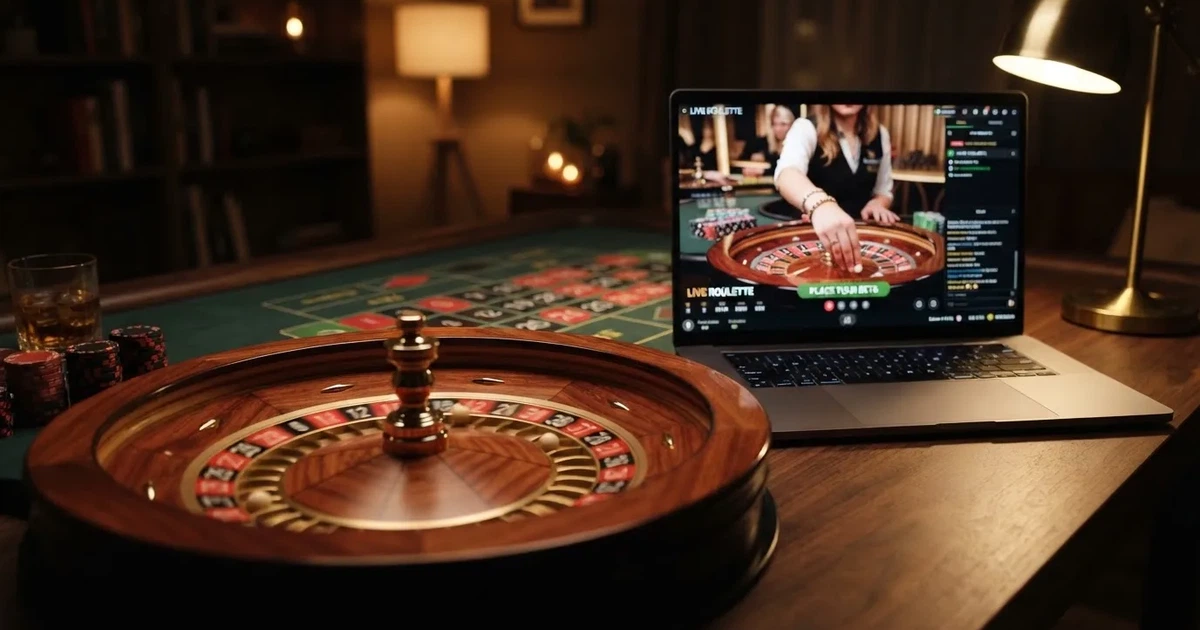
A live dealer casino is the closest thing a UK player can get to a physical table without leaving the room. The croupier is real, the wheel or shoe of cards is real, the studio camera crew is real, and the stream ends in the player’s account balance. All ten brands reviewed here hold a Gambling Commission remote casino operating licence, all participate in GAMSTOP, and all carry a live casino lobby alongside their other products. The licence obligations are identical across them. What varies is the wrapper each brand wraps around the same Evolution tables.
Current as of 23 September 2026 against the Gambling Commission’s public register.
- Playing live dealer on a phone or in an app
- Live tables, providers and paytables
- Ten UK-licensed live casinos, side by side
- Fundamentals of the UK live casino market
- Jurisdiction, licensing and what a UKGC licence obliges
- Responsible gambling, GAMSTOP and what the licence buys the player
- Crypto, iDEAL and the question of anonymity
- Deposits, withdrawals and payout speed at UK live casinos
- Bonuses, the 10x cap and the cost of clearing an offer
- Operator reviews
- Frequently asked questions
Playing live dealer on a phone or in an app
Live casino used to mean a desktop computer and a stable broadband line. Both assumptions are gone. A modern UK live casino streams a real croupier in HD to a phone over a 4G or 5G connection; the studio feed is encoded tightly enough to survive a train tunnel and clearly enough to read a card suit on a six-inch screen. Most of the brands covered in the operator reviews below now ship a native app on iOS and Android, and the rest run a mobile browser version that does the same job.
The mobile experience differs from the desktop one in three small ways worth knowing before claiming an offer. First, portrait mode on a phone collapses the betting grid to the bottom half of the screen, with the video feed above. It works, but the betting layout is denser in landscape and easier to read on a tablet held sideways. Second, the lobby layout reorders itself: thumbnails become the navigation, and table limits that were a click deep on desktop are one tap away on mobile. Third, betting timers shorten — a roulette round that waits fifteen seconds for late bets on desktop sometimes gives ten on the app. That matters less for fun play and more for anyone sitting at multiple tables at once.
App availability is uneven across the ten brands. The major operators — bet365, William Hill, Sky Vegas, Paddy Power, Betfair — all ship native apps. Smaller and more specialised brands typically rely on the mobile browser version and tune the responsive layout to behave like an app. Both routes are usable. The difference shows up mostly in how the phone stores the lobby and how quickly it cold-starts a stream.
Mobile data is the other practical concern. A live dealer stream uses a meaningful slice of a phone plan over a long session, and HD consumes more than SD. Players on a tight data cap should connect to wifi for a long session, or pick the SD setting in the lobby where it is offered. The casino’s own app settings menu usually exposes a quality toggle. The stream is also the part of the session where the player’s battery drains fastest.
What does not change between mobile and desktop is the licence. A UKGC remote casino operating licence covers every channel the licensee runs through the same account, and the player protection rules — GAMSTOP, age verification, deposit limit prompts, the £5 / £2 stake ceiling on slots — apply identically on phone, tablet and laptop. The device is not the test of whether the casino is licensed; the Gambling Commission’s public register is.
Live tables, providers and paytables
A live casino table is, mechanically, the simplest thing to describe and the hardest to scope. A studio floor holds a real croupier, a real roulette wheel or a real shoe of cards, and a battery of cameras and sensors. The cameras capture the action; the sensors read the outcome (where the ball lands, which card turns up); the outcome is overlaid on the player’s screen and the bets are settled against the live result. No random number generator is involved in the outcome; the randomness comes from the physical equipment. The studio is the RNG.
Evolution AB is the dominant supplier of that studio. The company was founded in 2006 by Jens von Bahr and Fredrik Österberg and launched its first live dealer games — live roulette and live blackjack — in 2007. It is now headquartered in Stockholm, listed on Nasdaq Stockholm under the ticker EVO since 2017 (having first listed on Nasdaq First North Premier in 2015), reported €1.798 billion in revenue for 2023 with 19,221 employees, and has acquired the online casino software supplier NetEnt in 2020 and the slot studio Big Time Gaming in 2021. When a UK player opens the live casino lobby on most UKGC-licensed sites, the tables behind the thumbnails are almost certainly Evolution’s.
The Evolution catalogue now spans far more than the original two games. The studio has rolled out a string of live game show formats — Dream Catcher in 2017, Lightning Roulette in 2018, Monopoly Live in 2019, Crazy Time in 2020 and Funky Time in 2023 — that hybridise a money-wheel or a bonus board with a casino-style payout mechanic. These are not table games in the traditional sense and they do not publish RTPs the same way, but they sit alongside roulette and blackjack in the lobby and pull a meaningful share of the action at UKGC-licensed sites.
The standard live casino paytable is closer to its land-based cousin than to a video slot. Live roulette pays 35:1 on a single number, 1:1 on red/black/odd/even, and the house edge is fixed by the wheel’s single-zero layout. Live blackjack sits at the casino’s discretion within the published rules — usually the dealer stands on all 17s, blackjack pays 3:2, side bets vary — and the paytable is printed on the table felt overlay. Live baccarat on a UKGC site is the Punto Banco variant: the casino banks both hands, the drawing rules are fixed, and the player makes no strategic decisions; Chemin de Fer, the skill-bearing French variant, exists at a few studios and is rarer at UKGC sites. Baccarat’s precise origins are disputed, with some accounts tracing it to 19th-century France and others to Italian soldiers at the end of the 15th century, and the modern Punto Banco variant developed in Havana during the 1940s.
Crash games are a more recent addition to the live lobby and they belong here because of how the paytable works. Aviator, developed by Spribe (a games studio founded in 2018, with the title released in 2019), runs a multiplier curve that rises from 1.00x until the round randomly crashes; the player must cash out before the crash to win their stake multiplied by the current value. Spribe’s own figures put Aviator at more than 42 million active users and around 350,000 bets per minute across more than 5,000 operators worldwide. The game’s house edge sits in the published RTP for each round and is independent of how long any individual multiplier runs. Aviator sits in a “crash” or “instant win” sub-lobby on most UK sites rather than the main live casino tab.
The studios that licence live tables to UK operators are subject to the Gambling Commission’s Remote Technical Standard 17, which the jurisdiction section sets out in more detail. The standard fixes the equipment quality, the video surveillance, and the training the croupiers must receive. A live casino table on a UKGC-licensed site is auditable to that standard; a live casino table on an unlicensed offshore site is not.
Ten UK-licensed live casinos, side by side
The ten brands in the table below are taken from the Gambling Commission’s public register. Each row shows the brand, the company that holds the licence, the licence number, and the status of the brand’s domain entry on the register. The order is the order the brands sit on the register’s domain list, not a ranking. Several brands share a parent licence holder — Paddy Power and Betfair are both under PPB Games Limited — and one of the ten, Virgin Games, is listed as a white-label domain rather than an active domain, trading under Gamesys Operations Limited’s licence.
| Brand | Licence holder | Remote casino licence | Domain status |
|---|---|---|---|
| MrQ | Tek Fox Ltd | 060629-R-337532-004 | Active |
| bet365 | Hillside (UK Gaming) ENC | 055149-R-331499-004 | Active |
| PokerStars | Stars Interactive Limited | 039108-R-319334-026 | Active |
| Paddy Power | PPB Games Limited | 039411-R-319335-010 | Active |
| Betfair | PPB Games Limited | 039411-R-319335-010 | Active |
| William Hill | WHG (International) Limited | 039225-R-319373-015 | Active |
| BetVictor | BV Gaming Limited | 039576-R-319370-028 | Active |
| Sky Vegas | Bonne Terre Gaming Limited | 065519-R-339675-002 | Active |
| Virgin Games | Gamesys Operations Limited | 038905-R-319430-022 | White label |
| Gala Bingo | LC International Limited | 054743-R-330863-014 | Active |
The table describes the licence structure and not the offer: no bonus terms, no game lists, no payout times sit behind those cells. The “subject support” matters tracked by the same register entry were not available for this comparison — that column has been dropped because its cells would repeat one value (the no-data marker) down every row and would not tell the reader anything new.
What the table does show is the structural shape of the licensed live casino market. Two of the ten brands — Paddy Power and Betfair — sit under the same licence holder. Virgin Games, the white-label entry, is the cleanest case of the licence-versus-brand distinction: the brand on the homepage is Virgin Games, the operating company on the register is Gamesys Operations Limited, the same way a chain restaurant trades under its parent company’s food registration rather than its own. Gala Bingo sits under LC International Limited, the same account that runs Ladbrokes and Coral outside this set of ten.
The brands also separate by primary product. bet365, William Hill, BetVictor and Sky Vegas are general online casinos with a live casino tab as one product among several. PokerStars is a poker site first and a casino site second; Paddy Power and Betfair trace their roots to sports betting — Betfair runs a betting exchange — and their casino products sit alongside the sportsbook. MrQ built its name on slots and grew into live dealer tables. Virgin Games and Gala Bingo are bingo-led brands; their live casino tab is a smaller piece of the product and the variety of tables there is usually narrower than on a casino-led brand.
That last distinction matters for a reader who wants a deep live casino lobby. A brand built around slots, sports or bingo will not always carry the full Evolution catalogue or the deeper set of game show formats. The operator reviews below describe each of the ten brands on that point and others.
Fundamentals of the UK live casino market
The UK online casino market is broader than any single brand or any single product. On 18 September 2026 the Gambling Commission’s public register held 1,065 active and 361 white-label domain entries — each entry a website, with the licence account that runs it printed next to the domain. A white-label site trades under another company’s licence: the brand on the homepage is a marketing brand; the operating company is the one on the register. The 139 businesses holding an active remote casino operating licence on that same date are the upstream counterpart of those 1,426 domain entries — most of them run multiple brands through the same account.
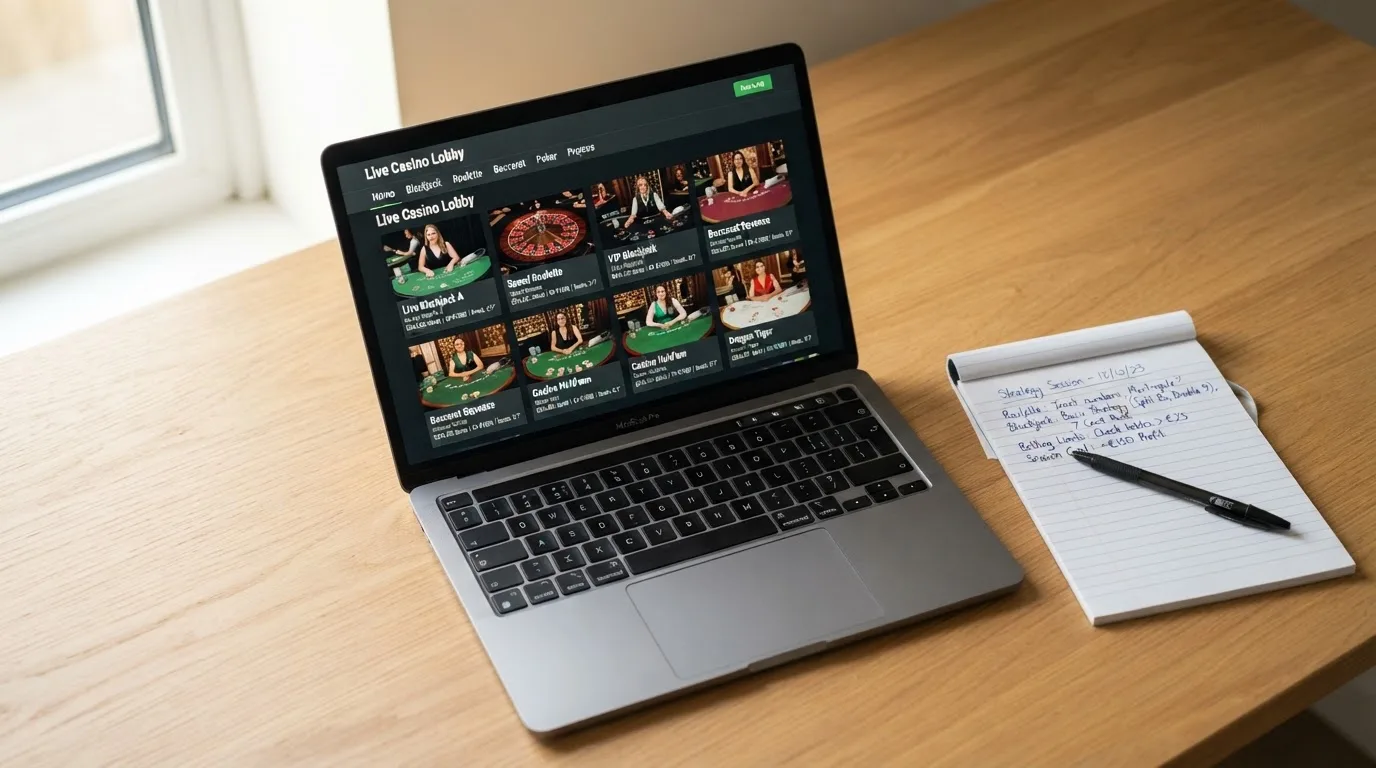
A live casino sits inside this market as one product line among several. A typical UKGC-licensed site runs slots, a sportsbook where the licence permits, bingo, an instant-win section and a live casino tab; the live casino tab opens onto a separate lobby maintained by the studio that licences the tables to the brand — most often Evolution. The player sees the studio’s branding on the table felt and on the dealer overlay; the underlying licence is the brand’s, not the studio’s. The studio is a supplier; the brand is the operator.
The choice between the brands in this set is mostly a choice of which Evolution tables a player wants, in which wrapper, with which sportsbook, bingo room or poker client sitting next door. The licence obligations are identical across all ten, because all ten sit under the Gambling Commission’s remote casino technical standards. The differences are at the edges: the cashier, the welcome offer, the app, the depth of the live game show catalogue, the loyalty programme, the speed at which withdrawals land.
The wider licensed market also runs several products that look like live casino but are not — most notably the crash-style games like Aviator, covered in the live tables section above. They share the studio-camera aesthetic without using a real croupier and they publish RTPs that look like slot RTPs rather than table RTPs. They are a different product line and the rules around them are different. Every brand in the comparison above sits inside the licensed market; there is no parallel licensed live casino market outside the Gambling Commission’s register.
Jurisdiction, licensing and what a UKGC licence obliges
Every brand in this comparison operates under sections of the Gambling Act 2005, with the Gambling Commission as the regulator and the Commission’s Remote Gambling and Software Technical Standards setting the technical floor. Since the Gambling (Licensing and Advertising) Act 2014, any operator taking customers in Great Britain — England, Scotland and Wales, not Northern Ireland — needs a Commission licence wherever it is based; a Curaçao, Maltese or Gibraltar licence is not a substitute.

A remote casino operating licence number on the register has the form account-R-number-suffix, where the leading six digits repeat the licence holder’s account number and the “R” marks a remote (online) licence. Reading one of the licences in this comparison: 060629-R-337532-004, the leading six digits (060629) are MrQ’s account number, the “R” confirms it is a remote licence, the middle number (337532) is the licence sequence, and the suffix (004) is the current revision. The format is the same on every licence on the register.
The technical standard that applies specifically to live dealer studios is RTS 17. The standard requires that live dealer operations be fair and independently auditable, with equipment and consumables of commercial casino quality and designated staff monitoring operational integrity. It requires video surveillance covering all predefined gaming areas in enough detail to confirm whether dealing procedures and game rules were followed. It requires croupiers to receive adequate training to deal fairly according to documented procedures and game rules, with evidence of that training and refresher training maintained. RTS 17 is issued under sections 89 and 97 of the Gambling Act 2005.
What this means for a player on a live table is narrower than the standard reads. A player on a UKGC-licensed site sits at a table in a studio that is built and staffed to a Commission standard, with the dealing recorded to a Commission standard, with the equipment checked to a Commission standard. A player on an offshore site outside that framework has none of those protections. The Commission’s cease-and-desist, payment-blocking and search-engine-delisting tools apply to the unlicensed operator; the player keeps whatever money the operator pays out, which may not happen. The Commission’s powers against an unlicensed operator do not extend to blocking the site at the ISP.
The Commission’s public register is the test of whether a brand holds a licence. It can be searched online and downloaded in full as CSV or Excel files. A reader who wants to check whether a brand is licensed can do so in under a minute; a reader who wants to check that a brand is not on the register can do that equally quickly. The register is the whole test, and it is updated continuously. As of 18 September 2026 the register listed 139 businesses holding an active remote casino operating licence.
The same framework extends to the payment side. Since 14 April 2020 credit cards have been banned for gambling in Great Britain, including credit cards routed through e-wallets. Since 19 December 2025 wagering requirements on bonuses have been capped at 10x and mixed-product bonuses — a sports bet that returns casino spins, for instance — have been banned. The two sections that follow set out what those rules mean for the player on a live table.
Responsible gambling, GAMSTOP and what the licence buys the player
A UKGC-licensed live casino runs GAMSTOP enrolment as a condition of its licence. GAMSTOP is the national online self-exclusion scheme, free to use, and a player who enrols is excluded from every UK-licensed online operator for the period they choose: six months, one year or five years. The exclusion cannot be cancelled early. The enrolment covers the live casino tab along with the rest of the site — there is no separate registration for live dealer tables, and the exclusion cannot be lifted for one product but not another.
The other protection layers run alongside it. The minimum age is 18; name, address and date of birth are verified before the first deposit or any play, and that requirement has been in force since 7 May 2019. Online slots carry a maximum stake per game cycle — £5 for players aged 25 and over since 9 April 2025, £2 for 18-24-year-olds since 21 May 2025. The Government tied the lower £2 ceiling to the under-25 age group on the published ground that 18 to 24 year olds have the highest average problem gambling score of any age group, alongside lower disposable income and ongoing neurological development.
Slots also carry a fixed spin time — a slot spin may not be faster than 2.5 seconds — and auto-play has been permanently banned, on published evidence that the feature caused players to lose track of their gambling activity. Reverse withdrawals — the practice of letting a customer re-gamble funds they had already requested to withdraw — were banned from 31 October 2021. The “losses disguised as wins” design pattern, where a slot celebratory sound plays for a stake-spin that netted the player a loss, is also banned.
Operators must prompt a customer to set a financial limit before the first deposit; that requirement has been in force since 31 October 2025. There is no state-set deposit ceiling beyond that prompt, but a financial vulnerability check runs at £150 net deposits in a rolling 30 days using public data only — a wider financial risk assessment is announced but not yet in force. The framework for player protection also names GamCare (which runs the National Gambling Helpline) and GambleAware as the support routes outside the operator itself.
None of these protections apply to an offshore site. A live casino trading outside the Gambling Commission’s framework takes no GAMSTOP enrolments, runs no licence-driven age verification, and answers to no UK-approved ADR body if a dispute arises. No penalty is aimed at the player; what the player loses on an unlicensed site is the protection — no GAMSTOP, no Commission complaints route, no approved ADR. That is the price of a site outside the framework.
Crypto, iDEAL and the question of anonymity
A live casino that lists cryptocurrency on its cashier page is still subject to UKGC rules if it operates in Great Britain, and the Commission’s identity check is the same regardless of the payment rail. Name, address and date of birth have to be verified before the first deposit — including when the deposit is in bitcoin, ethereum, USDT or any other coin — and that requirement has been in force since 7 May 2019.
Anonymous play is therefore not possible at a UKGC-licensed site. The brand can route the payment through a crypto exchange and settle the deposit in coin; it cannot skip the verification step. The exchange itself is the friction point: any reputable exchange in the UK or the EEA runs KYC at the point of fiat on-ramp, and a player who has passed that KYC has already given the exchange most of the information the casino would otherwise ask for. A player who acquires coin peer-to-peer and tries to skip the exchange still has to pass the casino’s own check on first deposit, and the casino has the right to refuse the deposit if the check fails.
iDEAL — a bank-to-merchant instant-payment scheme — sits on the same side of the line. iDEAL does not move a player into anonymity: it is a direct bank-to-merchant transfer, and the player’s bank has already KYC’d them at account opening. A UKGC-licensed site can add iDEAL to its cashier without breaking the identity framework; the framework is upstream of the payment method, not downstream of it. The same logic applies to the credit-card ban introduced on 14 April 2020: credit cards were banned as a funding route for gambling, and that ban covers credit cards routed through e-wallets as well as direct credit card payments.
What the payment rail does change is the friction at the cashier. Crypto deposits settle when the blockchain confirms; bank transfers clear in minutes to hours; e-wallets are instant; debit cards are instant at deposit and slower at withdrawal. None of those rails alters the licence position. The Commission is not regulating the deposit method; it is regulating the operator.
The offshore caveat is sharper here than on the licence question itself. An unlicensed live casino can offer anonymous crypto deposits by simply not asking the player to verify, and that is exactly what most of them do. A player who values anonymity over the UK protections should expect to be paid only when the operator decides to pay; the Commission’s disputes process does not reach an unlicensed operator at all. The crypto angle on a UKGC site is therefore mostly about payment friction, not about identity.
Deposits, withdrawals and payout speed at UK live casinos
The payment side of a UK live casino runs through three rails that handle most of the volume: debit card (Visa, Mastercard), e-wallet (PayPal, Skrill, Neteller, Apple Pay, Google Pay), and bank transfer (including the Faster Payments Service). A handful of brands add additional methods — Paysafecard prepaid vouchers, Trustly, occasionally iDEAL — but the core cashier looks similar across the licensed market.
Withdrawals are where the speed differential shows. E-wallets typically settle within hours of the brand releasing the funds; debit card withdrawals usually take one to three working days; bank transfers clear the same day on Faster Payments but can run one to two days on older rails. The reverse-withdrawals ban noted in the responsible-gambling section means the player cannot reverse a withdrawal once it has been requested, so the brand’s release time is the shortest possible path to the money. Players who want the fastest payout should pick an e-wallet they already hold; players who want the lowest friction at deposit should pick the rail their bank runs cleanly.
Identity verification sits in front of all of this. The Commission’s requirement — name, address and date of birth verified before the first deposit or any play — means a first withdrawal will sometimes trigger a fresh document check, particularly for larger amounts. That check is run by the operator and not by the regulator; the Commission sets the requirement and audits the operator’s compliance, but the documents move between the player and the brand. The honest read of a “fast payout” brand is one that runs the verification on first deposit and not on first withdrawal.
There is no state-set deposit or loss ceiling, but the operator is required to prompt a customer to set a financial limit before the first deposit — that requirement has been in force since 31 October 2025. A player who wants a hard ceiling on deposits needs to set it through the responsible-gambling menu on the brand’s site; the operator will enforce it on the cashier side. The financial vulnerability check that runs at £150 net deposits in a rolling 30 days sits on top of that limit; a player whose deposits cross that threshold will be asked additional affordability questions.
The ten brands in this comparison do not publish payout times in a consistent way, and the register does not record them either. The more useful question is which rail the player is using — and on that question the answer is the same across the set.
Bonuses, the 10x cap and the cost of clearing an offer
A live casino bonus on a UKGC-licensed site is now subject to the wagering cap that took effect on 19 December 2025: a bonus may require no more than 10 times its value in qualifying turnover. That cap is not a market norm; it is a hard rule, and any offer that asks for more is in breach of the Commission’s terms. Mixed-product bonuses — a sports bet that returns casino spins, for example — have been banned at the same time.
The cap changes the arithmetic of clearing a bonus. At the 10x cap, a live casino bonus of £25 obliges £250 in qualifying turnover, a £50 bonus obliges £500, a £100 bonus obliges £1,000, and a £200 bonus obliges £2,000. The result is a band — £250 to £2,000 in qualifying turnover for a £25 to £200 bonus — and the band is the same on every UKGC-licensed brand that runs a live casino offer. The required turnover scales linearly with the bonus amount, and the player clears the bonus once that total of wagers has been placed on eligible games.
The phrase “eligible games” is the one that does the damage in a live casino offer. Live dealer tables are frequently weighted at less than 100% toward wagering — 10% or 20% is common — and that weighting multiplies the turnover the player needs to produce. A £100 bonus with live tables weighted at 10% requires £10,000 in live-table wagers, not £1,000, to clear the same £100 of bonus value. The Commission’s 10x cap fixes the multiple on the bonus; it does not fix the game weighting, and the gap between those two numbers is where most of the player’s actual cost sits.
The other clause that bites is the maximum cashout cap, particularly on no-deposit or free-bonus variants. A bonus that pays out “up to £100” but caps the withdrawal at “5x the bonus” turns a winning session into a £50 ceiling once the wagering is cleared. No-deposit bonuses are the most common site of that cap; a player who values a clean withdrawal should look for a cap-free offer or a low cap that is explicit at the cashier rather than buried in the terms.
The marketing language around these offers uses the word “free” the way most marketing uses it: as a synonym for “fronted”, not as a synonym for “no-cost”. A live casino bonus is fronted by the operator and recovered from the player’s wagers over the wagering period; the player pays for it in time at the table and in the variance of play, not in subscription. The 10x cap constrains one part of the cost; the game weighting and the cashout cap sit elsewhere, and the operator reviews below describe each brand on those terms.
Operator reviews
MrQ — the only single-brand licence in the set
MrQ is the brand’s first appearance on the Gambling Commission’s register at any meaningful volume, and the licence sits at account 60629 — one of the more recent numbers on the register and one of the smaller operators in this comparison by account age. The licence holder is Tek Fox Ltd, and the remote casino operating licence is 060629-R-337532-004. The brand is listed on the register as an active domain.
MrQ built its reputation on the slots-led end of the UK market, with a flat welcome offer and no-wagering free spins that put it on the radar of players who read the small print. The live casino lobby is a sister product to the slots; it carries the main Evolution tables and a smaller selection of game show formats than the casino-led brands in this comparison. A player who comes to MrQ for the live tables is getting the standard Evolution catalogue rather than the long-tail set.
The Tek Fox Ltd account is small in the structural sense: it runs one brand. It does not have a sister brand under the same licence the way PPB Games does with Paddy Power and Betfair, and that single-brand structure shows in the product surface — a casino, a live casino tab and not much else. A player who wants sports betting or poker next to the live casino tab will not find it here.
For a live casino player, the appeal is the operator’s small-print reputation. MrQ has built its marketing around transparent bonus terms — no wagering on free spins, plain-English cash bonuses — and that carries through to the live casino side in the form of clearer live-casino-specific promotions. On the small-print reputation, MrQ has earned its place in this comparison. On the depth of the Evolution game show catalogue, the bigger brands pull ahead.
bet365 — the highest-reputation brand in the set
bet365 is the brand most UK readers already know. The Gambling Commission register lists bet365 as an active domain of account 55149, Hillside (UK Gaming) ENC, and the licence number 055149-R-331499-004 is one of the better-known on the register. Hillside (UK Gaming) ENC is the same Hillside group that runs the broader bet365 product set across sports, casino, poker and bingo, with the casino product feeding the live casino tab.
The live casino lobby is the standard Evolution catalogue at full depth — roulette, blackjack, baccarat, the game show formats, and the deeper Asian-dealer tables. bet365’s positioning on the live casino side is volume: it offers more simultaneous tables at more stake tiers than any of the smaller brands in the comparison. For a player who wants to sit at a £10,000-limit blackjack table or a £5-limit roulette table from the same operator, bet365 is one of the few in the set that covers both ends.
The Hillside group also has the strongest mobile and app offering in the comparison. The bet365 app is a single app that opens onto a sports, casino, poker or live casino tab; the live casino tab runs the full lobby in portrait and landscape, with a quality toggle for the video feed. The casino product is also the one that surfaces bet365’s responsible-gambling tooling — deposit limits, time-outs, reality checks — and a player who values consolidated tooling across a sportsbook and a casino will find both in the same app.
The bet365 brand carries its own caveat on the live casino side: the casino is one product among several, and the live casino tab is not the centre of the company’s offer. On live casino volume, bet365 is hard to beat in this comparison. On casino-led orientation, Sky Vegas is the cleaner fit.
PokerStars — the only poker-led operator in the comparison
PokerStars is the only brand in the comparison whose primary product is poker. The licence sits at account 39108, Stars Interactive Limited, with the remote casino operating licence 039108-R-319334-026. The .uk domain is the active entry on the register — PokerStars runs separate international domains for non-UK players — and the casino tab sits next to the poker client in the same Stars Interactive account.
The live casino tab is a second product inside a poker-led operator, and the offering reflects that. Stars Interactive carries the main Evolution tables — the standard roulette, blackjack and baccarat set — but the long-tail game show catalogue is narrower than at the casino-led brands. A player who wants Lightning Roulette and Crazy Time will find both; a player who wants the deeper Funky Time set may not.
The Stars Interactive account’s appeal for a live casino player is the licence position. Stars Interactive holds its own remote casino operating licence, and the casino product runs under that licence rather than as a white-label under another operator. A player who values the Stars brand on the poker side and wants a familiar cashier on the casino side will find both in the same account.
The poker orientation also means the live casino tab lacks the casino-specific marketing some of the casino-led brands run. Welcome offers framed around slots and live casino do not always extend to PokerStars the same way, and the brand’s headline promotions are mostly poker tournaments. PokerStars earns its place here for poker players who want a competent live tab. For a casino-led live casino experience, the cleaner fit is elsewhere in this comparison.
Paddy Power — the sportsbook-led half of PPB Games
Paddy Power is one half of the PPB Games pair in this comparison. The licence sits at account 39411, PPB Games Limited, with the remote casino operating licence 039411-R-319335-010. PPB Games Limited also holds the licence for Betfair, the second brand in the pair. The Paddy Power domain on the register is active.
The live casino tab sits inside a brand whose primary product is sports betting. Paddy Power’s casino product grew out of the sportsbook, and the live casino tab is one tab among several — sports, casino, live casino, games, bingo — that sit under the same Paddy Power login. The casino-led brands in this comparison carry the live casino tab as a primary product; Paddy Power carries it as a sister product.
The live casino lobby is the standard Evolution set, with roulette, blackjack, baccarat and the main game show formats. The stake-tier range is broad — Paddy Power offers live tables from low-limit roulette up to VIP-tier blackjack — but the long-tail game show catalogue is narrower than at the deepest casino-led brands. A player looking for the full Funky Time set will not always find it at Paddy Power.
The PPB Games licence structure shows in the operator-side infrastructure. Paddy Power and Betfair share a single cashier framework and a single responsible-gambling framework across both brands under the same account. A player who holds an account on one does not automatically hold an account on the other; the two brands are separately accessible from the same login, but the underlying account is shared at the licence level.
Paddy Power fits sportsbook players who want a live casino tab in the same login. Those players might find Sky Vegas or MrQ a more natural fit for a casino-led experience.
Betfair — the exchange-led half of PPB Games
Betfair is the second half of the PPB Games pair. The licence is the same one Paddy Power operates under — account 39411, PPB Games Limited, licence 039411-R-319335-010. Betfair is the active domain on the register, and the brand runs a betting exchange alongside its sportsbook and casino products.
The casino tab at Betfair has historically been lighter than the sportsbook, and the live casino tab is a smaller piece of the product than at the casino-led brands. The lobby carries the main Evolution tables — standard roulette and blackjack, the basic game show formats — but the depth of the catalogue is narrower than at bet365 or Sky Vegas. A player who wants the full Evolution game show set will not always find it at Betfair.
The PPB Games licence structure applies here as it does at Paddy Power: Betfair shares operator-side infrastructure with Paddy Power under the same licence account. A player who has a Paddy Power account and a Betfair account holds two separate accounts on the player side; the operator side runs them under the same licence.
Betfair’s appeal for a live casino player is mostly residual — a player who has a Betfair exchange account and wants a casino tab in the same app, or a player who prefers the Betfair brand over Paddy Power and is willing to accept a narrower live casino tab. The exchange orientation is the brand’s identity; the live casino tab is not.
Betfair fits exchange players who want a casino tab on the side. The casino-led options elsewhere in this comparison often provide a broader lobby.
William Hill — the longest-established high-street name
William Hill is the longest-established high-street name in the comparison. The licence sits at account 39225, WHG (International) Limited, with the remote casino operating licence 039225-R-319373-015. The brand’s history goes back decades on the UK high street, and the online casino product runs under a separate online licence rather than as a white-label.
The live casino tab is the standard Evolution set at full depth — roulette, blackjack, baccarat and the game show formats — with a stake-tier range that covers the middle of the market. William Hill’s casino offering has grown over the years and the live casino tab is now a meaningful product; it is not the casino-led focus of Sky Vegas or MrQ, but it is more than a sister product.
The William Hill cashier is one of the broader cashiers in the comparison, with debit card, e-wallet, bank transfer and Apple Pay as standard rails. The app covers the sportsbook, casino, live casino and bingo in one shell; a player who values a single app for sports and casino will find both here.
The high-street heritage carries through to the brand’s responsible-gambling tooling. William Hill’s safer-gambling interface is one of the more developed in the licensed market, with deposit limits, time-outs, reality checks, GAMSTOP enrolment and self-exclusion all routed through the same menu. A player who prizes consolidated tooling across sports, casino and bingo will find all three on the same screen.
William Hill fits long-time account holders who want the live casino tab in the same login. For a dedicated casino orientation, Sky Vegas is the clear alternative.
BetVictor — the independent challenger in the comparison
BetVictor is the independent challenger in this comparison. The licence sits at account 39576, BV Gaming Limited, with the remote casino operating licence 039576-R-319370-028. BV Gaming is its own licence holder; it does not share the licence with a sister brand the way PPB Games does with Paddy Power and Betfair, and that single-brand independence shows in the product surface.
The live casino tab is a sister product to the sportsbook, which is BetVictor’s primary product. The lobby carries the main Evolution tables — standard roulette and blackjack, the basic game show formats — with a stake-tier range that covers the middle of the market. The catalogue depth is narrower than at the casino-led brands in this comparison.
BetVictor’s appeal for a live casino player is the independence. BV Gaming is one of the smaller standalone licence holders in the comparison by account size, and the brand’s positioning is “boutique sportsbook plus a competent casino tab” rather than “casino-led operator with a sportsbook on the side”. A player who values that positioning will find it here.
The BetVictor cashier is the standard licensed-market set — debit card, e-wallet, bank transfer — and the app covers the sportsbook and casino in one shell. The responsible-gambling tooling is the licensed-market standard. A player who prizes a smaller, independent operator over a large group will find BetVictor’s positioning more comfortable than the larger groups in the set.
On independence, BetVictor is the standout in this comparison. On the depth of the Evolution game show catalogue, Sky Vegas and bet365 pull ahead.
Sky Vegas — the casino-led brand with the deepest Evolution set
Sky Vegas is the casino-led brand with the deepest Evolution set in this comparison. The licence sits at account 65519, Bonne Terre Gaming Limited, with the remote casino operating licence 065519-R-339675-002. The brand identity is built around casino play; the live casino tab sits at the centre of the marketing alongside the slots product.
The live casino lobby is the standard Evolution catalogue at full depth — roulette, blackjack, baccarat, the game show formats, and the deeper dealer tables. Sky Vegas’s positioning is casino-first; the live casino tab sits at the centre of the brand’s offer rather than as a sister product to a sportsbook or poker client.
The Sky Vegas cashier is the standard licensed-market set — debit card, e-wallet, bank transfer, Apple Pay — and the app covers the casino, live casino and slots in one shell. The brand does not run a sportsbook or a poker client alongside the casino, and that single-product focus shows in the depth of the live casino tab.
For a live casino player, Sky Vegas’s appeal is the casino-led orientation. A player who comes to Sky Vegas specifically for the live casino tab is using a brand that builds its identity around casino play, and the live casino tab sits at the centre of the product rather than as a sister product to a sportsbook. A player who prizes depth of Evolution coverage and a casino-led loyalty programme will find both here.
Sky Vegas earns its place here for the live-casino-first player who prizes depth of Evolution coverage and a casino-led loyalty programme.
Virgin Games — the only white-label in the set
Virgin Games is the only white-label domain in this comparison. The Gambling Commission register lists Virgin Games as a white-label domain of account 38905, Gamesys Operations Limited, with the remote casino operating licence 038905-R-319430-022. A white-label domain trades under another company’s licence: the brand on the homepage is Virgin Games, the operating company on the register is Gamesys Operations Limited.
The white-label position matters for two reasons. First, the operator is Gamesys Operations Limited, not Virgin Games — a player who has a complaint takes it to Gamesys and ultimately to the Commission’s ADR route, not to the Virgin brand. Second, the Gamesys licence account runs several sister brands alongside Virgin Games, and the responsible-gambling and cashier infrastructure is shared across the licence account rather than built separately for each brand.
The live casino tab at Virgin Games is a smaller piece of the product than at the casino-led brands. Virgin Games built its identity on bingo and slots; the live casino tab is a sister product, and the catalogue depth is narrower than at bet365 or Sky Vegas. The standard Evolution tables — roulette, blackjack, baccarat — are present; the long-tail game show formats are thinner.
Virgin Games fits bingo-first players who want a live casino tab in the same login. The live-casino-first player will find a deeper Evolution catalogue at Sky Vegas or bet365.
The white-label position is the structural caveat. A player who prefers brands that hold their own licence accounts — so that the operator and the brand are the same entity — will find that orientation more clearly at every other brand in this comparison except Gala Bingo, which also sits under a parent licence rather than its own.
Gala Bingo — the bingo-led brand in the set
Gala Bingo is the bingo-led brand in this comparison. The licence sits at account 54743, LC International Limited, with the remote casino operating licence 054743-R-330863-014. LC International Limited runs several sister brands alongside Gala Bingo — Ladbrokes and Coral are the largest — and the Gala Bingo product sits inside that wider LC International account.
The live casino tab at Gala Bingo is the smallest piece of the product in this comparison. Gala Bingo’s identity is built around bingo, and the live casino tab is a sister product that carries the standard Evolution tables — roulette, blackjack, baccarat — without the full game show catalogue. A player who comes to Gala Bingo specifically for the live casino tab will find a competent but limited offering.
The LC International licence structure applies here as it does across the wider LC International account: the cashier, the responsible-gambling tooling and the compliance framework are shared with Ladbrokes and Coral. A player who has a Ladbrokes account and a Gala Bingo account holds two separate accounts on the player side; the operator side runs them under the same licence.
Gala Bingo’s live casino tab fits bingo-first players on the LC International account rather than for players who come to it as a live casino operator. The casino-led brands will serve live-casino-first players more directly.
The mismatch is sharper at Gala Bingo than at any other brand in the comparison for a live-casino-first player. The live casino tab exists for players who already play on the LC International account; it does not exist as the brand’s primary product.
Frequently asked questions
What makes a live casino table different from a standard digital one?
A live casino table streams a real croupier dealing a real roulette wheel or shoe of cards, captured by cameras and relayed to the player. The randomness comes from the physical equipment, not from a random number generator. A standard digital table generates outcomes from an RNG inside the game client.
Can live casino tables be played through a mobile casino app?
Yes. The major UKGC-licensed operators — bet365, William Hill, Sky Vegas, Paddy Power, Betfair — all ship native iOS and Android apps with a live casino lobby. Smaller brands offer a mobile browser version that runs the same games. The stream and the betting grid work in portrait or landscape.
Does GAMSTOP cover a live casino site that is not on GAMSTOP?
A player who enrols on GAMSTOP is excluded from every UKGC-licensed online operator, including the live casino lobby. A site not on GAMSTOP — typically an unlicensed offshore casino — has no obligation to honour that exclusion. The player keeps no UK protection or ADR route there.
Are live casino tables available to fund with iDEAL or cryptocurrency?
A UKGC-licensed live casino may list iDEAL or cryptocurrency on its cashier page, but the Commission’s identity check still applies. Name, address and date of birth have to be verified before the first deposit, regardless of the payment rail. Anonymous play is not possible at a licensed site; the payment method does not bypass the check.
Is a live dealer stream regulated under the same licence as the rest of the site?
Yes. A UKGC remote casino operating licence covers the live casino tab along with the rest of the site. The Commission’s Remote Technical Standard 17 sets the rules for live dealer studios specifically, covering equipment quality, video surveillance and croupier training. A player on a licensed site sits at a table run to those standards.
Created by the ”cardcasinoguide” editorial team.