400% casino bonus UK: what the headline multiplier actually delivers
A 400% match bonus quadruples whatever you deposit, on top of your own cash. Deposit £10 and the casino adds £40, leaving £50 to play with. Deposit £100 and the casino adds £400, leaving £500. The percentage is large and the marketing leans into it — which is exactly the moment a player should slow down and read what sits beneath it. The bonus is not free money. It is a marketing expense the operator recoups, and the only mechanism it has for doing so is the wagering requirement that comes attached.

This page covers what a 400% match offer looks like at a UK-licensed online casino in 2026, what the Gambling Commission’s rules now permit, which payment methods still fund such an offer, and how the ten operators featured below sit on the Commission’s public register. Current as of 7 November 2026; the licence claims below were verified against the Gambling Commission’s public register of gambling businesses, downloaded on 18 September 2026.
- Payment methods that can fund a 400% match
- What the bonus actually pays — and what it asks back
- The 400% offer landscape at UK-licensed casinos
- Reading a UK online casino licence
- Responsible play within a bonus-driven session
- Where the 400% match sits in 2026
- Working the numbers on a 400% offer
- What changes when the offer is at an offshore brand
- The 10x cap, in one paragraph
- What a player should do before claiming
- Where this leaves the 400% offer
- Frequently asked questions
Payment methods that can fund a 400% match
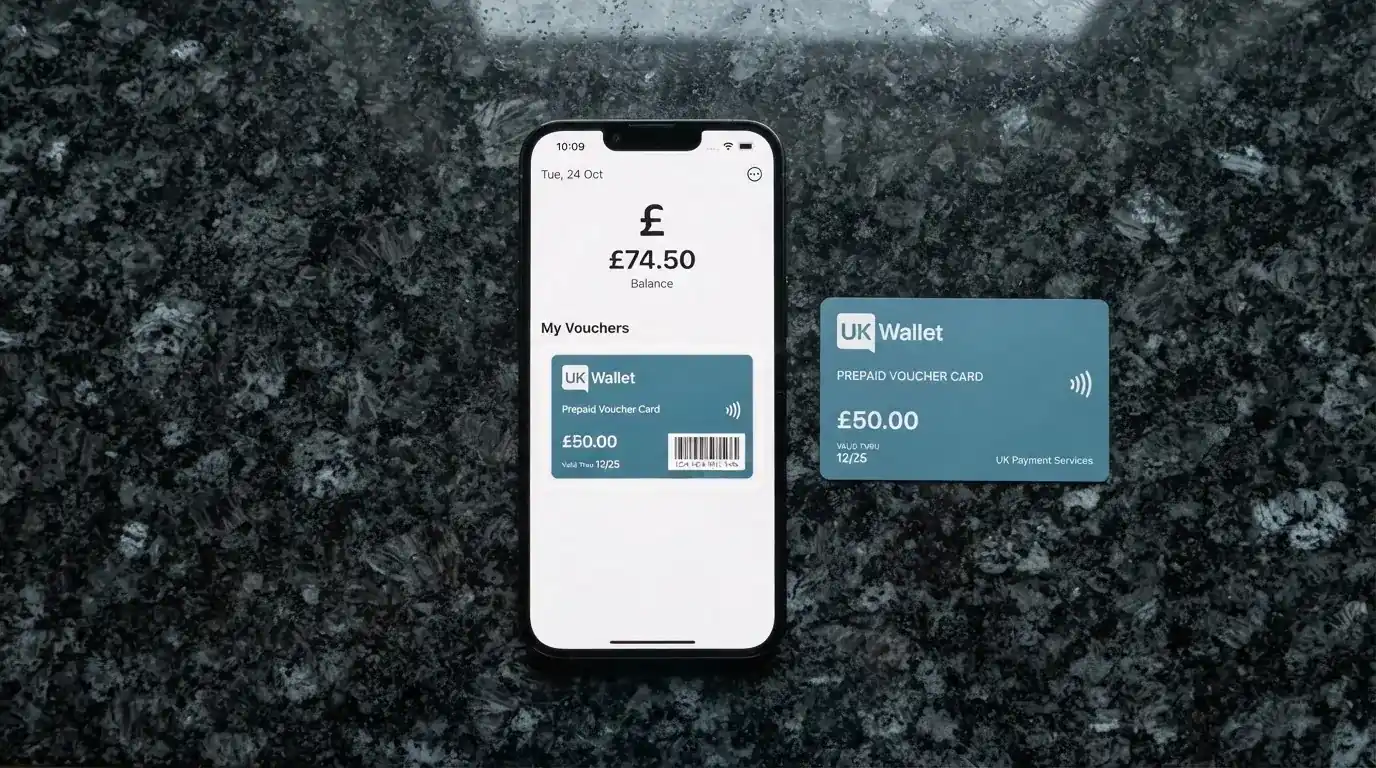
The first shelf a 400% bonus breaks against is not wagering — it is the deposit screen. Match bonuses are paid on the deposit that triggers them, and the trigger conditions narrow the field long before the percentage does. Most UK operators accept a fairly wide range of payment methods for an ordinary deposit, but bonus eligibility is a smaller set. e-wallets are the usual exclusions: Skrill and Neteller deposits have, for years, been excluded from welcome offers at most UK-licensed brands, and that exclusion is the rule rather than the exception. A paysafecard deposit, by contrast, is generally bonus-eligible, because paysafecard sits on the debit side of the wallet — it is prepaid, not credit. Apple Pay funding works at the brands that accept it, and bank transfers (Faster Payments) are bonus-eligible wherever the operator accepts them.
Why some deposits don’t trigger the bonus
The exclusion is not arbitrary. e-wallet operators have, historically, been a channel for bonus abuse — multiple accounts, hedging, fast withdrawals. Operators protect themselves by carving e-wallets out of the welcome package. The player sees this as a quirk; the operator sees it as a margin protection. The debit/prepaid carve-out exists because the Commission banned credit cards for gambling on 14 April 2020, and the ban covers credit cards routed through e-wallets as well. Anything that looks like credit is out; anything that looks like cash or prepaid is in.
How fast the deposit clears
Once a bonus-eligible payment is selected, the deposit itself is rarely the bottleneck. Faster Payments, the UK scheme operated by Pay.UK since 2008, runs twenty-four hours a day, seven days a week and most payments arrive instantly or within a couple of minutes — though a transfer can occasionally take up to two hours. Faster Payments has a £1,000,000 per-transaction ceiling, but no individual player’s casino deposit is anywhere near that figure. Apple Pay uses near-field communication (NFC) for in-store payments and tokenisation — replacing the real card number with a device-specific Device Primary Account Number and generating a dynamic security code per transaction — for in-app and online. The upshot for a casino deposit is simple: the same card, the same authorisation flow, and no extra friction on top of an ordinary debit-card deposit.
A note on paysafecard specifically
Paysafecard warrants its own paragraph because it is a common deposit method for such offers. A paysafecard-funded bonus still counts as the player’s own spend, and that matters when reality checks arrive: the Commission’s rules require operators to prompt a customer to set a financial limit before the first deposit, and any bonus-funded play flows through that limit just the same as cash play. Setting the limit before the deposit, and before the bonus lands, is the practical difference. With paysafecard there is no overdraft and no credit exposure — what is on the voucher is what can be spent — but the limit the operator holds is independent of the payment method, and the prompt fires once per player, not once per deposit rail.
Crypto deposits and the UK-licensed shelf
The same shelf carries a quieter question: can a 400% bonus be funded through cryptocurrency at a UK-licensed brand? The short answer is that the UK’s licensed shelf and the crypto-funded shelf are largely two different markets. A 400% match funded in Bitcoin or Ethereum is widely available at offshore operators licensed in Curaçao, but the Gambling Commission’s 2024 customer funds guidance and its expectations on source-of-funds verification mean most UK-licensed brands do not accept crypto deposits at all. Where a UK brand does accept crypto, the operator is still bound by the Commission’s wagering cap and by GAMSTOP enrolment, which is why the same 10x ceiling (covered below) applies regardless of how the deposit arrived. For a player whose main interest is a crypto-funded 400% match, the trade is between a wider choice of bonus sizes on one side and the loss of Commission oversight on the other.
What the bonus actually pays — and what it asks back
A 400% match is large, and large matches attract attention. They also attract wagering requirements, and the size of the wagering requirement is now capped in the UK. From 19 December 2025 the Gambling Commission limits wagering requirements on casino bonuses to 10x the bonus amount, and bans mixed-product bonuses — the kind that ask a player to bet on sport to release casino spins. The 10x cap is the headline rule every UK-licensed 400% offer sits under.
How wagering actually works
Wagering is the multiplier applied to the bonus before any winnings can be withdrawn. At 10x, a £40 bonus needs £400 of qualifying bets before the bonus funds convert to withdrawable cash. The qualifying bets are placed on the casino’s games at the stake the player chooses, and almost every slot contributes 100% of stake to the requirement. Table games contribute less — often 10% or 20% — which is why most players clear a bonus on slots. The exact game contribution table lives in the bonus terms; reading it is the one step that decides whether the bonus clears in hours or days.
Why 10x changes the picture
Before 19 December 2025 a 400% bonus routinely carried a 35x or 40x wagering requirement. On a £40 bonus that meant £1,400 or £1,600 of qualifying bets; on the £400 bonus a £100 deposit triggered, it meant £14,000 or £16,000. At 10x the same bonuses ask for £400 and £4,000 respectively. The rule has, in effect, made the 400% match purchasable for a player who would previously have declined it. It is also the reason offshore 400% offers still look more generous — because they remain outside the cap.
The arithmetic, worked through
A worked example shows what the rule costs the player in time. Take a £100 deposit that triggers a £400 bonus at 10x wagering, played on a slot at £1 per spin with a 5-second spin interval.
Betfair is listed on the Gambling Commission register under operating licence 039411-R-319335-010.
Required turnover: £400 bonus × 10 = £4,000 of qualifying bets. At £1 per spin that is 4,000 spins. At 5 seconds per spin that is 20,000 seconds, or roughly 5.6 hours of continuous play. The arithmetic is mechanical and the rule leaves nothing else to do — a player who sits down with a £100 deposit, claims the 400% offer, and plays through, will be at the wagering finish line in the best part of a working day.
That is the ceiling. Most players will not clear it in one sitting, and the bonus terms typically allow 7 or 30 days to complete wagering, with the bonus and any associated winnings removed if the clock runs out. The bet size matters too: a £5 spin on a high-volatility slot produces far fewer qualifying bets per minute, and the 10x requirement can stretch well past a single day.
Other bonus terms that bite
A 10x cap removes the worst of the wagering burden, but other terms still apply. Game weighting can keep table play from clearing the requirement at all. Max-bet rules cap the stake size during wagering — often at £5 — and a single spin above the cap can void the bonus. Some offers cap the winnings a bonus can produce; a £100 bonus might be capped at £500 of withdrawable winnings even if the slot pays £10,000 during the clearing period. None of this is hidden, but it is buried, and the player who reads only the headline percentage reads none of it.
How long before the bonus expires
Expiry is the other timer. UK-licensed brands typically give 7 days for free-spin winnings and 30 days for a matched bonus. The Commission’s rules do not prescribe a minimum expiry window, so the figure is set by the operator. A player who deposits, claims the bonus, and walks away for a fortnight will not necessarily find the bonus waiting.
The 400% offer landscape at UK-licensed casinos
The next shelf is the landscape itself — the operators that hold a Gambling Commission remote casino licence and the terms under which a 400% match is offered at each. What follows is not a recommendation and not a ranking. The brands are ordered as research and the public register list them, with the focus on licence status and the bonus structure each brand publishes. Several brands share a single licensee — Ladbrokes and its sister sites sit under LC International Limited — and that shared licence is worth noting because it means shared compliance, shared dispute routes, and the same GAMSTOP enrolment.
| Brand | Licence Holder | Domain Status |
|---|---|---|
| BetVictor | BV Gaming Limited | Active |
| Betfair | PPB Games Limited | Active |
| kwiff | Eaton Gate Gaming Limited | Active |
| Ladbrokes | LC International Limited | Active |
| Virgin Games | Gamesys Operations Limited | White Label |
| Betway | Betway Limited | Active |
| Jackpotjoy | Gamesys Operations Limited | Active |
| Betfred | Petfre (Gibraltar) Limited | Active |
| Sky Vegas | Bonne Terre Gaming Limited | Active |
| 888casino | 888 UK Limited | Active |
Payment methods and eligibility
| Payment Method | Deposit Eligibility |
|---|---|
| Debit Card | Eligible |
| Bank Transfer | Eligible |
| Apple Pay | Eligible |
| Paysafecard | Eligible |
| Skrill / Neteller | Excluded |
The right-hand column is empty for every row, and that emptiness is the point. None of the ten featured brands publishes a 400% match welcome offer. UK-licensed welcome packages in 2026 more typically sit in the 100%–200% band, with bonus caps in the £25–£250 range and the 10x wagering ceiling now in force. The 400% headline belongs to a different shelf — offshore brands operating under Curaçao or similar licences, where larger match percentages are the norm and the Commission’s wagering cap does not apply.
That does not make the page a dead end. The remaining sections cover what the 400% percentage would look like at a UK-licensed brand if one were offered (the arithmetic is the same regardless of which operator runs it), what protections a Commission licence actually buys the player, and how the GAMSTOP enrolment, identity verification and source-of-funds checks work in practice. A player who came here looking for the largest percentage is owed the answer that the largest percentage sits outside the UK shelf — and the same player is owed the explanation of what moving off that shelf costs.
Reading a UK online casino licence
The first shelf the page opened on was the deposit screen. The second was the bonus terms. The third is the licence itself, because nothing else on the page has any weight without it.
The Gambling Commission is the regulator for online gambling in Great Britain, operating under the Gambling Act 2005 and sponsored by the Department for Culture, Media and Sport. Great Britain means England, Scotland and Wales; Northern Ireland sits under a separate regime. Since the Gambling (Licensing and Advertising) Act 2014 any operator taking customers in Great Britain needs a Commission licence wherever it is based — a Curaçao, Maltese or Gibraltar licence is not a substitute, and presenting one as such is a misrepresentation.
What the register tells you
The Commission’s public register is downloadable as CSV or Excel, and it is the single source of truth on which brands hold a licence and which do not. On 18 September 2026 the register listed 139 businesses holding an active remote casino operating licence, against 1,065 active domain entries and 361 white-label domain entries. A white-label site is one that trades under another company’s licence — Virgin Games runs under Gamesys Operations Limited, for example. That distinction matters because the licensed entity, not the brand, is the one the player has a complaints route against.
A licence number on the register follows the format account-R-number-suffix — for example 039576-R-319370-028 — where the leading six digits are the licence holder’s account number, the “R” marks a remote (online) licence, and the suffix is a per-licence sequence. The format is precise enough to type-check: a Commission-issued licence on this register has six leading digits, an R, six more digits, a dash, three more, and a final dash and three digits. Anything else is not from this register.
Identity checks before play
Since 7 May 2019 every UK-licensed operator has verified a customer’s name, address and date of birth before the first deposit and before any play. The verification is not optional and not a soft prompt — it is the point at which the player either passes or is refused. Anonymous play is not available at a licensed site, and the brand that offers it is not licensed.
Minimum age is 18. There is no carve-out for any game type. The age verification sits alongside GAMSTOP, the national online self-exclusion scheme, which every UK-licensed online operator has been required to enrol players in since 31 March 2020. Self-exclusion runs for six months, one year or five years, and cannot be cancelled early. A player who has registered with GAMSTOP cannot open an account at any UK-licensed brand for the duration of the exclusion, regardless of what bonus that brand is offering.
Stake limits on slots
The Commission has set per-spin stake ceilings on online slots. From 9 April 2025 the maximum stake for players aged 25 and over is £5 per game cycle; from 21 May 2025 the maximum for players aged 18 to 24 is £2 per game cycle. The lower ceiling for younger players is the sharper of the two — a young player’s bankroll burns faster under the same stake pattern, which is the Commission’s stated rationale. Both limits are per game cycle, not per session.
Auto-play has been banned since 31 October 2021. A slot spin may not complete faster than 2.5 seconds, and losses disguised as wins — a slot animation that celebrates a payout smaller than the triggering stake — are banned. The rules look technical, but each one exists because the operator’s product design had previously been pushing against the player’s interest.
The bonus cap and what surrounds it
The wagering cap of 10x, in force from 19 December 2025, sits alongside a ban on mixed-product bonuses. A bet-on-sport, get-casino-spins offer is no longer permissible. The 10x ceiling is the most concrete gain a UK player has had from a Commission rule change in years, and it is the rule that determines whether a 400% match offer is even worth describing in the first place. The bonus cap works against operators’ incentives to overdesign promotions, and it works for the player’s bankroll in the most direct way the Commission’s brief allows.
What the credit card ban still covers
The credit card ban, in force from 14 April 2020, applies to all online and offline gambling in Great Britain, except non-remote lotteries paid for face-to-face. It covers credit cards routed through e-wallets as well — using a credit-funded PayPal balance to deposit at a casino is the same offence, for the operator, as a direct credit card deposit. Debit card and bank transfer deposits are unaffected, and the Commission’s reasoning is in the original consultation: around 800,000 UK consumers used credit cards to gamble in 2018, and 22% of online gamblers who did so were classed as problem gamblers. The figure is the basis for the rule, and the rule remains in force.
Deposit limits and affordability checks
There is no state-set deposit or loss ceiling. Instead, every operator must prompt a customer to set a financial limit before the first deposit, in force from 31 October 2025. The prompt fires once per player, but the limit is independent of the payment method — a paysafecard-funded player sets a limit, a debit-funded player sets a limit, and the prompt is the same.
Financial vulnerability checks are triggered at £150 in net deposits over a rolling 30-day period, in force from 28 February 2025. The check uses public data only at this stage, and it is the lighter of the two checks the Commission has signalled. Wider financial risk assessments, drawing on richer data sources, have been announced but are not yet in force.
Responsible play within a bonus-driven session
The Commission’s player-protection regime runs alongside the bonus terms. A 400% match is, by design, a larger playable balance than the player deposited — and a larger playable balance is exactly the situation the responsible gaming framework exists to handle. The mechanisms below are not specific to a 400% match and not specific to any one brand; they sit on every UK-licensed site and the player meets them at the deposit prompt, in the bonus terms, and at the moment a session starts to drift.
Reality checks and time-out
A reality check is an in-session prompt that tells the player how long they have been playing and how much they have won or lost. It is mandatory on every UK-licensed slot session, and the player cannot disable it for the duration of a session without exiting. Time-out is a short self-exclusion — typically 24 hours, seven days, or a month — that the player sets themselves. It sits below GAMSTOP and does not require the same commitment.
GAMSTOP for a longer break
GAMSTOP is the longer route. A six-month, one-year or five-year self-exclusion removes the player from every UK-licensed online operator for the duration. The exclusion cannot be cancelled early. The brands themselves cannot override the registration — a player who has self-excluded cannot open a new account at the same brand under a different name, because the Commission’s identity verification catches it. GAMSTOP is the most powerful single tool the UK player has, and it is also the one a 400% match offer is least likely to mention.
Help outside the operator
Two national services sit outside the operator’s own framework. The National Gambling Helpline, run by GamCare, offers free, confidential advice by phone and online. GambleAware funds treatment, education and research, and signposts the same population. Neither service is an alternative to self-exclusion; they are the front line for a player who has already decided the deposit limit is not enough.
Setting a limit before the bonus lands
The single most useful step a player can take on a 400% match offer is to set the deposit limit before claiming the bonus. The limit is set once and the operator cannot raise it without a cool-down period. A player who sets the limit at the deposit prompt and then claims the bonus has bracketed the bonus within a fixed spend; a player who claims the bonus first and sets the limit afterwards is working in the opposite order, and the order is the difference between a controlled session and an uncontrolled one.
Where the 400% match sits in 2026
The headline percentage belongs to a different market than the one this page has been describing. Offshore operators licensed in Curaçao and similar jurisdictions routinely publish 200%, 300%, 400% and higher match offers, with bonus caps that can run into four figures and wagering requirements that can run well above 10x. The Commission’s wagering cap does not bind them. The Commission’s player-protection regime does not apply. GAMSTOP does not enrol their players. The Commission’s complaints route does not accept disputes from their customers.
The trade a player is being asked to make
A player who moves from a UK-licensed brand to an offshore 400% match offer trades a set of protections for a percentage. The percentage is real. The protections are also real, and they are the things a player only notices when they need them — at the moment a withdrawal stalls, at the moment a bonus term is read against the player, at the moment a self-exclusion request is ignored. The trade is one a player should make with eyes open, and the page’s role here is to spell it out rather than dress it up.
What an offshore site cannot do
Providing gambling to people in Great Britain without a Commission licence is an offence under section 33 of the Gambling Act 2005. The Commission disrupts illegal sites through cease-and-desist notices, search-engine delisting, and payment and hosting referrals, but it has no ISP-blocking power. The penalty is aimed at the operator, not the player. What the player loses by playing at an unlicensed site is the protection regime — not a fine, but a complaints route, an ADR, a GAMSTOP enrolment, and the source-of-funds verification that exists for a reason.
Tax is not the issue
Players pay no tax on gambling winnings in the UK. Operators pay Remote Gaming Duty, which rose from 21% to 40% from 1 April 2026 — a model figure only, and the actual figure a player cares about is the operator’s, not their own. A player who reads the bonus terms, sets a deposit limit, and stays on a UK-licensed site is not paying tax on winnings at any rate. The trade this offer implies — move offshore, get a larger bonus — is a trade in protection, not in pounds.
Working the numbers on a 400% offer
The arithmetic the page owes the reader is a band, not a single figure, because the inputs vary. A £100 deposit at a 400% match under the 10x wagering cap produces a £400 bonus and £4,000 of required turnover; a £10 deposit produces a £40 bonus and £400 of required turnover. The cap on the bonus amount is operator-set, and the wagering multiplier is fixed at 10x by the Commission’s rule.
A worked example
A £100 deposit triggers a £400 bonus. At 10x wagering, £4,000 of qualifying bets must be placed before the bonus converts. Played at £1 per spin on a slot contributing 100% of stake to wagering, that is 4,000 spins. At a 5-second interval per spin, 4,000 spins take 20,000 seconds, or roughly 5.6 hours of continuous play. The same bonus played at £0.20 per spin takes 20,000 spins and 100,000 seconds — close to 28 hours. Most sessions are not continuous, and the bonus terms usually allow up to 30 days; the 5.6-hour figure is the ceiling, not the typical session.
The expected loss on a clear
A bonus’s real cost is the expected loss over the wagering period. On a slot with a 96% return-to-player, the house edge is 4%. Over £4,000 of qualifying bets the expected loss is £160 — meaning the player should expect to be down £160 from the bonus funds alone by the time the wagering requirement is met. The £400 bonus is worth £400 in cash terms; after a 4% house edge over £4,000 of play it is worth £240 in expected value. The arithmetic is mechanical and is the same for every bonus of the same size on the same game. The figure is an estimate — an average over many spins — not a guaranteed outcome for any one session.
Why the band matters
The same arithmetic applied to a £10 deposit with a £40 bonus at 10x wagering produces £400 of required turnover and an expected loss of £16 against a £40 bonus. The bonus clears faster and costs less in absolute terms, but the percentage return is the same — 4% of turnover, regardless of stake size. A player who can afford to clear a £4,000 turnover in 30 days and a player who can afford to clear a £400 turnover in 30 days are not the same player, and the bonus that suits each is not the same bonus.
Game weighting and the assumption
The worked example assumes 100% game weighting and a £1 spin on a single slot. Table games typically contribute 10% or 20%, so £4,000 of qualifying bets on a 20%-weighted table game requires £20,000 of stake. The bonus terms are the source on weighting, and the figure to use is the one in those terms. The example also assumes the player wagers only the bonus funds; in practice, deposits and bonus funds are usually pooled into a single balance, and the wagering is drawn from that pool.
The expiry window is the constraint
The Commission’s rule caps wagering at 10x but does not prescribe an expiry window. The 30-day figure is typical for UK-licensed brands and is the assumption the example above uses. A tighter window — seven days — turns the 5.6-hour play time into a daily target of 0.8 hours, which is workable; a tighter window still — 24 hours — turns it into a near-impossible ask for a player who does not play continuously. The expiry window is the constraint the percentage does not announce.
What changes when the offer is at an offshore brand
The arithmetic is identical at an offshore brand. A £100 deposit, a 400% match, and a 30x wagering requirement produces a £400 bonus and £12,000 of qualifying bets — three times the turnover the same offer carries under the UK’s 10x cap. The expected loss on the same 96% slot is £480. The bonus is worth less in expected-value terms at the offshore brand, and the percentage that attracted the player in the first place is the same. What changes is the protection regime around the bonus.
What the player does not get offshore
No GAMSTOP enrolment. No approved ADR. No Commission complaints route. No source-of-funds verification in the form the Commission requires, although a reputable offshore operator will run its own checks. No guarantee that the bonus terms are honoured in a dispute; the Commission’s licence is the lever a UK player pulls when a brand refuses a withdrawal. The lever does not exist at an unlicensed brand.
What the player does get offshore
A larger match percentage, more often. A larger bonus cap, more often. A wider choice of game providers, including studios that do not hold UK licences. Crypto funding as a default. The combination is genuinely attractive — which is exactly why the trade is worth describing rather than dismissing. A player who reads the trade and chooses it anyway has made an informed decision; a player who takes the bonus because the percentage is large has not.
The audit trail matters
The Commission’s public register is the audit trail for the UK-licensed shelf. A player who wants to check whether a brand is licensed can do so in five minutes on the Commission’s website. There is no equivalent register for offshore brands, and the burden of checking a Curaçao sub-licence or a Kahnawake licence falls on the player. The Commission lists brands it has issued cease-and-desist notices against, and that list is short — it is also not exhaustive, because the Commission can only enforce against sites its remit reaches.
The 10x cap, in one paragraph
The 19 December 2025 wagering cap is the single rule that makes a 400% match offer worth describing at a UK-licensed brand. Before the cap, the same offer carried a 35x or 40x multiplier, and the expected loss over a £4,000 turnover on a 96% slot was £140 to £160 — the same as today. After the cap, the offer carries a 10x multiplier and the turnover is £4,000 instead of £14,000. The offer is now feasible for a player with a small bankroll and a 30-day window. It was not before. The Commission’s rule has, in a single line, opened the 400% match to a UK audience that previously had to look elsewhere.
What a player should do before claiming
The steps below are not new to the UK-licensed shelf, but they apply to a 400% match more sharply than to a smaller one. The larger the bonus, the larger the bankroll it can spend through, and the more important the bracketing becomes.
Set a deposit limit at the operator’s prompt. The limit is fixed and the operator cannot raise it without a cool-down. The same limit applies whether the deposit is funded by debit card, bank transfer, paysafecard, or Apple Pay. The payment method does not change the limit; the operator’s first-deposit step does.
Read the wagering requirement and the game weighting. The 10x cap is the headline figure; the game weighting is the figure that determines which games count. A player who plans to clear the bonus on a single slot at 100% weighting has the cleanest path; a player who plans to mix slots and tables needs to check the table contribution.
Check the expiry window. Seven days is short, thirty days is typical. The same offer at seven days is a different offer from the same offer at thirty days.
Read the max-bet rule. A £5 cap is standard; a single spin above it can void the bonus. A player who likes larger spins should look at the cap before staking.
Check the max-win cap. Some bonuses cap the withdrawable winnings the bonus can produce. The cap is in the bonus terms.
Set a time-out or self-exclude if the bonus has changed the way the player is depositing. GAMSTOP is the longer lever; the operator’s time-out is the shorter one. Either is better than continuing to deposit because a bonus suggests the next session will be different.
Where this leaves the 400% offer
The 400% bonus is real, it is widely offered, and the UK-licensed market rarely publishes it. The Commission’s 10x cap, in force since 19 December 2025, has made the offer feasible in the UK in a way it was not before, but the welcome packages published by BetVictor, Betfair, kwiff, Ladbrokes, Virgin Games, Betway, Jackpotjoy, Betfred, Sky Vegas and 888casino in 2026 do not include a 400% match. A player who wants the percentage has to leave the UK market, and the page has spelled out what leaving costs. A player who wants the protection has to stay on the market, and the page has spelled out what the protection buys.
Neither choice is wrong on its face. The choice is the player’s, and the page’s job is to make it an informed one.
Frequently asked questions
Does a 400% bonus mean £400 free?
No. A 400% match bonus means the casino adds four times your deposit on top of it — a £10 deposit gets £40 added, a £100 deposit gets £400 added. The bonus is paid on top of the deposit, not instead of it, and the funds carry a wagering requirement before any winnings can be withdrawn.
What is the wagering requirement on a UK 400% bonus?
From 19 December 2025 the Gambling Commission caps casino bonus wagering at 10x the bonus amount. A £400 bonus needs £4,000 of qualifying bets before it converts. The 10x figure is a hard ceiling; a UK-licensed brand cannot offer a higher multiplier, but it can offer a lower one.
Can a 400% bonus be funded with paysafecard?
Generally yes. Paysafecard is a prepaid voucher and is not covered by the credit card ban that took effect on 14 April 2020. Most UK-licensed brands treat paysafecard deposits as bonus-eligible. e-wallets (Skrill, Neteller) are more commonly excluded from welcome offers, regardless of how the wallet is funded.
Are crypto deposits accepted on a UK 400% bonus?
Most UK-licensed brands do not accept crypto deposits at all. Where a UK brand does, the 10x wagering cap and the GAMSTOP enrolment still apply, because the operator is bound by Commission rules regardless of the payment rail. A genuinely crypto-funded 400% match offer is more commonly found at offshore brands, where the Commission’s rules do not apply.
How long does a 400% bonus take to clear?
On a £100 deposit with a £400 bonus at 10x wagering, played at £1 per spin on a 100%-weighted slot, the bonus needs 4,000 spins. At a 5-second spin interval, that is roughly 5.6 hours of continuous play. Most players clear over several sessions, and the bonus terms usually allow up to 30 days. The 5.6-hour figure is the ceiling; the actual time is whatever the player’s session pattern and the expiry window allow.
What happens if I don’t clear the bonus in time?
The bonus and any associated winnings are removed from the account. The Commission’s rules cap wagering at 10x but do not prescribe an expiry window, so the removal happens at the end of whatever window the operator sets — typically 30 days for a matched bonus and 7 days for free-spin winnings.